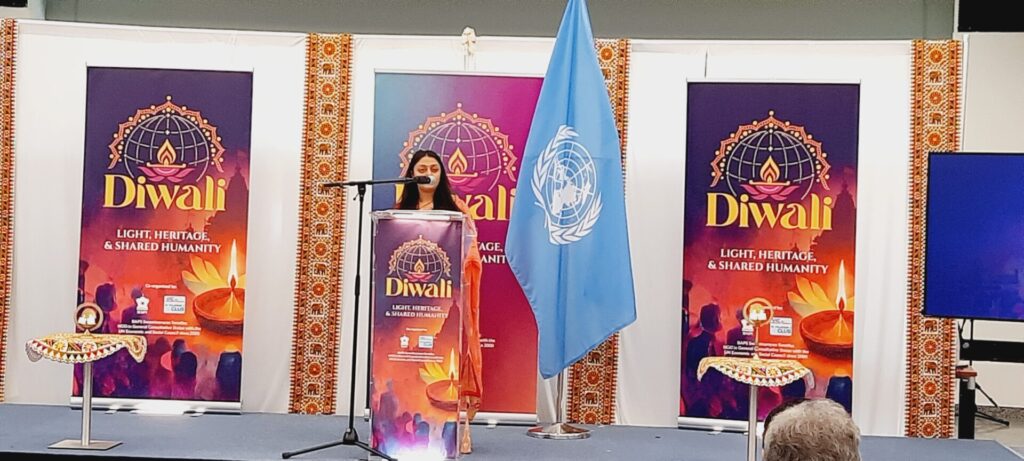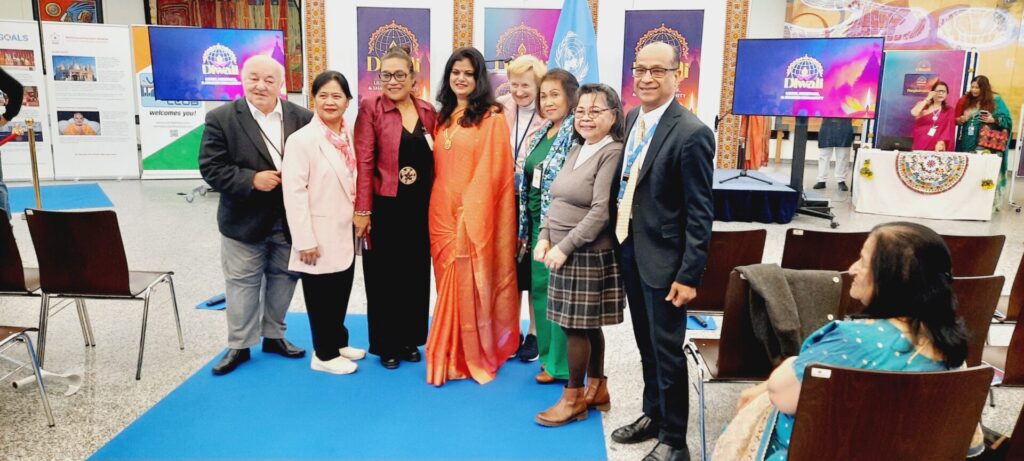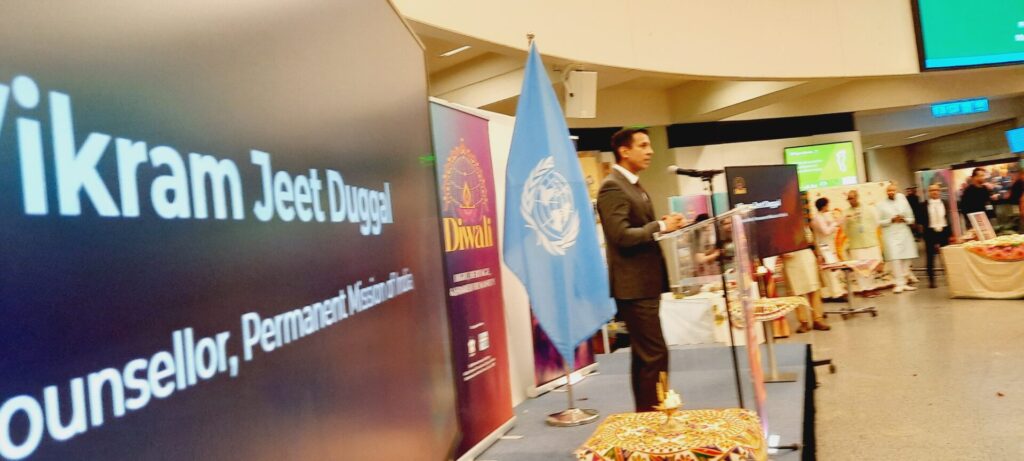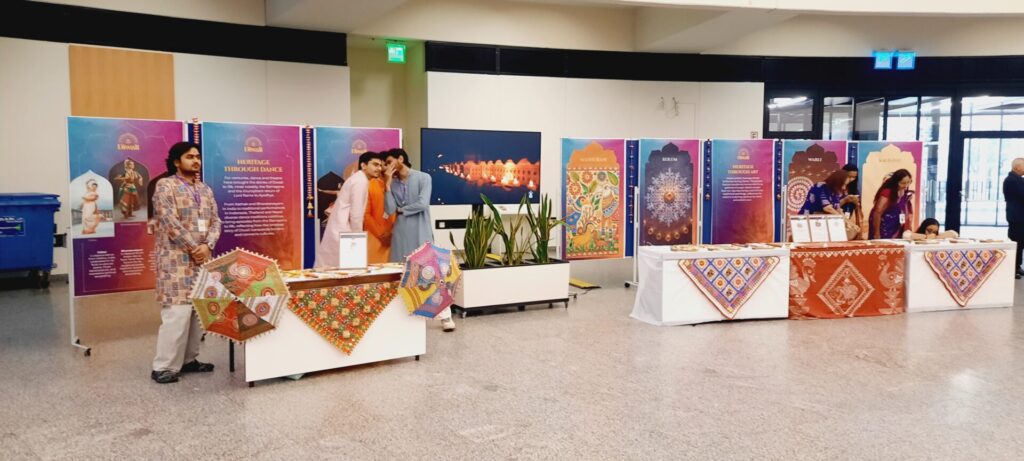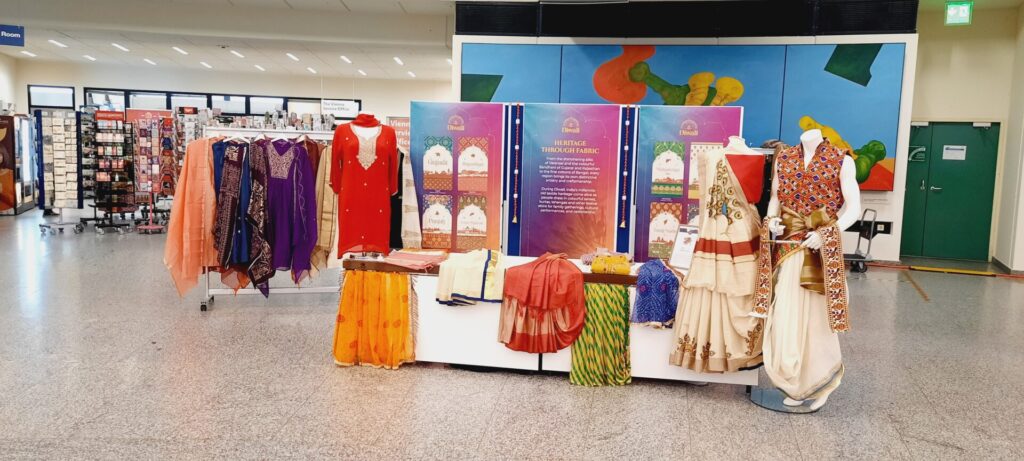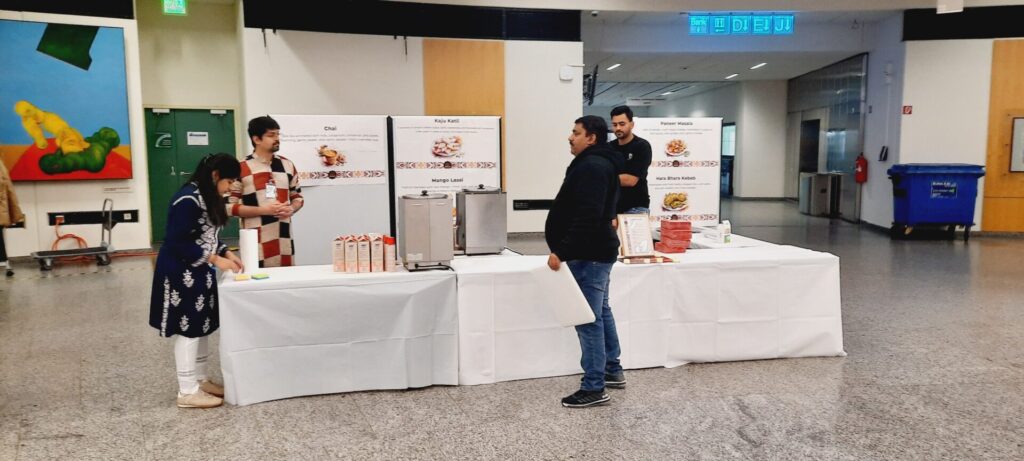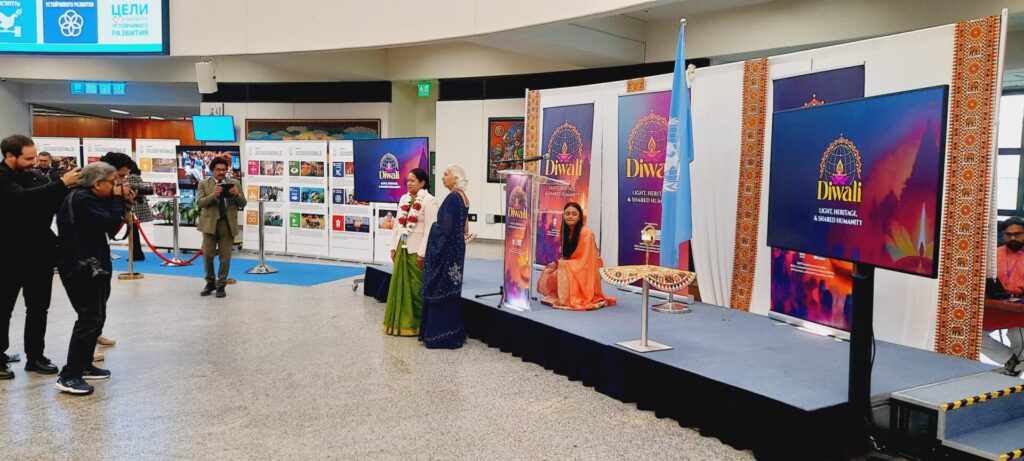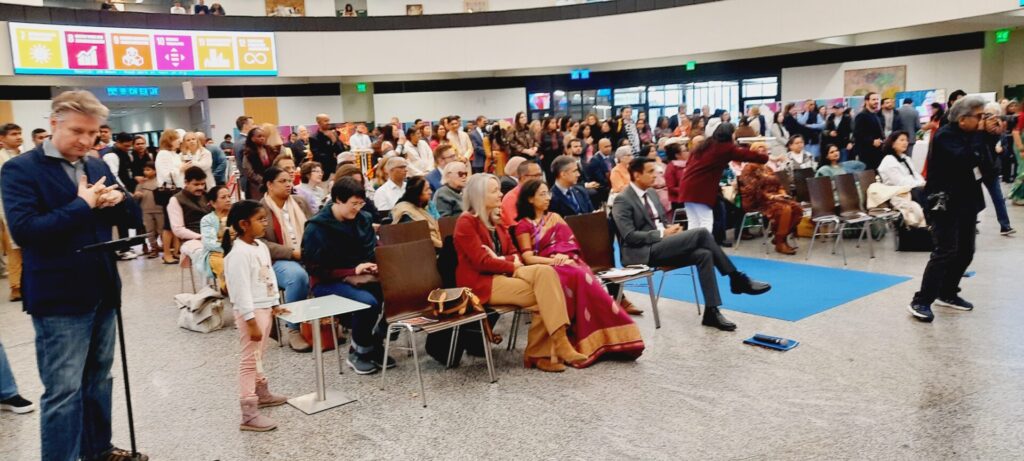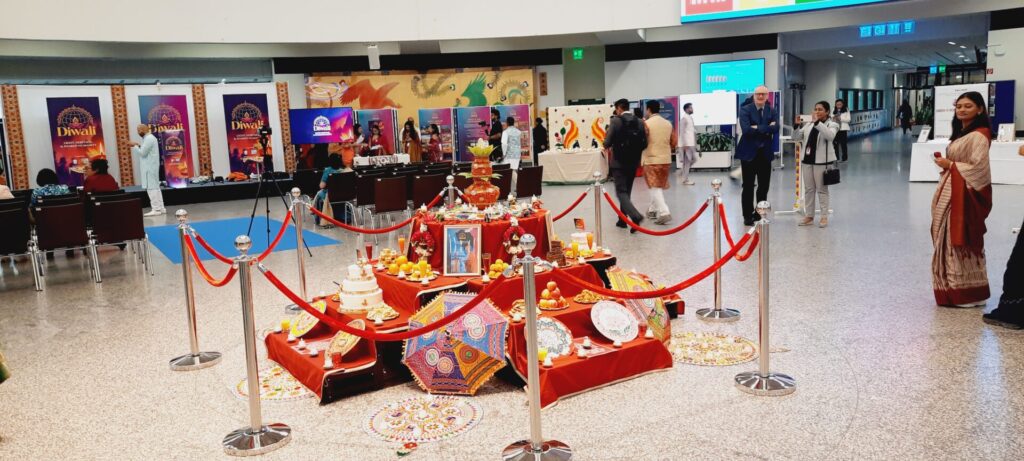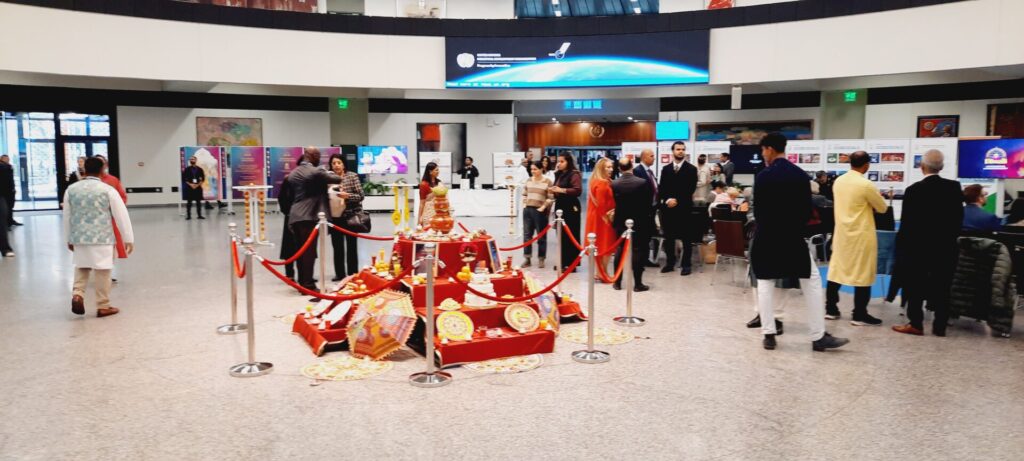


On Monday, 16 November 2026, Diwali brought a gathering shaped by light, heritage, and cultural exchange to the United Nations Office at Vienna (UNOV). Guests came together in the Rotunda of the Vienna International Centre for an afternoon marking the festival in an international setting. The occasion offered a shared space to recognize Diwali’s cultural significance while bringing its themes into the life of Vienna’s United Nations community.
Light and color provided a distinctive frame for the gathering. Diwali is widely associated with the symbolism of light, renewal, and hope, and these ideas gave the afternoon a meaningful point of connection. Within the Rotunda, guests could meet across cultural backgrounds and take part in an event centered on the festival’s heritage. The setting linked a tradition celebrated in many communities around the world with the everyday presence of international dialogue at the Vienna International Centre.
The celebration also highlighted how cultural occasions can create opportunities for exchange. Diwali carries different customs and personal meanings for those who observe it, while its familiar themes can invite curiosity and conversation among people encountering the festival in a new context. At UNOV, the gathering placed that exchange at the heart of the afternoon, bringing guests together through a shared appreciation of culture and tradition. The event’s emphasis on light and color helped create a welcoming atmosphere without diminishing the varied histories behind the celebration.
For the United Nations community in Vienna, the Diwali gathering was an occasion to recognize cultural heritage within a diverse international environment. Its setting in the Vienna International Centre’s Rotunda made the event part of a place associated with cooperation among people and nations. As guests gathered on 16 November, the afternoon connected the festival’s enduring symbolism with the value of meeting, learning, and sharing across cultures. In that way, Diwali offered both a celebration of heritage and a moment of cultural exchange at UNOV.
The event’s stated theme, “Light, Heritage,” brings together two ideas closely associated with Diwali while leaving room for varied personal and cultural understandings. Light is among the festival’s most recognizable symbols, appearing in lamps, candles, and illuminated public spaces. It can suggest warmth, hope, renewal, and the movement from darkness toward clarity. Heritage points to the histories, customs, and shared practices through which communities carry meaning across generations. Placed side by side, the words frame Diwali not only as a celebration of brightness, but also as an occasion to consider the traditions that give the festival its distinctive place in cultural life.
Diwali is observed in diverse ways across regions, religions, and families. Practices may include lighting traditional lamps, preparing special foods, decorating homes, gathering with loved ones, and sharing greetings or gifts. The significance attached to these customs can differ, reflecting distinct stories, beliefs, and local histories. This variety is part of the festival’s heritage: it is neither a single, uniform experience nor a tradition frozen in time. Instead, it is sustained through people who preserve familiar rituals, adapt them to changing circumstances, and pass their meanings to new generations. The theme acknowledges that cultural identity can be expressed through both continuity and change.
In an international setting such as Vienna’s UN Center, “Light, Heritage” can serve as an invitation to share and reflect, rather than prescribe one interpretation of Diwali. The theme creates space for people to learn about the festival’s traditions and to recognize the many ways heritage shapes community life. It also points toward cultural exchange as a process of listening: encountering another tradition with curiosity, while understanding that no brief presentation can represent every experience. By connecting a widely recognized symbol with the lasting influence of inherited practices, the theme offers a thoughtful framework for considering how celebrations can illuminate both shared human concerns and the distinctive identities communities cherish.
The announcement places Diwali in the Rotunda of the Vienna International Centre, a setting that gives the celebration a distinctly public character. Rather than being described only as a private or household observance, the gathering brings a cultural tradition into a shared civic space. Its atmosphere is suggested through the meeting of people and perspectives, with the occasion offering a point of connection across communities. The Rotunda becomes a place where heritage can be encountered collectively, and where the meaning of the festival is conveyed through presence and participation. This framing emphasizes openness without requiring assumptions about the event’s specific arrangements or activities.
Diwali is widely associated with light and renewal, and its presence at an international center can invite reflection on how traditions travel and take on meaning in different settings. In Vienna, the celebration creates an opportunity for cultural exchange: attendees can share a moment shaped by an established festival while gathering in a workplace and diplomatic environment. The announcement’s emphasis on color evokes a lively, welcoming mood, while its reference to heritage points to the histories and practices that communities carry with them. Together, these themes suggest an event that is both rooted in tradition and open to conversation among people with varied backgrounds.
Such a gathering can also make cultural exchange visible in a simple, everyday way. A shared venue allows the festival to be experienced as part of the broader life of the Vienna International Centre, rather than as something distant from its international community. The Rotunda’s role as the setting reinforces this sense of common ground: a public interior can bring different cultural experiences into proximity while leaving room for each tradition to retain its distinct meaning. The result, as suggested by the announcement, is an atmosphere of welcome and mutual curiosity. Diwali’s light and heritage offer a shared occasion for connection, without reducing the celebration to a single interpretation.
Holding Diwali at the United Nations center in Vienna places a cultural celebration within an international setting. The festival’s light, heritage and customs can be encountered there not only as elements of a tradition, but as expressions that invite conversation. For attendees with different cultural or religious backgrounds, the occasion offers a point of entry: they may learn what Diwali means to those who celebrate it, notice practices associated with the festival and ask questions in a shared environment. This kind of encounter need not erase differences. Rather, it makes room for understanding through attention, explanation and respectful participation.
A venue connected with the United Nations also gives the gathering a distinctive context. Vienna is home to international institutions and communities, and a celebration there can bring cultural expression into a space associated with dialogue among people and nations. The setting does not, by itself, determine what participants take away. Its significance lies more modestly in making room for a cultural tradition to be presented and encountered alongside the institution’s international character. Through shared attention to music, stories, symbols or other elements included in the event, participants can recognize both the particularity of Diwali and the value of learning about traditions beyond their own.
The event’s focus on cultural exchange is therefore best understood through the interactions it makes possible. People can share what the celebration means to them, listen to perspectives they may not have encountered before and appreciate the care with which traditions are carried forward. Such exchange can take place without assuming that every attendee will respond in the same way or leave with identical impressions. A common venue provides the setting; respectful curiosity gives the gathering its human dimension. In Vienna’s international community, celebrating Diwali at the UN center offers a measured opportunity to meet across backgrounds and to regard cultural difference as something that can be approached with interest and respect.