A durable Gulf security arrangement must include all eight states bordering the Gulf: Oman, Bahrain, Kuwait, Qatar, Saudi Arabia, the United Arab Emirates, Iran, and Iraq. Their geography, economic links, and exposure to shared risks make exclusion an unstable foundation for regional order. No single capital can secure shipping lanes, energy infrastructure, and communities while ignoring the interests and perceptions of its neighbors. Participation does not require agreement on every dispute, nor does it erase differences in political systems and strategic aims. It does, however, create channels through which competition can be managed and misunderstandings addressed before they escalate into confrontation.
Years of containment toward Iran have not yielded lasting security. Sanctions, military pressure, and efforts to isolate Tehran may constrain actions, but they have not resolved the underlying rivalries or established mechanisms for preventing conflict. Nor has a security umbrella removed the risks of miscalculation, attacks on critical infrastructure, or disruption to maritime trade. The record does not mean deterrence or defense is unnecessary; it shows that these tools cannot substitute for diplomacy and inclusive regional engagement. Continuing to rely on pressure alone leaves Gulf states managing crises without changing the conditions that generate them.
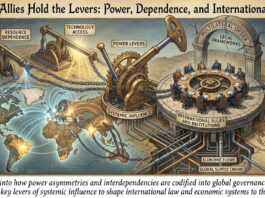
Gulf states are being called to reassess how heavily they depend on powerful external partners, including the United States, and to assume greater responsibility for regional security. They have demonstrated an ability to protect their societies, infrastructure, and economies through periods of strain. Yet military readiness and foreign partnerships, however valuable, cannot by themselves deliver durable stability. The central task is to complement defense with communication, cooperation, and rules that all neighboring states can recognize. The key question is not only how to respond when a crisis erupts, but how Gulf governments can shape the conditions that prevent crises from taking hold.
A diplomatic meeting can signal a change in tone, create room for a temporary understanding, or help resolve an immediate problem. Its effects, however, may fade if governments have no regular way to maintain contact. A continuing process has a different purpose: it can gradually establish habits of consultation, shared expectations, and practical rules for managing disagreements. For Gulf states, the value of dialogue therefore lies not only in what leaders announce at one gathering, but also in whether they sustain communication between crises and across political cycles. Repeated engagement gives officials opportunities to clarify intentions before assumptions harden into policy or trigger avoidable escalation.
The Helsinki process offers a useful, though not identical, precedent. Launched in 1975 amid profound divisions between East and West, it provided a framework for continuing dialogue and confidence-building rather than requiring political agreement as a precondition. The participating states remained in sharp disagreement on security and ideology, yet sustained contact helped create procedures and expectations that could be developed over time. Gulf circumstances differ in their history, institutions, and regional pressures, so the European experience cannot simply be transferred. Its relevant principle is narrower: states can talk about managing risks while major disputes remain unresolved. Dialogue need not imply consensus, endorsement, or the abandonment of national positions.
Regular contact can reduce miscalculation by allowing governments to exchange information, raise concerns, and communicate during periods of uncertainty. Early cooperation need not begin with the most contested political questions. Practical work on maritime safety, crisis communication, and protecting critical infrastructure could produce shared procedures with direct benefits. Humanitarian assistance and disaster response may also offer opportunities for coordination, since emergencies can cross borders and demand timely action. Economic connectivity, including transport and trade links, can provide another area where predictable arrangements serve mutual interests. Progress in these fields would not guarantee agreement on wider security issues. It could, however, build familiarity and confidence, making a durable regional dialogue more useful when difficult disputes arise.
A sustainable regional order in the Gulf cannot be designed solely in distant capitals, then presented to the states expected to live with its consequences. External powers may provide resources or guarantees, but durable arrangements require the consent and participation of neighboring countries. Local governments understand the region’s histories, sensitivities, and practical constraints; their involvement makes rules more legitimate and more likely to endure. This principle does not exclude outside partners. It places them in a supporting role, while Gulf states define priorities, identify acceptable compromises, and assume responsibility for implementation. Regional agency is therefore not a call for isolation, but a condition for effective cooperation.
Smaller and middle powers can advance this agenda not by matching the leverage of great powers, but by making sustained engagement possible. They can convene neighbors who rarely meet, establish modest institutions for recurring consultation, keep communication channels open during crises, and create practical incentives for cooperation in areas such as trade, maritime safety, and disaster response. The Helsinki experience offers a useful precedent: smaller states helped shape a process that drew larger powers into dialogue and common rules, without pretending that rivalries had disappeared. Its value lay in creating habits and expectations that made restraint and consultation more consequential. In the Gulf, such work would likewise depend on patient diplomacy, flexible formats, and a willingness to build confidence issue by issue rather than demand agreement on every strategic question at once.
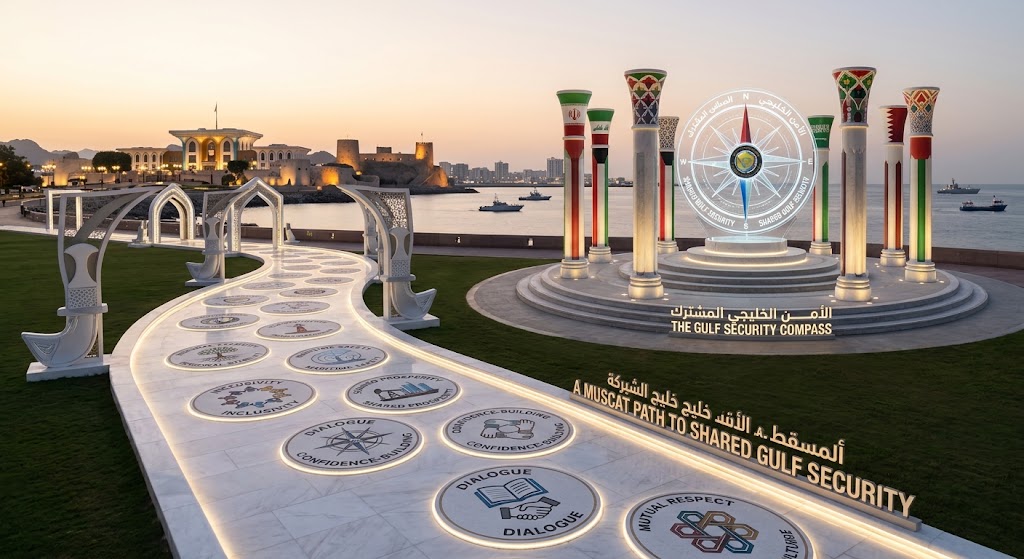
Oman is well placed to contribute because its diplomacy has long emphasized patience, credibility, and the maintenance of relationships across political divides. Muscat’s value is not that it can settle every dispute, but that parties may regard it as a dependable place to speak, test proposals, and clarify concerns without public pressure. A Muscat initiative should therefore begin as a practical, gradual process: regular consultations, clear channels for crisis communication, and cooperation on shared interests, with participation expanding as confidence grows. It need not start with a treaty or a grand regional institution. Consensus-building and continuity are stronger assets than ambitious declarations that cannot be implemented. By preserving dialogue through periods of tension and recording incremental understandings, Oman can help neighbors develop habits of cooperation. A durable framework would emerge from repeated choices by regional states, not from an imposed blueprint.
Gulf stability depends on several elements working together. Credible deterrence can reduce incentives for coercion and miscalculation, but it is most effective when supported by clear communication and restraint. Sustained dialogue helps governments explain concerns, identify areas of practical cooperation, and manage incidents before they escalate. Neither dialogue alone nor military preparedness can provide durable security: deterrence without communication may intensify suspicion, while conversation without credible safeguards may lack influence. Their interaction creates space for diplomacy to work without asking states to ignore genuine risks. International partnerships add resources, expertise, and diplomatic reach, while regional ownership ensures that Gulf priorities are defined by those most directly affected.
Greater regional agency does not require disengagement from the United States, European countries, Britain, China, or other partners. These relationships can reinforce stability through consultation, defense cooperation, economic ties, and support for de-escalation. At the same time, external partners should complement a Gulf-led process rather than substitute for it. States in the region need room to set priorities, negotiate arrangements, and adapt them as circumstances change. A balance between local initiative and international support is therefore essential: partnerships widen options, and regional participation gives cooperation legitimacy and continuity.
A permanent Gulf process, supported by a group of friends of the process, could provide a reliable framework. Its external participants would encourage contact and sustain engagement without dictating outcomes. The purpose would not be to settle every dispute immediately, but to build habits of consultation and make future solutions more attainable. A Muscat initiative would give Gulf states an enduring setting in which to shape their own security arrangements over time. Progress may be uneven, and disagreements may persist; neither should prevent continued participation. Its value would lie in helping states manage differences and develop shared approaches as conditions evolve.