
Understanding Female Genital Mutilation (FGM)
Female Genital Mutilation (FGM), also known as female circumcision, refers to the partial or total removal of the external female genitalia for non-medical reasons. This harmful practice is recognized internationally as a violation of human rights and is often rooted in cultural, social, and religious traditions. FGM is practiced predominantly in parts of Africa, the Middle East, and Asia, affecting millions of women and girls worldwide.
The historical context of FGM spans centuries, with origins linked to cultural beliefs surrounding femininity, purity, and sexuality. In some communities, FGM is deemed essential for preserving a girl’s chastity and ensuring marriageability. It is perpetuated by societal pressures and the belief that undergoing such a procedure is vital for conforming to cultural norms. These deeply held beliefs can lead to intergenerational cycles of FGM, where mothers, despite understanding the health risks, facilitate the continuation of the practice.
There are several forms of FGM, classified by the World Health Organization into four major types, ranging from the clitoridectomy to infibulation. Each variation of FGM poses significant risks to the physical and mental health of women and girls. Immediate complications may include severe pain, bleeding, and infections, while long-term effects can lead to complications during childbirth, psychological trauma, and issues related to sexual health. The ramifications of FGM extend far beyond the individual, impacting communities and societies by perpetuating gender inequality and violating fundamental human rights.
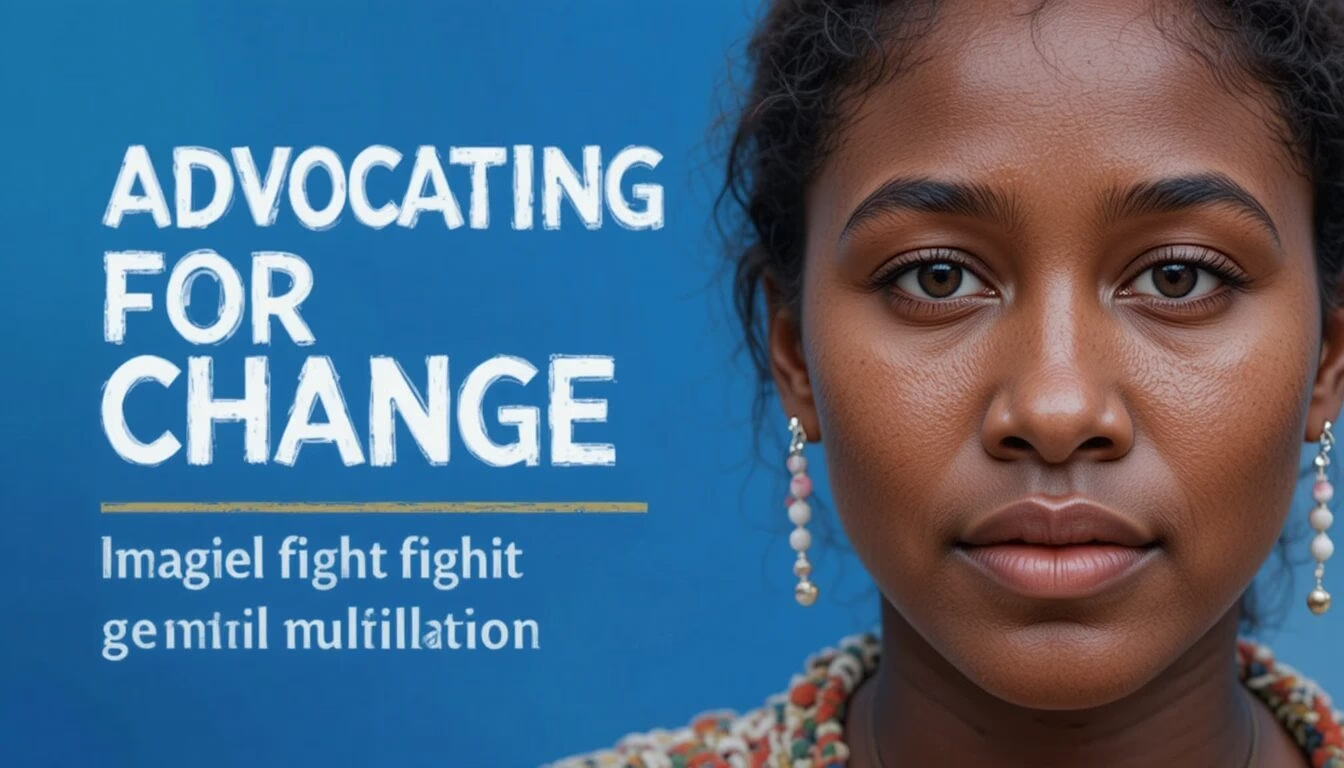
Ultimately, understanding the complex factors surrounding Female Genital Mutilation is essential in advocating for change and supporting efforts to eradicate this inhumane practice. A concerted global approach is necessary, addressing not only the health implications but also the underlying cultural beliefs that sustain FGM.
The Impact of Female Genital Mutilation
Female genital mutilation (FGM) imposes severe health risks upon women and girls, a consequence that can manifest immediately and extend throughout their lives. The procedure itself often leads to long-term physical complications, such as chronic pain, infections, and complications during childbirth. Women who have undergone FGM frequently face obstetric complications, including prolonged labor, higher rates of cesarean sections, and increased neonatal mortality rates. Furthermore, the psychological impact can be profound, with many survivors suffering from post-traumatic stress disorder (PTSD), anxiety, and depression.
Beyond the individual ramifications, there are far-reaching societal implications associated with FGM. The practice hinders educational and economic prospects for affected girls. When young girls undergo FGM, their educational paths are often interrupted, leading to higher dropout rates. The loss of educational opportunities can restrict their ability to attain employment, perpetuating cycles of poverty and inequality. As a result, communities lose the potential contributions of these girls and women, undermining overall progress in socio-economic development.
Moreover, FGM is often rooted in cultural norms, which can perpetuate the cycle of violence and discrimination against women. This cultural endorsement can stifle community efforts aimed at promoting gender equity, leading to a broader societal impact that extends beyond individual cases. Women subjected to FGM are tragically cut off from critical resources that would empower them socially and economically, further entrenching gender disparities.
In light of these considerable consequences, the fight against FGM is not only about protecting women’s health but also about fostering economic growth and social stability. Advocating for change involves addressing both the healthcare needs of affected women and the educational opportunities for girls, creating a pathway towards a more equitable society.
Global Efforts to Eradicate FGM
The global community has intensified efforts in recent years to eradicate Female Genital Mutilation (FGM), a deeply entrenched practice affecting millions of women and girls worldwide. Various initiatives are being spearheaded by international organizations, governments, and non-governmental organizations (NGOs) with a common goal: to end FGM by 2030 as outlined by the United Nations Sustainable Development Goals.
One prominent initiative is the UNFPA-UNICEF Joint Programme, which aims to eliminate FGM in over 17 countries where the practice is most prevalent. This program emphasizes community engagement and education, aiming to shift cultural perceptions and encourage leaders to denounce FGM publicly. Key stakeholders, including community leaders, have been instrumental in these efforts, facilitating discussions that prioritize the health and rights of women and girls.
Moreover, several governments have adopted stringent laws prohibiting FGM. For example, nations like Egypt and Somalia have increased their legal frameworks against the practice, although enforcement remains a challenge. Awareness campaigns have also been crucial in educating communities, highlighting not only the immediate health risks associated with FGM but the long-term socio-economic consequences. Recent statistics indicate a gradual decline in FGM prevalence rates in some regions, illustrating that with dedicated efforts, change is indeed possible.
Successful case studies from countries such as Kenya demonstrate how a multi-faceted approach involving education, community outreach, and legal measures can significantly reduce FGM rates. In Kenya, for example, various local NGOs have employed peer education strategies to reach younger generations, fostering a cultural shift that celebrates the value of women without the need for harmful practices.
Despite progress, challenges remain, particularly in areas where FGM is deeply rooted in tradition. Continuous collaboration among governments, community activists, and health professionals is crucial to enhance awareness and sustain efforts to eradicate FGM, ensuring a future free from this violation of human rights.
Renewing Our Commitment to Protect Women’s Rights
The global fight against female genital mutilation (FGM) demands an unwavering commitment to protecting the rights of women and girls. This includes recognizing FGM as a critical violation of human rights, emphasizing the necessity for concerted actions directed towards eradication. To achieve this, a multi-faceted approach that encompasses education, advocacy, and community engagement is imperative.
Educational initiatives serve as a cornerstone in this effort, as they illuminate the physical and psychological repercussions of FGM. By empowering individuals with knowledge, communities can foster awareness and challenge long-held cultural beliefs surrounding this practice. Comprehensive education programs that incorporate discussions on gender equality, bodily autonomy, and women’s rights can instill values that counteract the justification of FGM. These programs must be tailored to resonate with various cultural contexts, ensuring effectiveness and greater acceptability.
Advocacy plays a crucial role in amplifying the voices of those affected by FGM. By engaging policymakers, influencers, and activists, a robust narrative can be constructed to bolster support for legal reforms aimed at banning this harmful practice. Lobbying for effective laws and policies is essential, but implementation must be prioritized to guarantee that these measures translate into tangible benefits for women and girls.
Furthermore, engaging with local communities to create a dialogue about the negative impacts of FGM is paramount. Initiatives that involve men and boys in discussions about gender equality can significantly shift perspectives and promote collective responsibility. By fostering an environment where women’s rights are at the forefront, community leaders can become advocates for change.
It is critical that we come together—governments, NGOs, and individuals alike—in this effort. Our renewed commitment to protect women’s rights from practices like FGM will ensure that all women and girls can live free from violence and fear, fostering a more equitable future for generations to come. Only through this collective endeavor can we hope to eradicate FGM and uphold the rights of women globally.