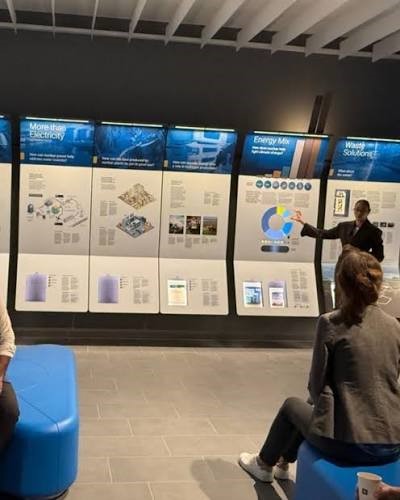
Engaging with Real-World Applications
The IAEA Visitor Centre serves as a pivotal platform for students to engage with the practical ramifications of nuclear science and technology. Located adjacent to the IAEA’s laboratories in Seibersdorf, this center presents a unique opportunity for young minds to observe firsthand how scientific exploration confronts critical global challenges. Courses of study in nuclear science are often grounded in theory, but at the Visitor Centre, students can witness the direct application of these concepts.
For example, one of the primary focus areas of the IAEA’s work involves enhancing agricultural productivity through nuclear techniques. Students can explore systems that employ isotope techniques to improve crop resilience and increase yield, thereby addressing food security—a pressing issue affecting millions worldwide. This approach not only allows for the understanding of scientific principles but also highlights the broader implications of research initiatives in the quest for sustainable agricultural practices.
Another area where nuclear science plays an essential role is healthcare. The Visitor Centre showcases how nuclear techniques are utilized in medical diagnostics and treatment, offering insights into the innovative methods used in radiotherapy and imaging. Students can see demonstrations that illustrate how these technologies not only enhance patient outcomes but also contribute to advancements in public health.
Additionally, environmental sustainability is a critical theme enhanced through research exhibited at the centre. The IAEA employs nuclear techniques for environmental monitoring and analysis, allowing students to grasp how these methods help in tracking climate change and managing natural resources. By interacting with these exhibits and seeing real-world applications of nuclear technology, students can appreciate its significant contributions to the challenges faced in contemporary science.
Overall, the Visitor Centre stands as a beacon of learning, where theoretical knowledge marries practical application, thus nurturing informed future leaders in science and technology.
Hands-On Learning Experience
The IAEA Visitor Centre offers students a unique opportunity to engage in hands-on learning experiences that foster a deeper understanding of nuclear science. With 33 interactive exhibits designed specifically for educational purposes, learners can explore various scientific principles that govern the usage and effects of nuclear technology in contemporary society. These exhibits creatively merge physical and digital elements, making complex concepts in physics, biology, and chemistry more accessible and engaging.
One of the standout features of the IAEA Visitor Centre is its emphasis on interactivity. Students are encouraged to participate actively in their learning journey, allowing them to manipulate exhibit components and witness the immediate impact of their actions. This interactive format enables students to absorb information more effectively than traditional learning methods, as the tactile experience helps cement knowledge through practical engagement. By exploring fundamental themes such as the behavior of isotopes or the principles of radiation, students can gain firsthand insights into the scientific practices that are integral to various fields.
Moreover, these exhibits illuminate the practical applications of nuclear technology, particularly in energy production and environmental monitoring. For instance, students can learn about how isotopes are utilized in medical diagnoses or the role of nuclear power in generating electricity. This real-world connection helps demystify the science behind nuclear technology, bridging the gap between theory and practice. By exposing students to these applications, the IAEA Visitor Centre not only enhances their understanding of the subject matter but also inspires curiosity and interest in pursuing further studies in related scientific disciplines.
Overall, the hands-on learning experience provided by the IAEA Visitor Centre is an invaluable resource for students aiming to enhance their knowledge of nuclear science. Through interactive engagement, they can explore intricate scientific concepts while recognizing the tangible impacts of these technologies on society and the environment.
Exploration of STEM Career Options
Visiting the IAEA Visitor Centre provides students with a unique opportunity to explore various STEM career paths related to nuclear science. This exploration is particularly valuable in a time when the demand for professionals in the fields of science, technology, engineering, and mathematics continues to grow. A firsthand look at the range of career options available in nuclear science can inspire students and help them envision their future in these fields.
During the visit, students can engage in interactive exhibits that illuminate the numerous roles within the nuclear science sector. Many might be surprised to learn that careers extend far beyond the well-known positions of nuclear engineers and physicists. For instance, the field of analytical chemistry plays a crucial role in ensuring the safety and effectiveness of nuclear operations, providing vital data for decision-making processes. Furthermore, roles such as health physicists and radiation protection specialists underscore the importance of safety in the nuclear industry.
Personal stories shared by professionals currently working in these fields serve to enrich the students’ experience. Hearing about the career trajectories of these individuals helps demystify the pathways into nuclear science and illustrates the diverse academic backgrounds that can lead to success in this sector. Testimonies from other students who have pursued internships or educational programs related to nuclear science offer invaluable insights and encouragement.
The IAEA Visitor Centre also provides access to experts who can offer advice on educational pathways, internships, and research opportunities available within the nuclear science community. This guidance is essential for students as they seek to align their interests with suitable career opportunities. Overall, the visit promotes an understanding of nuclear science that transcends conventional perceptions, inspiring students to consider the exciting possibilities within this expansive field.
Interacting with Experts in the Field
Visiting the IAEA Visitor Centre presents students with a unique opportunity to engage with experts actively working in the field of nuclear science. Each visit includes guided tours conducted by knowledgeable staff members who are well-versed in various aspects of nuclear technology and its applications. This interactive experience enhances students’ learning experiences, allowing them to connect theoretical knowledge gained in classrooms with practical insights shared by professionals.
The guided tours are structured to prominently feature discussions about the historical development of nuclear science, which is critical for understanding its implications and advancements. Students have the opportunity to ask questions, leading to enriched dialogues that cover not only the fundamental principles of nuclear science but also its current applications worldwide. This back-and-forth interaction between students and experts allows for a deeper exploration of topics that may not be thoroughly covered in traditional educational settings.
Furthermore, these discussions often highlight cutting-edge research and significant international collaborations promoted by the IAEA. Students can gain an appreciation for the role of nuclear science in addressing global challenges, such as energy sustainability, medical advancements, and environmental protection. Learning directly from professionals helps demystify complex concepts and showcases real-world examples of how nuclear technology impacts society.
Additionally, this direct interaction with specialists fosters a stimulating environment where students can inspire curiosity and critical thinking. It encourages them to consider future career paths in nuclear science and related fields. As students grasp the depth of knowledge shared during these tours, they are likely to develop a more profound understanding of the subject matter, enhancing their academic journey.