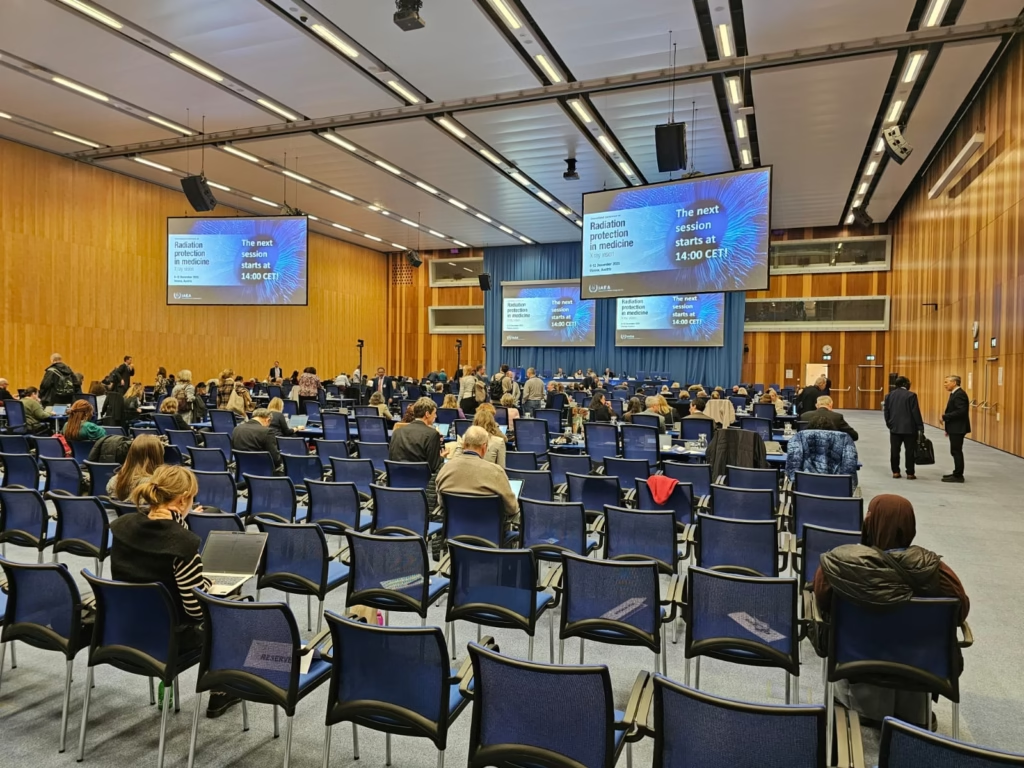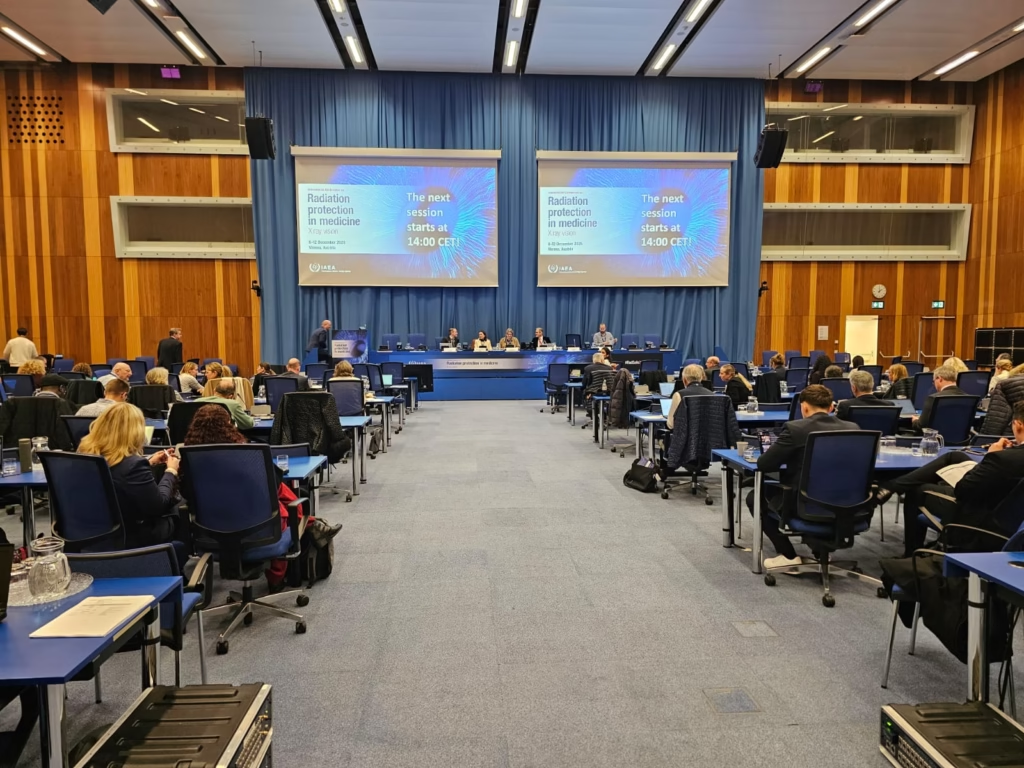

Overview of the Conference
The International Conference on Radiation Protection in Medicine serves as a pivotal platform for addressing key issues in the realm of radiation safety. The main purpose of this conference is to bring together experts and stakeholders from diverse fields to discuss advancements in medical radiation practice, evaluate current safety protocols, and identify emerging challenges that need to be addressed in the near future. With the increasing reliance on radiation in both diagnostic and therapeutic applications, it is crucial to ensure that safety measures are continually updated and reinforced.
This conference is prominently supported by significant international organizations, including the International Atomic Energy Agency (IAEA), the World Health Organization (WHO), and the Pan American Health Organization (PAHO). These institutions are integral in shaping global health policies and promoting co-operative action across borders to enhance radiation protection. By facilitating cross-sector dialogue, the conference creates an environment where proactive strategies can be formulated to address various safety concerns related to medical imaging and radiation therapy.
Experts from various disciplines gather to share insights on the latest research, technologies, and policies aimed at improving radiation protection measures. The event serves as an opportunity not only to present innovative solutions but also to highlight case studies and successful practices from around the globe. The collaboration among international health agencies fosters a comprehensive understanding of radiation safety challenges and possible solutions, thereby promoting an integrated approach to managing risks associated with medical radiation exposure.
Through this collaborative effort, the conference emphasizes the critical importance of shared knowledge and resources in enhancing patient safety. Ultimately, the outcomes of such a gathering are essential for guiding future initiatives and ensuring that radiation protection remains a forefront priority in the ever-evolving landscape of medical practice.
Current Challenges and Opportunities in Radiation Safety
The landscape of radiation protection is continually evolving, particularly due to the introduction of advanced technologies in medical practice. As healthcare facilities increasingly integrate emerging imaging technologies and new radiopharmaceuticals, the need for enhanced radiation safety measures has become paramount. These innovations, while beneficial for patient diagnosis and treatment, pose unique challenges to existing safety protocols.
With the advent of sophisticated imaging technologies, such as digital X-rays and advanced nuclear medicine techniques, professionals are required to reassess radiation exposure standards. Each novel tool introduces its own set of risks, prompting the need for rigorous evaluation and adaptation of safety measures. The integration of artificial intelligence (AI) into diagnostic imaging further complicates this landscape. AI has the potential to improve accuracy and decrease unnecessary radiation exposure, yet its implementation must be carefully managed to ensure patient safety and compliance with regulatory standards.
During the opening ceremony of the recent International Conference on Radiation Protection, IAEA Director General Rafael Mariano Grossi emphasized the essential balance between innovation and regulatory oversight. He noted that any advancements in medical technology should be paralleled by the development of regulatory frameworks that safeguard both patients and healthcare professionals. This perspective highlights a significant opportunity for stakeholders in the medical field to collaborate on establishing dynamic guidelines that evolve in response to technological advancements.
In addressing the challenges presented by these innovations, there is also a potential for improved radiation protection practices. By leveraging new technologies, healthcare providers can enhance their safety protocols, leading to reduced exposure and better patient outcomes. As the dialogue around radiation safety continues to evolve, fostering collaboration among regulatory bodies, healthcare providers, and technology developers will be crucial in shaping a safe and effective future in medical radiation use.
The Importance of Radiation Protection Standards
In recent years, the prevalence of radiological examinations and radiation therapy treatments has seen a significant increase globally. According to the World Health Organization, millions of diagnostic imaging procedures are performed annually, reflecting a growing reliance on radiological practices within healthcare. This surge in usage underscores the critical need for robust radiation protection and safety standards in clinical environments. Effective protocols not only optimize the benefits of diagnostic imaging and therapeutic interventions but also mitigate the risks associated with ionizing radiation exposure.
Radiation exposure can have serious consequences, including a heightened risk of cancer and other health complications. Therefore, well-defined safety standards serve to safeguard patients, healthcare professionals, and the general public from potential adverse effects. Various stakeholders, including healthcare providers, regulatory bodies, and patient advocacy groups, concur that adherence to stringent radiation protection standards is essential for ensuring the safety and efficacy of radiological procedures.
The establishment of comprehensive guidelines is particularly vital in light of the increasing complexity of medical imaging technologies and treatment modalities. These standards are designed to promote the judicious use of radiation, advocating for the principle of “as low as reasonably achievable” (ALARA), which aims to limit exposure while maintaining diagnostic image quality and treatment effectiveness. Furthermore, continued education and training of healthcare personnel in radiation safety practices further enhance the protective measures in place.
In this context, international collaboration is essential to harmonize radiation protection standards across borders. By sharing best practices and research findings, countries can create a more cohesive framework to protect patients and healthcare workers from the risks of radiological procedures. This collaborative approach is critical for addressing the evolving landscape of medical radiation usage and ensuring comprehensive protection measures are implemented universally.
Initiatives and Global Efforts Toward Enhancing Safety
The ongoing transformation in medical technologies underscores the importance of global initiatives aimed at enhancing safety in radiation protection. One prominent program is the International Atomic Energy Agency’s (IAEA) ‘Rays of Hope’ initiative, which seeks to strengthen capacities worldwide in the safe use of radiation for medical applications. This initiative addresses disparities in access to radiation technologies across various regions, emphasizing the need to ensure that healthcare professionals are equipped with the requisite knowledge and skills to apply these technologies safely and effectively.
In addition to the ‘Rays of Hope’ initiative, numerous collaborative efforts among international organizations focus on developing comprehensive training programs and guidelines. These programs aim to equip healthcare practitioners with the necessary competencies to implement best safety practices in medical imaging and therapy. By pooling resources and expertise, organizations can establish robust frameworks that promote adherence to radiation protection standards, ensuring a higher level of safety for both patients and medical staff.
Moreover, the emphasis on enhancing safety protocols has led to the creation of numerous resources aimed at guiding healthcare facilities in their pursuit of higher safety standards. These resources, which include manuals, handbooks, and online courses, are designed to address the rapid advancements in medical imaging technologies, such as computed tomography (CT) and magnetic resonance imaging (MRI), which can present new challenges for radiation safety.
Looking ahead, the future strategies that can enhance radiation protection standards worldwide will revolve around continuous education and policy development. The integration of emerging technologies in radiation therapy and diagnostics necessitates an adaptive regulatory framework that can address evolving challenges. As global collaboration intensifies, the shared goal of ensuring safe access to radiation technologies will help create a healthier environment for patients globally.