
Introduction to the Exhibition
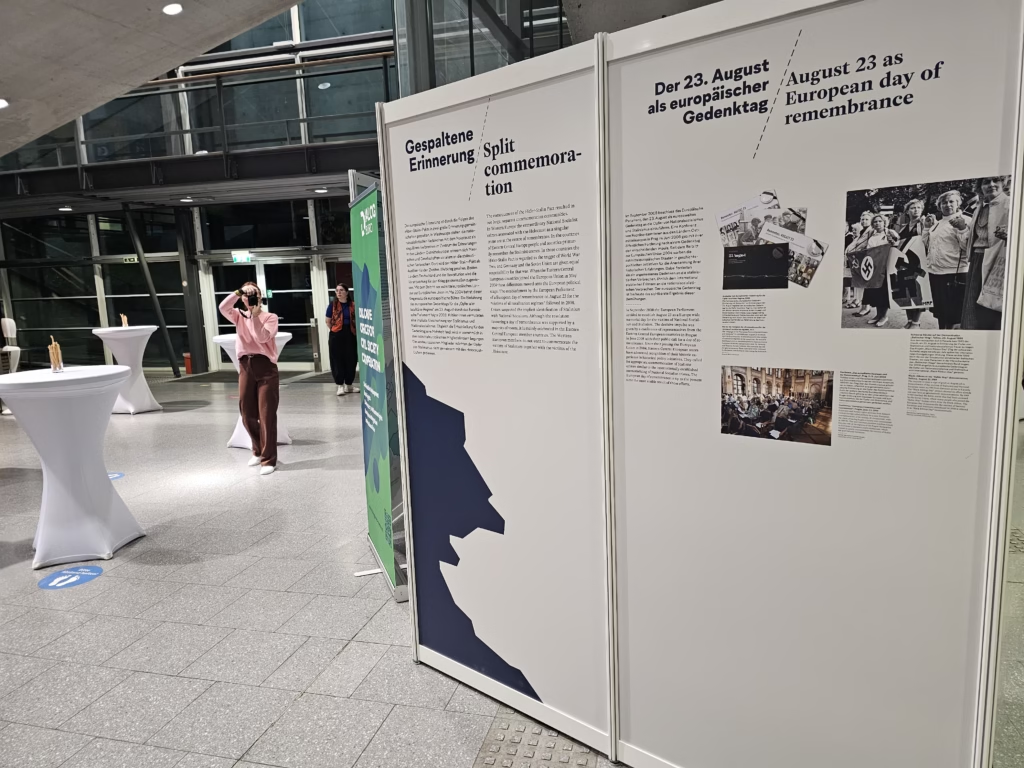
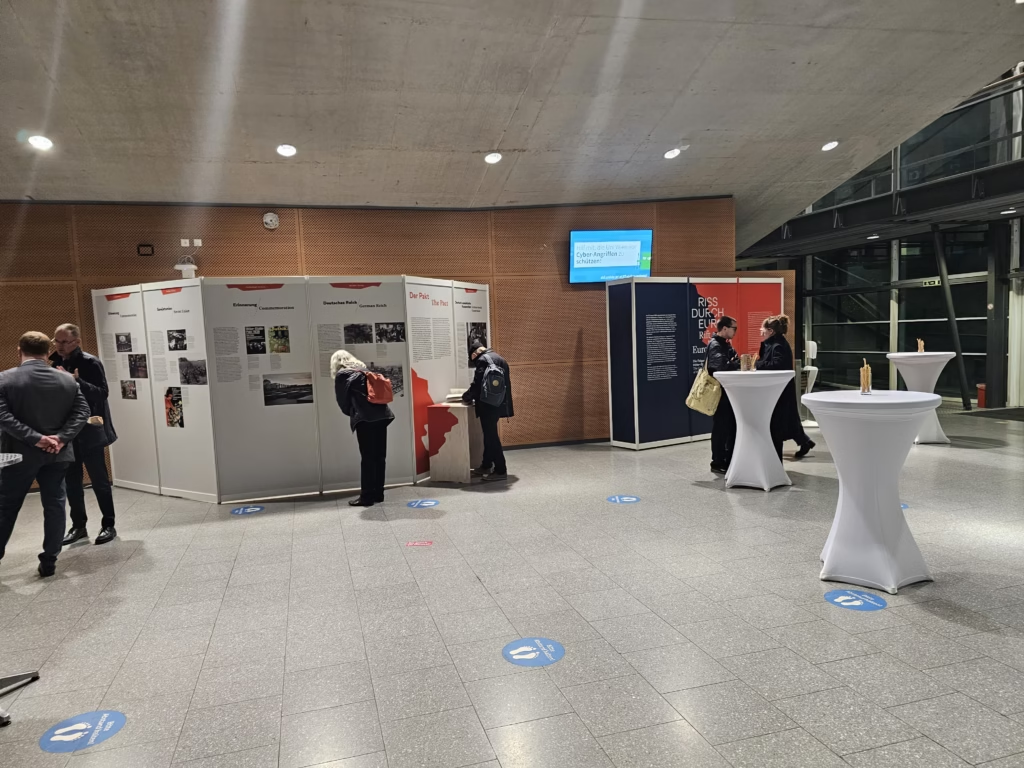
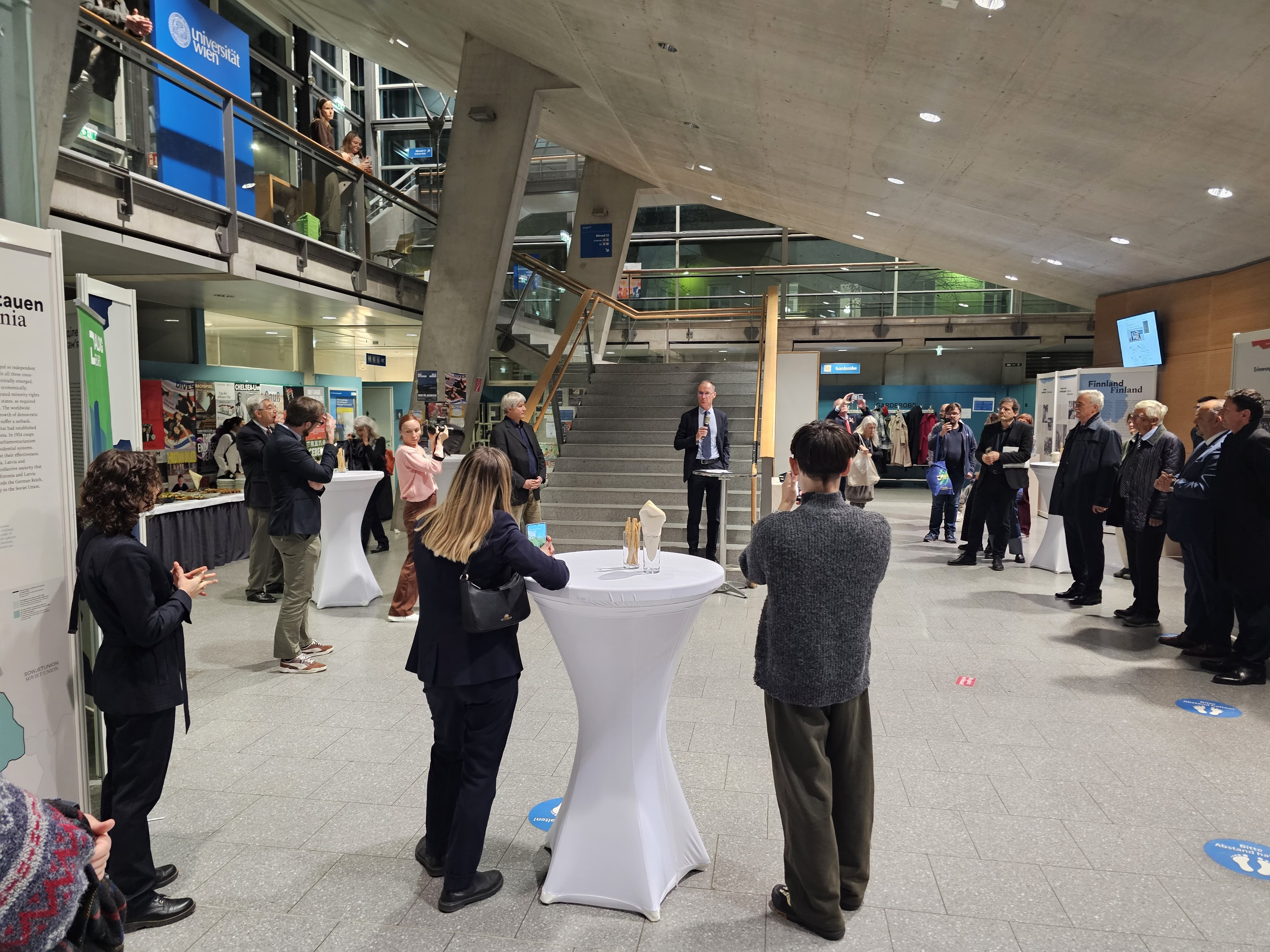
The ‘A Rift Through Europe’ exhibition was inaugurated on November 12, 2025, at the esteemed University of Vienna, marking a significant moment in the exploration of historical narratives in Europe. This exhibition seeks to shed light on the profound implications of the Hitler-Stalin pact, a pivotal agreement that not only shaped the course of World War II but also left an indelible mark on European identity and memory. Professor Wolfgang Müller, an eminent historian, delivered a thought-provoking speech during the inauguration, emphasizing the relevance of the exhibition to our contemporary society.
In his address, Professor Müller articulated how the agreement between Hitler and Stalin led to the division of Europe and dramatic shifts in power dynamics. He stressed the importance of revisiting such historical events to foster understanding and critical dialogue regarding collective memory and national identity in present-day Europe. The exhibition aims to evoke a rigorous examination of the consequences stemming from the pact, encouraging visitors to reflect on the historical complexities that continue to influence European relations.
The focus of ‘A Rift Through Europe’ extends beyond mere historical facts; it invites visitors to engage actively with the narratives that have emerged as a result of these historical alliances. Through various multimedia displays and interactive installations, the exhibition seeks to facilitate discussions about how memory shapes our understanding of identity in modern Europe. By encouraging a deeper contextual appreciation of the Hitler-Stalin pact, the exhibition fosters a space for nuanced conversations about the legacies of totalitarianism, war, and peace in Europe today.
The Historical Context of the Hitler-Stalin Pact
The Hitler-Stalin Pact, formally known as the Molotov-Ribbentrop Pact, was signed on August 23, 1939, as a non-aggression treaty between Nazi Germany and the Soviet Union. This agreement emerged from a complex web of geopolitical considerations, wherein both Adolf Hitler and Joseph Stalin sought to secure their respective national interests. For Hitler, the pact provided a strategic advantage, allowing him to invade Poland without fearing a Soviet intervention. Conversely, Stalin viewed the alliance as a means to buy time for the Soviet Union to bolster its military defenses against future threats.
The motivations behind the Hitler-Stalin Pact were not merely tactical; they were deeply rooted in the ideological rivalry and power dynamics of the time. Despite the stark contrasts in fascist and communist ideologies, both nations recognized the potential benefits of collaboration. The secret protocols of the pact laid out arrangements for the division of territories in Eastern Europe, particularly detailing how Poland would be partitioned between the two powers, thus significantly reshaping the political landscape of the region.
This temporary alliance also shattered the expectations for peace in Europe. The signing of the pact signaled a shift in international relations, resulting in a sense of betrayal among European nations that had hoped for a collective resistance against Nazi expansionism. Furthermore, the Hitler-Stalin Pact violated legal norms regarding sovereignty and territorial integrity, laying the groundwork for a tumultuous and violent period in European history. Its ramifications extended well beyond its existence, ultimately contributing to the onset of World War II and the reshaping of Europe in the post-war era. The ramifications of this agreement resonate today, illustrating the complexities of international diplomacy and the precarious nature of alliances.
The Aggressive Expansion of Totalitarian Regimes
The period following the signing of the Hitler-Stalin Pact in 1939 marked a significant escalation in the territorial ambitions of both Nazi Germany and the Soviet Union. This clandestine agreement not only established a non-aggression treaty between the two regimes but also effectively divided Eastern Europe into spheres of influence. With this newfound partnership, both totalitarian regimes unleashed a wave of military aggression that had profound consequences for the region.
Shortly after the pact was signed, Germany initiated its invasion of Poland on September 1, 1939, employing a strategy known as Blitzkrieg or “lightning war.” This tactic, characterized by swift and decisive military operations, overwhelmed Polish defenses. The rapid success of the Wehrmacht not only resulted in the fragmentation of Poland but also showcased the ruthless efficiency of totalitarian military doctrine. Just weeks later, on September 17, 1939, the Soviet Union invaded Poland from the east, effectively sealing the country’s fate and facilitating its division between these two oppressive regimes.
The subsequent Soviet campaign in Finland in the Winter War of 1939-1940 served as another example of territorial expansion driven by totalitarian ideology. The Soviet Union sought to secure its borders and exert control over strategic territories, inflicting significant human suffering and casualties. Furthermore, the occupations of the Baltic states—Estonia, Latvia, and Lithuania—illustrate the widespread nature of these aggressive maneuvers. Amidst these military actions, severe human rights violations occurred, foreshadowing the broader horrors of the Holocaust and totalitarian repression.
These expansions reshaped the political landscape of Eastern Europe, revealing the profound humanitarian costs associated with the actions of totalitarian regimes. The tragic outcomes of these military forays not only altered national boundaries but also left an indelible mark on the lives of countless individuals, highlighting the fraught relationship between power and human rights in this tumultuous historical context. Understanding these dynamics is crucial for interpreting the themes presented in the ‘A Rift Through Europe’ exhibition, which seeks to explore the enduring legacy of these aggressive expansions.
Relevance of Historical Events in Today’s Context
The exhibition ‘A Rift Through Europe’ at the University of Vienna provides an insightful exploration into historical events that resonate profoundly within contemporary geopolitical contexts. In recent years, especially following Russia’s actions in Ukraine, the relevance of these historical narratives has become increasingly prominent. Territorial claims and the accompanying conflicts often echo past wars and disputes, revealing patterns that can offer critical lessons for today’s society.
Historically, the principles of sovereignty and self-determination have guided international relations. The exhibition highlights how these principles have been central to various moments across Europe, framing a discourse that remains vital in today’s climate. The modern perception of these concepts is challenged by aggressive geopolitical moves, such as the annexation of Crimea and ongoing conflicts in Eastern Europe. As nations face the repercussions of disregarding sovereignty, it becomes essential to examine the historical context that has shaped current borders and alliances.
Moreover, ‘A Rift Through Europe’ serves a dual purpose by not only educating visitors on historical events but also stimulating public discourse around pressing societal issues. The dialogue prompted by such exhibitions is crucial for a populace navigating the complexities of modern geopolitics. As people reflect on the past, they are equipped to engage more meaningfully with contemporary challenges, advocating for peace and rule of law in international relations. The exhibition thus acts as a reminder of the enduring impact that historical patterns can have on present and future geopolitical landscapes, urging responsibility and action from the international community.