A Passion for Science: Zeinab Hassan’s Early Journey
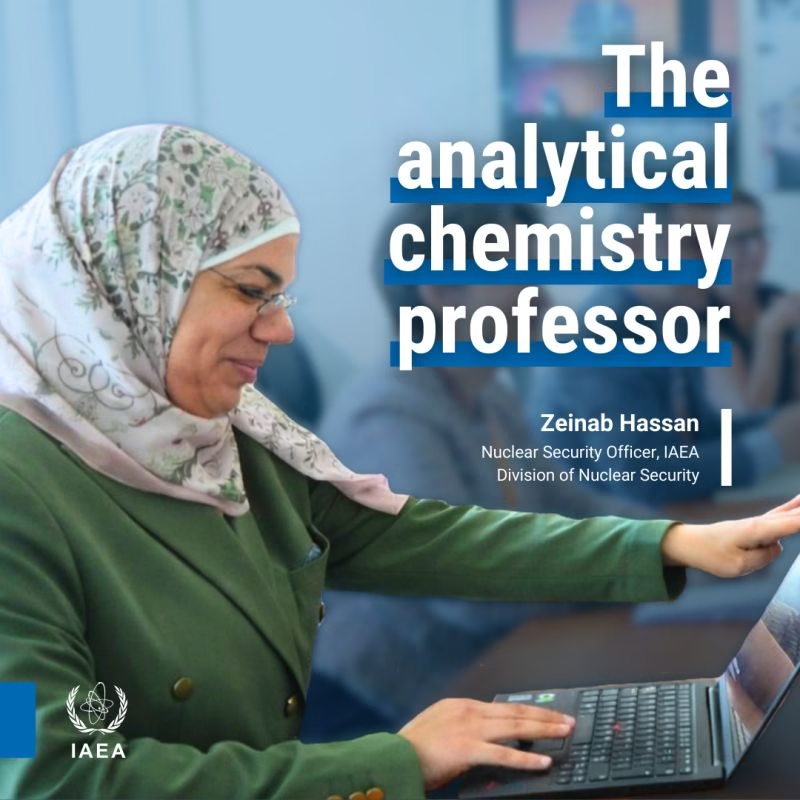
Zeinab Hassan’s journey in the realm of science began in the vibrant city of Cairo, where she was born and raised. From a young age, Zeinab exhibited an insatiable curiosity about the natural world, particularly in the domain of chemistry. This formative interest blossomed into a profound passion as she explored various chemical reactions and their applications, eventually shaping her academic pursuits.
Her academic journey was marked by a series of impressive achievements. Zeinab earned her Bachelor’s degree in Chemistry with outstanding grades from a prestigious Egyptian university, where she quickly distinguished herself among her peers. Recognizing her potential, faculty members encouraged her to further her education, propelling her towards a Master’s degree and subsequently a PhD in Analytical Chemistry. Throughout her studies, she demonstrated a commitment to excellence, engaging in rigorous research that would lay the foundation for her future contributions to the field.
During her Master’s program, Zeinab focused on nuclear chemistry, a field that intertwines her passion for science with practical applications in nuclear security. Her research not only garnered accolades from her academic institution but also sparked her determination to address pressing issues related to nuclear safety and security. Upon completing her PhD, she emerged as a leading voice in analytical chemistry, with her work emphasizing methodologies that enhance the reliability and safety of nuclear materials.
Overall, Zeinab Hassan’s early journey reveals the significance of nurturing a passion for science in youth. Her dedication not only facilitated her academic success but also established her as a fervent advocate for advancements in the field of nuclear and analytical chemistry. Through her efforts, she continues to inspire future generations of scientists and underscore the importance of scientific inquiry in fostering a safer world.
Turning Points: Breaking Barriers in Nuclear Science
Zeinab Hassan’s career in nuclear science is marked by several pivotal moments that exemplify her resilience and determination. Beginning her journey as a teaching assistant, Zeinab faced a challenging landscape characterized by gender biases and a predominance of male colleagues. Nevertheless, she embraced these challenges, viewing them as opportunities for growth and innovation.
One of the most significant turning points in her career occurred when she transitioned to the role of a nuclear safeguards inspector. This position was not only vital for her professional development but also emblematic of her commitment to nuclear security. In this role, Zeinab demonstrated exceptional analytical skills and a profound understanding of the intricate regulations governing nuclear materials. Her contributions in this capacity were instrumental in enhancing the integrity and safety of nuclear operations in Egypt.
In a groundbreaking achievement, Zeinab became the first woman to head the nuclear security administration at the Egyptian Atomic Energy Authority. This historic position not only showcased her expertise but also served as a powerful symbol of progress for women in a traditionally male-dominated field. As the head of this administration, Zeinab was at the forefront of efforts to shape Egypt’s nuclear security framework, implementing robust policies that have since become a model for other nations.
Throughout her journey, Zeinab encountered skepticism regarding her capabilities due to her gender. Yet, her steadfast spirit and unwavering dedication propelled her to overcome these obstacles. By championing equality and demonstrating that expertise transcends gender, she has inspired a new generation of women in nuclear science. Her journey underscores the importance of breaking barriers and the necessity of diverse representation in all areas of scientific inquiry.
Mentorship and Guidance: Shaping Future Scientists
Zeinab Hassan has firmly established herself as an influential mentor and professor, committed to nurturing the next generation of scientists. In today’s rapidly evolving world, young students face numerous challenges, particularly in maintaining focus amidst the distractions posed by social media. This platform, while facilitating communication and information sharing, often detracts from the concentration and motivation needed for academic success. Zeinab addresses these issues head-on, providing valuable insights and strategies to her students.
Understanding the unique struggles of her students, especially young women aspiring to enter the field of science, Zeinab emphasizes the importance of perseverance and self-belief. She recognizes the societal pressures that may deter young girls from pursuing their ambitions in STEM fields. By sharing her own experiences and overcoming challenges, she encourages her students to learn from setbacks rather than be discouraged by them. Her advice focuses on creating a mindset that embraces resilience and determination, urging students to remain committed to their goals despite obstacles.
In her mentorship role, Zeinab fosters an environment of support, where her students feel empowered to seek help and guidance. She stresses the significance of networking and building professional relationships, which can prove invaluable in scientific careers. Furthermore, she advocates for pursuing passions with an unwavering spirit, reiterating that the road to success is often fraught with difficulties that ultimately shape character and drive. Through her dedication and encouragement, Zeinab is not just imparting knowledge but also instilling confidence in her students.
IAEA’s Commitment to Gender Equality in Nuclear Science
The International Atomic Energy Agency (IAEA) has long recognized the importance of gender equality in the scientific fields, especially within nuclear science and technology. This commitment is exemplified through various initiatives aimed at empowering women and fostering diversity in traditionally male-dominated areas of research and development. A driving force behind these efforts is the understanding that inclusivity in the workplace enhances innovation, creativity, and problem-solving capabilities.
Notable among the IAEA’s programs is the Marie Skłodowska-Curie Fellowship Programme, which aims to provide women the opportunity to excel in nuclear science. This fellowship not only supports the educational pursuits of women in the nuclear field but also creates a platform for mentorship and networking among female scientists, enhancing their visibility and fostering collaboration. By engaging talented women through such initiatives, the IAEA underscores its dedication to reducing the gender gap in nuclear sciences.
Similarly, the Lise Meitner Programme reinforces this commitment by offering financial and professional support for women researchers pursuing advanced degrees or positions in nuclear-related industries. This program plays a vital role in helping female scientists gain the recognition and support necessary to thrive in their careers. Such initiatives demonstrate that the IAEA is not merely advocating for gender equality but actively implementing measures to achieve it.
The significance of the IAEA’s efforts extends beyond individual success stories; it reflects a broader understanding of the vital need for gender balance in nuclear science. By promoting opportunities for women, the IAEA is contributing to a more diverse and effective workforce, ultimately impacting global nuclear security and safety positively. Thus, these programs not only benefit the female participants but also strengthen the overall capabilities of the nuclear sector.