Introduction to Yemen’s Current Situation
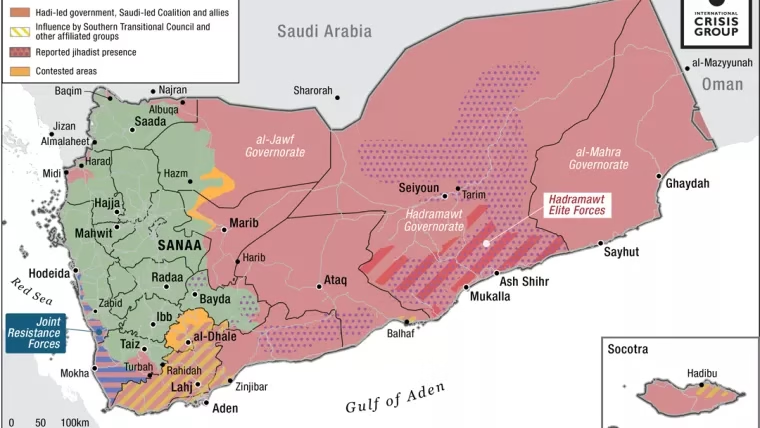
Yemen has been embroiled in a complex and devastating conflict since 2015, which has resulted in a humanitarian crisis of staggering proportions. The situation escalated when the Houthi movement, a group aligned with the Zaidi branch of Shia Islam, took control of the capital, Sana’a, ousting the internationally recognized government of President Abdrabbuh Mansur Hadi. This power shift quickly drew in various stakeholders, including a coalition led by Saudi Arabia and supported by several Western nations, further complicating the conflict.
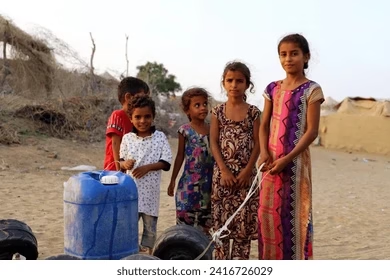
The conflict has turned Yemen into one of the world’s worst humanitarian disasters. Approximately 24 million people, over 80% of the population, require humanitarian assistance, according to reports from various international organizations. This encompasses food aid, medical supplies, and other essential services. The ongoing war has severely affected infrastructure, leading to widespread famine and disease outbreaks, such as cholera, which has afflicted millions. Access to basic healthcare, clean water, and sanitation remains critically low, exacerbating the suffering of Yemeni civilians.
The crisis is further complicated by the presence of various factions and external influences, including regional rivalries and the ambitions of local warlords. Consequently, efforts to establish peace have been met with significant challenges, as each faction pursues its agenda, often at the expense of the civilian population. The dire circumstances underscore an urgent need for international intervention and a comprehensive resolution to restore peace and stability in Yemen.
The Role of the United Nations Special Envoy
The United Nations Special Envoy for Yemen plays a critical role in addressing the ongoing humanitarian and political crisis in the country. Appointed to facilitate dialogue among conflicting parties, the envoy serves as a neutral mediator in efforts to reach a political settlement. Through consistent engagement with various stakeholders, the envoy aims to foster an inclusive political process that accommodates the interests of all Yemeni factions.
Recent initiatives led by the Special Envoy have focused on reviving stalled peace talks, striving to establish a ceasefire and create conditions conducive to negotiations. These efforts have included shuttle diplomacy, where the envoy moves between different parties to encourage discussions and compromise. Furthermore, the envoy organizes conferences and working groups to discuss key issues such as governance, security arrangements, and humanitarian access. In a context marked by deep mistrust and widespread violence, the envoy’s role is instrumental in laying the groundwork for a lasting resolution.
However, the challenges confronting the United Nations Special Envoy are significant. The multifaceted nature of the Yemeni conflict, characterized by involvement from regional powers and non-state actors, complicates the landscape of negotiations. Ongoing hostilities, frequent violations of ceasefires, and the lack of a unified Yemeni political front further hinder the peace process. Additionally, there are concerns regarding the humanitarian situation, which continues to deteriorate, placing immense pressure on the Special Envoy to deliver results swiftly. Despite these obstacles, the envoy remains committed to the pursuit of peace, recognizing that dialogue is essential for achieving a stable and prosperous Yemen.
Security Council’s Position and Recommendations
The United Nations Security Council has recently issued a press statement reflecting its unified stance on the ongoing crisis in Yemen. This statement underscores the council members’ collective dedication to supporting peace initiatives aimed at resolving the protracted conflict that has led to significant humanitarian suffering across the region. The Security Council explicitly reiterated its support for diplomatic efforts that encourage dialogue between the conflicting parties, emphasizing the need for a comprehensive solution that addresses the root causes of the conflict.
Furthermore, the council condemned the ongoing detentions carried out by the Houthi forces, which have raised significant concerns regarding human rights violations in Yemen. The Security Council stressed that such actions not only hinder the peace process but also exacerbate the humanitarian crisis affecting millions of Yemenis. The members highlighted the necessity of an immediate end to arbitrary detentions and called for the release of all individuals unjustly held by the Houthis.
The emphasis on de-escalation was a critical theme in the Security Council’s statement. The members urged all parties involved in the conflict to exercise restraint and to prioritize the safety and well-being of civilians, who are disproportionately affected by the ongoing violence. The council acknowledged the role of regional and international stakeholders in promoting peace and stability in Yemen and encouraged collaborative efforts to facilitate humanitarian assistance and support for the Yemeni people.
In conclusion, the Security Council remains committed to supporting a peaceful resolution to the Yemen crisis, calling for sustained diplomatic engagement, a halt to hostilities, and respect for human rights, thereby reinforcing the global community’s responsibility to alleviate the suffering of the Yemeni population.
Humanitarian Concerns and Call to Action
The ongoing conflict in Yemen has precipitated one of the most severe humanitarian crises in modern history, where millions are affected by violence, starvation, and disease. The situation for those detained amid this turmoil is particularly dire. Reports indicate that numerous individuals are held in inhumane conditions, with limited access to basic necessities such as food, water, and medical care. This treatment not only violates fundamental human rights but also exacerbates the broader humanitarian implications of the war. Many families have been torn apart, with loved ones disappearing without trace, leaving children orphaned and communities fractured.
The severity of the humanitarian crisis cannot be overstated. According to the United Nations, Yemen is on the brink of famine, with about 20 million people requiring urgent assistance. The health infrastructure is overwhelmed, leading to rampant outbreaks of preventable diseases such as cholera. Moreover, the conflict has disrupted humanitarian operations, making it increasingly perilous for aid workers trying to provide essential services to those in need. Attacks on humanitarian organizations and their personnel are a frequent occurrence, sparking widespread calls for increased protection and support for these crucial efforts.
International response is imperative. The global community must take decisive action to address this escalating catastrophe and alleviate the suffering of the Yemeni people. This includes advocating for a ceasefire, facilitating immediate humanitarian access, and ensuring the safety of humanitarian workers on the ground. The urgency for action has never been greater as millions face the grim reality of daily survival. By rallying support and resources from around the world, we can help restore hope and healing to a nation in desperate need. A collective effort is essential to ensure that Yemen does not slip further into despair.