
Understanding Iran’s Multiethnic Demographics
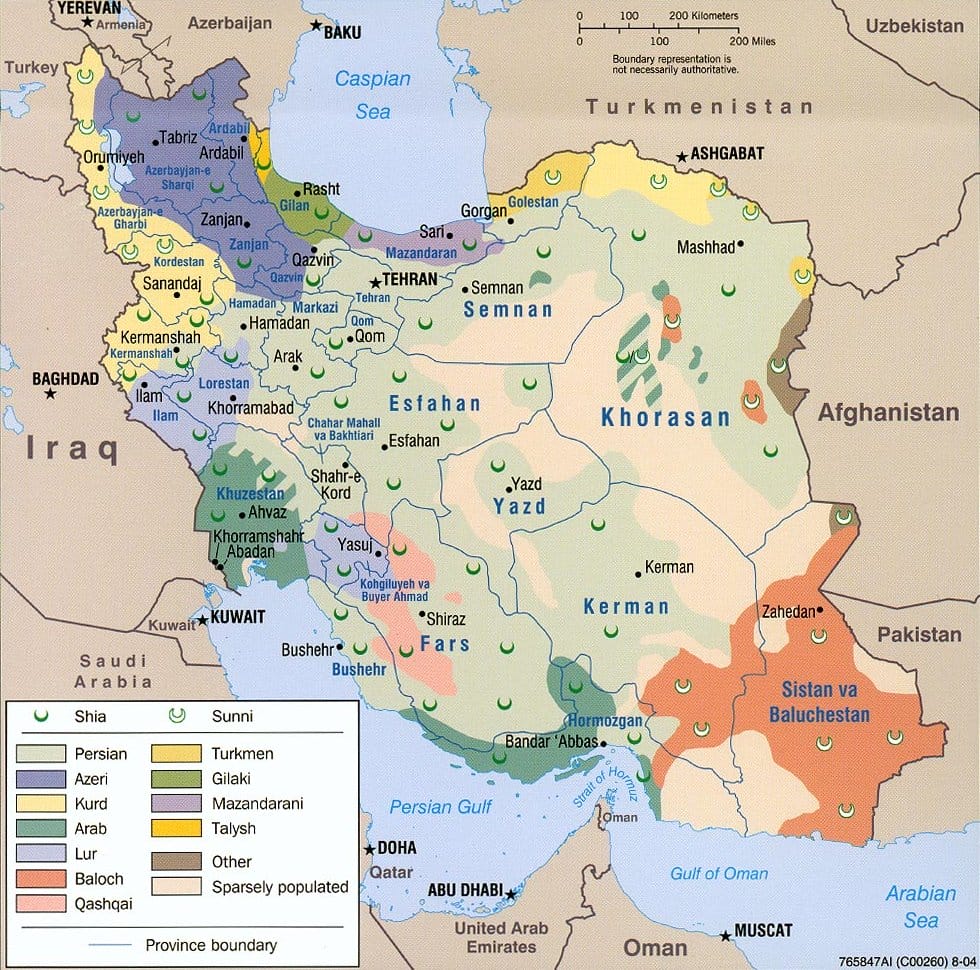
Iran is characterized by its rich tapestry of ethnic diversity, a factor that significantly influences its social, political, and economic landscape. The demographic composition reveals that while Persians constitute the majority, making up approximately 61% of the population, several substantial ethnic minorities contribute to the country’s multifaceted identity. Among these groups, Azerbaijanis represent around 16%, followed by Kurds at 10%, Lurs at about 6%, Arabs at approximately 3%, and Turkmen and Baluchis making up smaller, yet notable proportions.
The geographical distribution of these ethnic groups further enhances the complexity of Iran’s demographics. For instance, Azerbaijanis predominantly inhabit the northwest regions, particularly in East and West Azerbaijan provinces. Kurds mainly reside in the western areas, while Lurs are primarily found in the Zagros mountain range. Arabs are concentrated along the southwestern borders with Iraq, especially in Khuzestan province. Baluchis can be found in the southeastern part of Iran, within the Sistan and Baluchestan province, whereas Turkmen occupy the northeastern regions, close to the borders with Turkmenistan.
This distribution not only highlights the dense concentrations of various ethnicities in border regions but also introduces a dynamic of internal cohesion and potential discord. The ethnic composition plays a critical role in shaping Iran’s external relations, as areas with significant minority populations often have historical ties and affiliations with neighboring countries. Furthermore, these demographic realities can impact national policies and governance, especially when minority rights and representation are considered. With this intricate multiethnic structure, understanding the social fabric of Iran is essential for comprehending the broader geopolitical implications that emerge from its internal dynamics.
The Geopolitical Significance of Ethnic Minorities
In Iran, ethnic minorities play a crucial role in shaping the geopolitical landscape of the country. The diverse ethnic fabric, comprising groups such as Kurds, Baluchis, and Arabs, is integrated into regions that have strategic significance for both regional stability and the Iranian state’s sovereignty. The sharing of ethnic ties with neighboring nations can create a complex web of loyalty and discontent, potentially destabilizing Iran, especially during periods of political or economic crisis.
One prominent region of concern is Iranian Kurdistan, where ethnic Kurds express aspirations for greater autonomy, often inspired by movements in neighboring Iraq and Turkey. This has led the Iranian government to adopt a heightened security approach to prevent secessionist sentiments from gaining traction. The presence of Kurdish armed groups along Iran’s borders prompts the state to prioritize military presence and surveillance in this region to mitigate perceived threats.
Similarly, in the southeastern province of Baluchistan, the predominantly Baluchi population has voiced grievances regarding socioeconomic disparities and political exclusion. These tensions can escalate into violence or insurgency, prompting the Iranian government to bolster its security operations in this area. The government’s focus on maintaining control in Baluchistan reflects a broader strategy to secure its borders against infiltration and unrest correlated with Baluchi identities in Pakistan and Afghanistan.
Finally, the Arab-majority region of Khuzestan is critical for its vast oil reserves. Here, ethnic Arabs have historically felt marginalized, leading to protests and demands for recognition and rights. The Iranian regime’s response often intertwines ethnic identity with national security considerations, emphasizing the need for stability in areas with distinct ethnic identities. Collectively, these dynamics underscore how ethnic minorities are not only integral to Iran’s internal politics but also influential in its overarching geopolitical strategies.
The Role of Key Minority Groups in Iran’s Political Landscape
Iran is a nation marked by profound ethnic diversity, where several minority groups contribute significantly to the socio-political fabric of the country. Among these, the Azerbaijanis, Arabs of Khuzestan, Baluchis, and Kurds stand out due to their demographic characteristics and historical contexts, which have shaped their political identity and potential for mobilization. The Azerbaijani community, primarily residing in the northwest, constitutes one of the largest ethnic minorities in Iran, with a rich cultural heritage and a strong sense of regional identity. Historically, they have advocated for greater autonomy and cultural rights, which have occasionally placed them at odds with the central government.
The Arabs of Khuzestan, predominantly situated in the southwestern region, also share similar aspirations. They have faced challenges such as socio-economic marginalization and cultural assimilation policies, which have prompted protests and calls for recognition. The political activism of this group, particularly during periods of unrest, highlights the role of ethnic grievances in shaping the political landscape in Iran.
Further to the southeast, the Baluchis, primarily living in Sistan and Baluchestan province, encounter distinct challenges related to their socio-economic development and security issues. This region has witnessed sporadic violence linked to law enforcement actions against separatist groups. While the Baluchis are relatively less politically organized than other minorities, their demands for equity and representation can potentially ignite larger movements within the framework of Iranian politics.
Among these minority groups, the Kurds have emerged as a particularly significant force. Their political organization, along with strong transnational ties to Kurdish populations in neighboring countries, such as Iraq and Turkey, enhances their capacity for mobilization. This dynamic not only poses challenges to the Iranian state but also influences regional stability, as Kurdish aspirations for autonomy have far-reaching implications beyond Iran’s borders. Understanding the complexities and aspirations of these minority groups is essential for grasping the broader contours of Iran’s political landscape and its implications for stability and change.
Navigating the Challenges of Ethnic Identity and State Cohesion
Iran’s intricate tapestry of ethnic identities presents both challenges and opportunities regarding national unity and stability. The country is home to a diverse array of ethnic groups, including Persians, Azerbaijanis, Kurds, Lurs, Baloch, and Arabs, each with its own distinct cultural heritage and aspirations. This diversity, while enriching, can also lead to tensions, particularly within the political sphere, as minority groups often seek greater recognition and autonomy. The Iranian state has traditionally emphasized a strong national identity centered around the Persian culture; however, this approach risks marginalizing minority groups, potentially fueling ethnic rivalry and discontent.
The Iranian government’s ability to maintain social cohesion while accommodating various ethnic identities is closely linked to its security apparatus. Authorities have developed mechanisms to manage dissent and protests that arise due to ethnic grievances. Security forces are frequently deployed during unrest to quell demonstrations, reflecting the state’s concern that ethnic fragmentation could threaten the broader stability of the nation. Nonetheless, heavy-handed responses can exacerbate grievances, leading to a cycle of repression and increased demands for autonomy from minority groups.
Public attitudes towards ethnic fragmentation are complex. While many Iranians express solidarity with a shared national identity, the persistence of ethnic grievances underscores a need for a more inclusive political framework. An acknowledgment of ethnic diversity within national policies may mitigate feelings of exclusion and enhance state legitimacy. Building a dialogue that recognizes the rights and identities of all groups can potentially foster a more cohesive society. As Iran navigates these challenges of ethnic identity and national unity, the interplay between state control and societal attitudes will be crucial in determining the long-term stability of the country.