
Introduction to Monica Juma’s Appointment
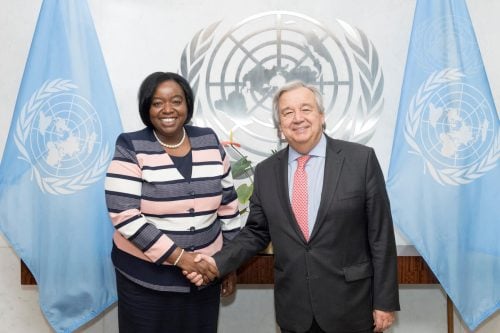
Monica Juma has recently been appointed as the director-general of the United Nations Office at Vienna and as the executive director of the United Nations Office on Drugs and Crime (UNODC). This significant appointment marks a pivotal moment not only for Juma herself but also for the United Nations and its mission in addressing drug-related challenges globally. Juma’s leadership is expected to bring a fresh perspective to the pressing concerns surrounding drug trafficking, organized crime, and their impact on international peace and security.
As the UNODC executive director, Juma is taking the helm during a critical time when issues surrounding drug abuse and trafficking are increasingly intertwined with broader global crises, including health emergencies and transnational crime. Her wealth of experience in diplomacy and policy-making positions her well to navigate the multifaceted challenges that the UNODC faces today. It is crucial to recognize that her leadership will not only influence the direction of drug control strategies but also contribute to the formulation of collaborative efforts among nations to combat these pervasive issues.
In the context of her new role, Juma inherits an organization that is increasingly focused on integrating sustainable development goals with drug policy. Her appointment aligns with a broader commitment by the United Nations to tackle the root causes of drug-related issues while promoting public health and safety. This approach underscores the UN’s endeavor to foster a cohesive response that encompasses prevention, treatment, and law enforcement.
Moreover, Juma’s appointment symbolizes a significant step towards enhancing the representation of diverse leadership within the United Nations, which is essential for fostering inclusivity in global governance. As she embarks on this new journey, the international community looks forward to her leadership in redefining strategies for a safer and more equitable world.
Professional Background and Experience
Monica Juma possesses a remarkably extensive professional background that spans over two decades, during which she has taken on various strategic leadership roles. Her experience notably includes serving as the national security adviser to the President of Kenya, a position that places her at the nexus of national and international security issues. In this capacity, she was responsible for advising on critical security policies and strategies, thereby enhancing Kenya’s response to both domestic and international challenges.
Juma’s tenure in cabinet positions has further shaped her understanding of governance and public policy. As the cabinet secretary for foreign affairs in Kenya, she played a pivotal role in international diplomacy and negotiations. Her qualifications are not limited to her governmental roles; she has also participated in global discussions concerning security, migration, and environmental sustainability. This breadth of experience equips her with a well-rounded perspective necessary for leading within the United Nations framework.
In addition to her administrative roles, Juma’s academic credentials underpin her expertise. She has engaged in extensive research related to security and governance and has contributed to policy frameworks that address complex international issues. Her multifaceted approach combines strategic planning with practical implementation, demonstrating her ability to navigate the intricacies of UN operations.
As Juma assumes leadership roles within the UN Vienna Office and the UNODC, her previous experiences are expected to inform her decision-making and strategic focus. Her understanding of global security dynamics and capacity to foster international collaboration will be instrumental in addressing pressing issues currently facing the UN. Her commitment to enhancing international cooperation positions her as a catalyst for positive change within the organization.
Goals and Vision for UNODC and the UN Office in Vienna
Monica Juma has articulated a clear and ambitious vision for her tenure as the director of the United Nations Office on Drugs and Crime (UNODC) and the UN Office in Vienna. In her leadership role, she has identified addressing critical challenges such as drug trafficking, organized crime, and terrorism as priorities that require immediate attention. Recognizing the interconnectedness of these issues, she emphasizes a comprehensive approach that bridges policy, enforcement, and international cooperation.
One of her primary goals is to enhance the effectiveness of UNODC in combating illicit drug trafficking, which not only poses a threat to public health but also fuels violence and instability worldwide. By strengthening collaboration with member states, Juma aims to promote evidence-based practices that can significantly reduce drug-related harms and enhance the resilience of communities.
In addition to addressing the illegal drug trade, Juma is committed to tackling organized crime, which undermines governance and economic development. She envisions the UNODC playing a pivotal role in formulating strategies that not only disrupt criminal networks but also support marginalized communities vulnerable to exploitation. This holistic approach aligns with her aspiration for a safer world where justice and security are accessible to all.
Furthermore, the director’s vision encompasses a proactive stance against terrorism. By integrating counter-terrorism strategies with development initiatives, she aims to foster environments that diminish the appeal of extremist ideologies. Juma’s leadership in the UN Office in Vienna seeks to forge partnerships that bring together diverse stakeholders to create robust responses to these complex threats. Under her guidance, the UNODC is expected to emerge as a pivotal agent in crafting a more equitable and just global society.
The Importance of Multilateralism in Today’s World
Multilateralism has become increasingly vital in the contemporary global environment, particularly given the complex challenges that nations now face. Issues such as climate change, pandemics, and international security surpass national boundaries, emphasizing the need for collective action. The appointment of Monica Juma to the leadership positions in the UN Vienna Office and UNODC signals a potential commitment to revitalizing multilateral cooperation. Strong leadership can foster an atmosphere where dialogue and collaboration are prioritized, essential for navigating today’s multifaceted crises.
Despite the significance of multilateral organizations, they are encountering various challenges that threaten their effectiveness. Political divisions between member states, the rise of unilateralism, and competition among global powers can undermine international cooperation. In this context, effective leadership, such as that offered by Ms. Juma, is crucial. Her experience can contribute to bridging divides and reinforcing a commitment to collective problem-solving approaches in the UN framework.
International cooperation is not merely beneficial but necessary to tackle pressing global issues. The complexities of modern conflicts, the increasing frequency of natural disasters, and the urgent need for global health responses illustrate the limitations of unilateral approaches. Only through multilateral engagement can states pool resources, share knowledge, and coordinate their responses effectively.
The importance of leadership in these multilateral efforts cannot be understated. A capable leader can articulate a shared vision, motivate diverse stakeholders, and navigate the intricacies of diplomacy. With Juma at the helm, there exists an opportunity to enhance the UN’s relevance and efficacy in addressing contemporary challenges, moving toward a more unified global response.