Romania’s recent story is marked by a striking contrast: living standards have risen, yet hardship remains widespread. Inflation was reported at 8.2% in July 2026, while the 2025 budget deficit reached 7.9% of gross domestic product. Significant gaps in value-added tax and corporate-tax compliance further constrain public finances. Closing those gaps and tightening spending may be necessary, but the burden can feel unjust when reductions or higher costs fall most heavily on people who already meet their tax obligations. For households with little room in their budgets, fiscal adjustment is not an abstract accounting exercise; it shapes the ability to afford food, housing, and essential services.
That pressure sits alongside poverty risks affecting roughly 28% of Romania’s population and more than 32% of its children. Confidence in government, parliament, and political parties is also low, reflecting a wider concern that public institutions do not consistently deliver what citizens need. Meanwhile, people have adapted to change in ways institutions have struggled to match: many emigrated, some returned, and others built businesses, supported families across borders, or strengthened local organizations. Their choices reveal initiative and resilience, but also the limits of opportunity at home. The Romanian Constitution states that sovereignty belongs to the people, while the national anthem calls on them to awaken. Together, these ideas raise a practical question: who is being governed, and for whose benefit?
Moldova faces related pressures, including poverty, population decline, emigration, and vulnerability to energy shocks. Remittances, close to 10% of gross domestic product, support households and the wider economy, while also underscoring the importance of income earned abroad. Geopolitical uncertainty adds to the challenge of building secure, capable institutions. In both countries, European Union accession can offer a framework for reform and closer cooperation, but its credibility depends on more than formal milestones. People need to see improvements in income, public services, institutions, and opportunities where they live. When the state keeps pace with citizens’ needs, integration becomes tangible; when it does not, promises of convergence risk feeling distant from everyday life.
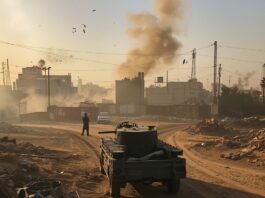
War’s human costs are measured not only in territory gained or lost but in homes emptied, families separated, and ordinary routines made impossible. In Ukraine, July 2026 figures recorded 437 civilians killed and 2,610 injured, the highest monthly toll since 2022. Strikes on cities far from the front bring sovereignty into daily life: occupation can mean repression, deportation, and the loss of identity. What are people meant to preserve through such sacrifice? In Russia, public unease coexists with continued support for the armed forces. Levada Center figures say 57% view conditions as tense, 13% as critical, and 62% favour peace talks. Projected 2026 military spending of about 14.9 trillion roubles, or 6.3% of GDP, signals the scale of state commitment. Support for a country or its military can therefore persist alongside fatigue with war’s costs.
In Gaza, mass displacement and severe water insecurity have made survival a daily struggle for civilians. The 2023 Hamas attack and Israel’s right to defend its citizens are essential context; neither, however, can erase human limits on the use of force. Israelis also live with attacks, hostages, mobilisation, and deepening polarisation. In July 2026, only 38% said security had improved since the war with Iran. Greater trust in the military than in government points to a distinction between confidence in an institution and confidence in political leadership. Even a battlefield outcome cannot automatically restore public trust, especially when danger and uncertainty continue.
In Iran, July 2026 inflation of 66% and food-price inflation of 128% make the effects of authoritarian rule, sanctions, and war tangible. Economic pressure is translated into choices about what families can afford, including cutting meat from meals. These figures describe prices: they show how political decisions and conflict enter kitchens, reshape nutrition, and narrow the room people have to plan for the future.
Geopolitical decisions are often presented as contests of strategy, but their consequences arrive in household budgets, employment prospects, and confidence in public institutions. In the United States, the Trump presidency’s promises of peace and lower costs sit uneasily beside an August 2026 approval rating of 33% and support of 31% for military action against Iran. Inflation stands at 3.4%, energy prices have risen 14.7% year on year, and real hourly earnings have fallen. These pressures help explain why only 34% of Americans believe the American dream still works, while 51% say it once worked but no longer does. When foreign policy claims fail to align with people’s lived economic experience, trust in leaders and their promises can weaken.
China’s growing influence is visible in technological advances, infrastructure, and an expanding global role. Yet national ascent does not guarantee security for every citizen. Unfinished apartments and a prolonged property crisis have unsettled households, while youth unemployment reached 17.9% in July 2026. For younger people, the gap between the country’s achievements and uncertain prospects can be especially stark: growth in national power may coexist with difficulty finding stable work or planning a future. The measure of policy is therefore not only what a state can build or command, but whether people can rely on institutions and imagine a viable life.
In Venezuela, the United States’ capture of Nicolás Maduro in January 2026 prompted sharply mixed reactions. Those who opposed his rule may welcome his removal, but the essential questions for ordinary people remain practical: have institutions changed, are incomes improving, is justice more accessible, and can emigrants realistically return? Greenland faces a different form of pressure. U.S. discussion of acquiring the territory, coupled with linking tariffs on Europe to that ambition, risks treating residents’ land and political agency as bargaining instruments. Canada’s response to U.S. tariffs of 50% likewise illustrates how economic asymmetry can strain alliances when used as leverage. In Sudan, roughly 9.1 million people were internally displaced by the end of 2025. The collapse of security destroys homes, communities, and children’s futures, whatever strategic advantage competing parties claim.
Bringing these cases together does not make their governments, responsibilities, or degrees of suffering equivalent. The circumstances of a citizen facing economic reform differ from those of a refugee fleeing war, a stateless person denied legal recognition, or a minority living under threat. Comparison is not a claim that every experience is the same. It is a way to resist the language of strategy when that language makes the people affected disappear. Across different systems and crises, decisions reach citizens, refugees, displaced and stateless people, minorities, soldiers, taxpayers, parents, and children—often with little control over the choices that shape their lives.
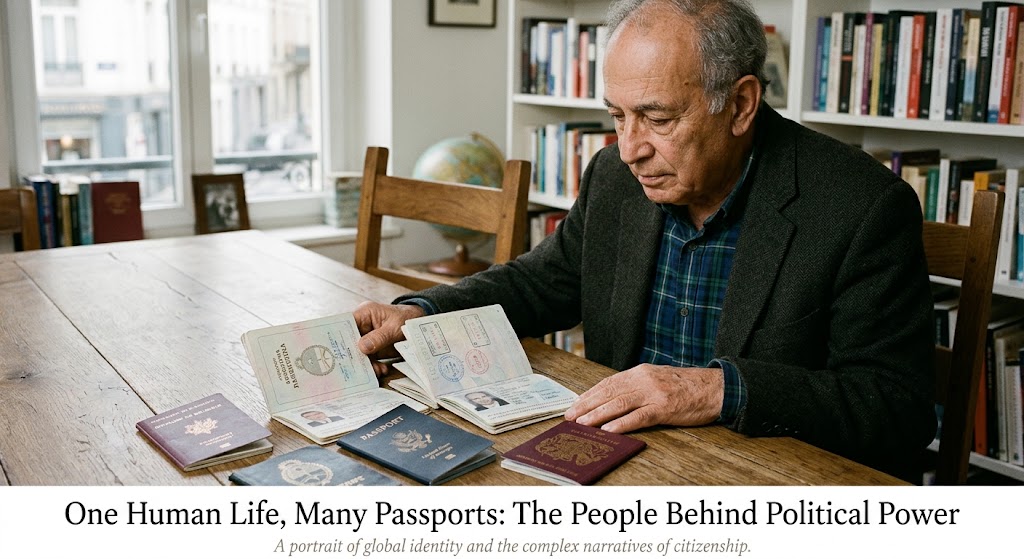
The costs are concrete: money lost to inflation or taxation, hours spent navigating borders and institutions, freedoms curtailed, homes abandoned, safety put at risk, and lives ended. Some costs accumulate gradually; others arrive in a moment. A passport can determine whether someone may cross a border, seek protection, work, study, or reunite with family. It can open doors or close them, and it can influence how much security a person receives. Yet a passport changes a person’s access to opportunity and protection, not their humanity. Those with fewer documents or less powerful states behind them should not become less visible in accounts of international affairs.
Romania’s constitutional promise raises a question that matters far beyond Romania: who do leaders govern for, and what must citizens be able to expect in return for being governed? The answer cannot rest solely on declared intentions or national symbols. It must include whether people can live with dignity, exercise their rights, and find protection when they are vulnerable. This standard applies whether the subject is reform, security, economic power, territory, or war. Strategic choices may require difficult trade-offs, but their assessment should account for who bears the costs and whether those costs are justified, shared, and answerable to the public. Victories, budgets, and claims of national prestige may describe a state’s aims; they cannot, by themselves, show what those aims have meant in human lives.