
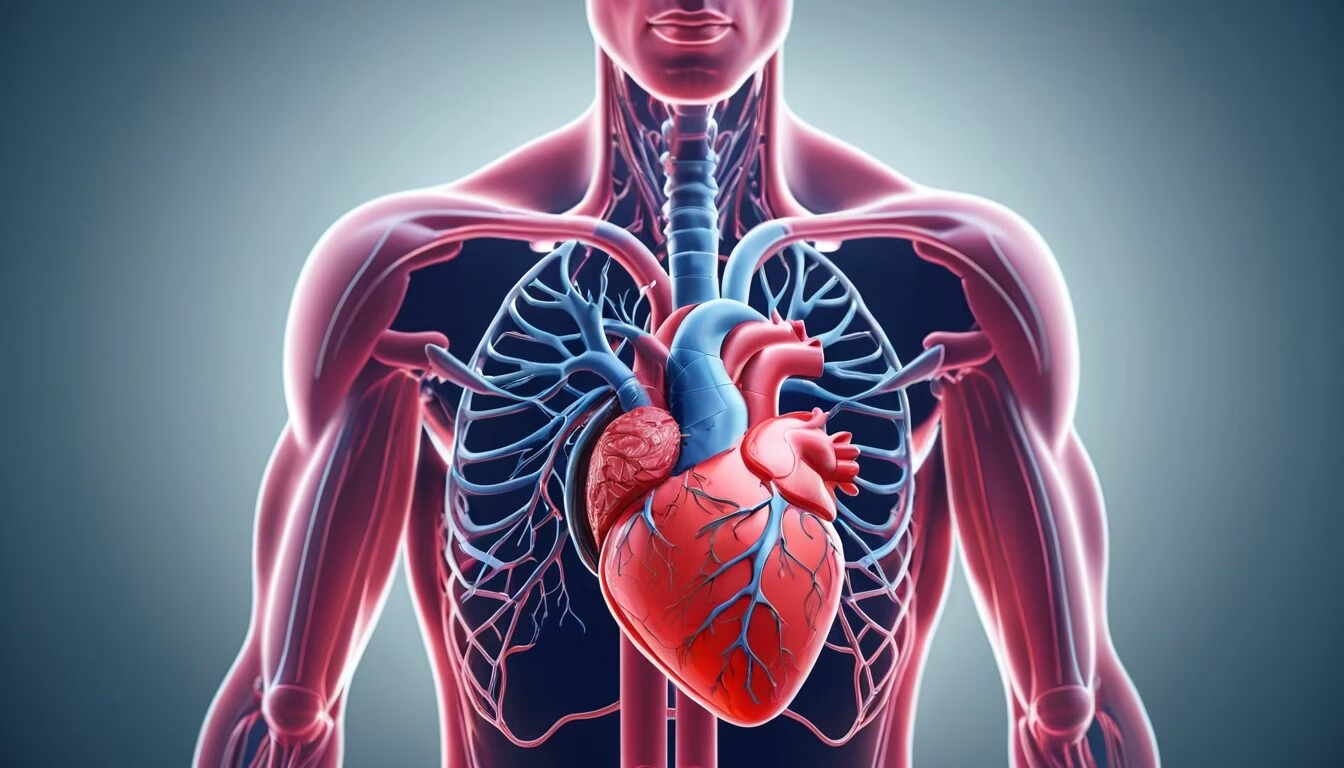

Introduction to Heart Disease and the Role of Technology
Heart disease remains one of the leading causes of mortality worldwide, with its prevalence notably significant in Germany. It is estimated that over 350,000 people die from cardiovascular diseases each year in the country, underscoring the urgent need for effective prevention and management strategies. Traditional approaches to understanding and treating heart disease have primarily focused on lifestyle modifications, pharmaceutical interventions, and surgical procedures. While these methods have shown some efficacy, they often fall short in addressing the multifactorial origins of heart disease, which include genetics, diet, exercise habits, and environmental influences.
As the incidence of cardiovascular diseases continues to rise, there is a growing consensus among healthcare professionals that advancing technology is essential for improving patient outcomes. Digital health innovations are revolutionizing the landscape of heart disease prevention and management. Telemedicine, wearable health devices, and mobile health applications have begun to play a transformative role in patient care, allowing for more personalized and immediate monitoring of cardiovascular health. However, the integration of artificial intelligence (AI) into this domain represents a significant leap forward.
AI technology has the potential to analyze vast amounts of data swiftly and accurately, providing insights that were previously unattainable. By leveraging machine learning algorithms, healthcare providers can identify risk factors, predict the likelihood of heart disease, and recommend tailored interventions. This proactive approach not only enhances early detection but also aids in timely and effective treatment plans, ultimately reducing mortality rates associated with heart disease.
In light of these advances, it is crucial to continue exploring the intersection of technology and cardiovascular health. By doing so, the medical community can foster a more comprehensive understanding of heart disease, paving the way for innovative solutions that may revolutionize the current standards of prevention and care.
The SmartHeart Project: Innovation in Cardiovascular Modeling
The SmartHeart project, spearheaded by the research team at the Munich University of Applied Sciences, represents a significant advancement in the field of cardiovascular modeling. This initiative aims to create a personalized computer model that accurately replicates the complex dynamics of the cardiovascular system. By harnessing the power of artificial intelligence (AI), the project seeks to address some of the longstanding challenges faced in traditional diagnostic procedures, particularly concerning the adaptability of simulations to individual patient profiles.
Historically, traditional simulations required extensive computational time, which often rendered them impractical for routine clinical application. Furthermore, the lack of patient-specific data in these models led to generalized results that might not fully capture the unique physiological characteristics of each individual. The SmartHeart project tackles these issues head-on through the development of sophisticated AI algorithms capable of processing large datasets quickly and efficiently. The result is a model that can adapt in real-time to a patient’s specific cardiovascular metrics, thus improving diagnostic accuracy.
This innovative approach not only streamlines the computational process but also enhances the reliability of cardiovascular assessments. The ability to create a dynamic model that evolves based on a patient’s data could revolutionize existing treatment paradigms. Patients will benefit from a more tailored approach to their cardiovascular health, paving the way for personalized prevention strategies aimed at reducing heart disease risks. The SmartHeart project exemplifies how integrating AI technology into medical research can lead to transformative improvements in patient care, marking a pivotal shift in cardiovascular diagnostics towards a more individualized framework.
Transformative AI Methodologies: Reduced Order Models
In recent years, the integration of artificial intelligence (AI) in medical research has led to significant breakthroughs, particularly in the field of cardiology. Among various innovative methodologies, the reduced order model (ROM) stands out as a transformative tool that enhances efficiency and accuracy in heart simulations. This approach allows researchers to create simplified yet highly informative representations of complex cardiac systems, leading to improved outcomes in heart disease prevention.
The implementation of reduced order modeling involves a combination of advanced statistical methods and AI techniques. By leveraging these methodologies, researchers can streamline computational processes, significantly decreasing the time and resources required for simulations while ensuring that the overall authenticity of the data is preserved. This efficiency is crucial when analyzing intricate heart functionalities, as it enables the examination of a broader range of scenarios and patient anatomies.
Through these AI-powered simulations, researchers are able to identify particular movement patterns within the heart that may indicate underlying issues. As the methods employed continue to evolve, the precision of detecting abnormalities such as arrhythmias or valve dysfunctions is enhanced. This capability is vital for personalized medicine approaches, as it can lead to tailored treatment plans that align with the specific anatomical and physiological characteristics of individual patients.
Moreover, the significance of reduced order models extends beyond just enhancing simulation accuracy; they represent a paradigm shift in how heart disease research is conducted. By enabling faster simulations and data analysis, these methodologies facilitate more robust testing and validation of new treatments. Consequently, the ongoing advancements in AI and reduced order models hold great promise for the future of heart disease prevention, paving the way for innovative diagnostic and treatment solutions that improve patient outcomes across the board.
Future Implications: The Digital Twin of the Heart
The advent of artificial intelligence (AI) is paving the way for revolutionary developments in heart disease prevention, particularly through the implementational concept of a digital twin of the heart. This innovative technology is fundamentally grounded in real patient data, allowing for an unprecedented understanding of individual cardiovascular systems. A digital twin models a patient’s heart with precision, enabling healthcare professionals to simulate various clinical scenarios without putting the patient at risk. Such simulations can yield invaluable insights into potential surgical outcomes and the effectiveness of various treatment strategies.
The potential applications of a digital twin in personalized medicine are vast. It facilitates the customization of treatment plans based on the unique anatomical and physiological characteristics of each patient. By utilizing data derived from an individual’s health history, lifestyle, and genetic predispositions, clinicians can predict how a patient’s heart would respond to particular interventions. This shift towards tailored healthcare approaches not only enhances the accuracy of diagnosis but significantly improves the quality of care offered to heart disease patients.
Moreover, the continuous evolution of this technology holds remarkable implications for future healthcare practices. Advancements in AI algorithms and data analytics promise to refine the digital twin concept, leading to improved diagnostic capabilities. Early detection and risk assessment become more attainable, allowing for proactive measures that could potentially avert severe cardiac events. As data collection tools and analytical methods grow increasingly sophisticated, the digital twin is set to revolutionize how heart disease is understood and managed worldwide, ultimately transforming patient outcomes and fostering long-term health sustainability.