Overview of Security Council Actions on South Sudan
The United Nations Security Council has been actively engaged in addressing the complex situation in South Sudan since the onset of its independence in 2011. The involvement of the Security Council is primarily aimed at promoting peace and stability in a region that has been marred by conflict and political unrest. One of the significant actions taken by the Council is the establishment of a sanctions committee tasked with monitoring violations of imposed sanctions, particularly against individuals and entities deemed to be undermining peace efforts.
In recent developments, the Security Council has implemented a series of targeted sanctions that include asset freezes, travel bans, and arms embargoes. These measures were designed not only to penalize those responsible for escalating violence but also to incentivize compliance with international norms and peace agreements. The interim report transmitted to the Council’s president on November 25, 2025, serves as a critical document, summarizing the committee’s findings on the effectiveness of these sanctions and their impact on the ground in South Sudan.
The significance of the interim report extends beyond mere documentation; it highlights the ongoing need for a coordinated international response to the protracted conflict in South Sudan. The report analyzes how the sanctions relate to the broader goals of promoting reconciliation and supporting the implementation of peace agreements that are vital to the country’s recovery and stability. The Security Council’s actions underscore the global commitment to facilitating a peaceful resolution to the turmoil in South Sudan, emphasizing the need for all parties to engage in negotiations and uphold their obligations under the peace agreements. This ongoing dialogue is essential for restoring peace and rebuilding trust within the nation.
Key Recommendations from the Panel of Experts
The implementation of the peace agreement in South Sudan has faced significant challenges that necessitate urgent action from all parties involved. The Panel of Experts has outlined several critical recommendations aimed at fostering a stable environment conducive to lasting peace. Firstly, there is a profound emphasis on the immediate cessation of hostilities. The recommendation calls for all conflicting parties to abandon violence and adhere to a permanent ceasefire. Such a commitment is essential not only to halt the ongoing conflict but also to create a foundation for rebuilding trust among the affected communities.
Moreover, the establishment of a permanent ceasefire is deemed vital. This will not only help in minimizing civilian casualties but also ensure the safety of humanitarian workers who are crucial in delivering aid to crisis-affected areas. The Panel of Experts stresses that a continuous state of warfare hampers humanitarian access and exacerbates the already dire situation in regions impacted by conflict. Therefore, a dedicated effort to maintain a ceasefire is paramount.
In addition, the Panel of Experts advocates for an inclusive dialogue among the conflicting parties. This dialogue should encompass all sectors of society, including marginalized groups and women, to ensure that a diverse range of perspectives is considered in shaping the future of South Sudan. Engaging diverse voices is crucial for building a reconciliatory atmosphere that recognizes the grievances of all stakeholders. As such, fostering this inclusive dialogue will promote a shared vision for peace and reconciliation.
In summary, the recommendations from the Panel of Experts highlight the urgent need for concerted efforts in ceasing hostilities, maintaining a permanent ceasefire, and facilitating an inclusive dialogue. These measures are indispensable for creating a sustainable peace framework that allows for effective humanitarian access and the restoration of normalcy in South Sudan.
Mandatory Compliance for Neighboring Member States
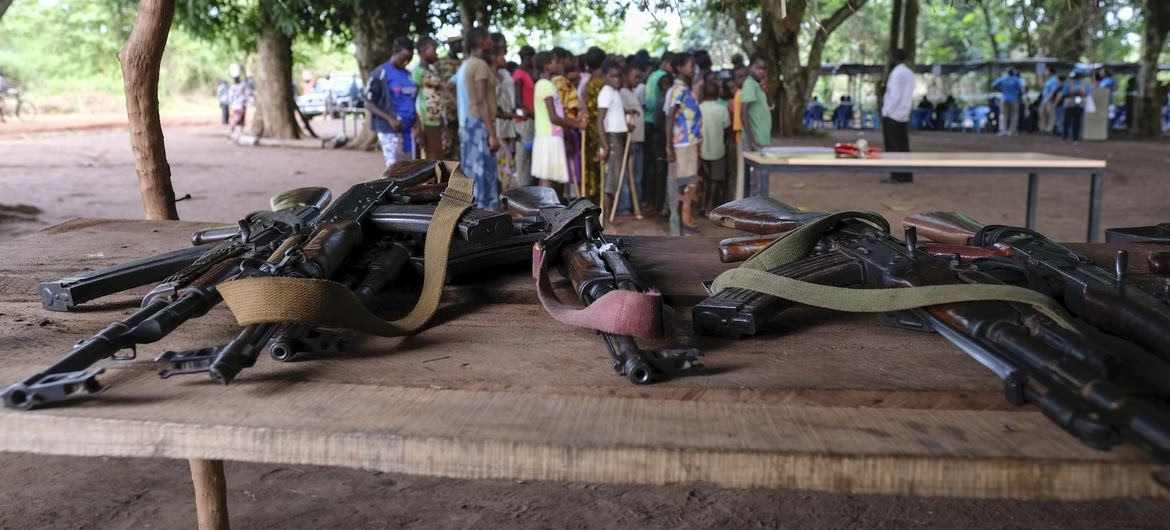
Paragraph 88(c) of the interim report outlines crucial directives for neighboring member states regarding their responsibilities in managing arms flow to South Sudan. It emphasizes the importance of strict adherence to resolution 2428 (2018), which prohibits the supply of arms and related military assistance to South Sudan. This prohibition is vital for maintaining peace and preventing further escalation of conflict within the region. Neighboring states are called upon to actively monitor and regulate any arms transactions that could potentially undermine the fragile stability in South Sudan.
Furthermore, resolution 2428 stipulates that member states must take appropriate measures to ensure compliance with these restrictions. It includes implementing legal frameworks that penalize any entity found guilty of engaging in illicit arms trade. Additionally, it requires transparency in arms transfers, which contributes to regional accountability. By doing so, neighboring states will help reinforce the international community’s commitment to peace and stability in South Sudan.
As the situation evolves, adjustments have been made concerning the provision of non-lethal military equipment, as indicated in resolution 2683 (2023). This resolution allows member states to provide assistance that is conducive to supporting the peace agreement, provided it does not involve offensive capabilities. Neighboring member states have therefore been encouraged to offer logistical support, humanitarian aid, and capacity-building measures that align with the principles of the peace process.
By strictly adhering to these regulations, neighboring countries contribute significantly to the stabilization efforts in South Sudan. Their proactive engagement in enforcing the arms embargo and supporting peace initiatives while respecting the outlined restrictions exemplifies their commitment to regional security and cooperation.
Challenges and Solutions in the Implementation of the Peace Agreement
The implementation of peace agreements in South Sudan has been fraught with numerous challenges that hinder progress towards sustainable peace and stability. One significant challenge is the difficulty in upholding the ceasefire amidst ongoing violence. Despite formal commitments to cease hostilities, various factions engage in sporadic attacks, undermining trust among the parties involved. Such incidents not only erode confidence in the peace process but also complicate the disarmament initiatives necessary for lasting peace.
Moreover, the promotion of inclusive political dialogue presents its own set of complexities. Political power struggles and deep-rooted ethnic divisions impede the establishment of a cohesive governance structure that truly represents the diverse interests of the South Sudanese population. External pressures, including influence from neighboring countries and international stakeholders, further complicate the dialogue process, often leading to competing agendas that do not align with the core objectives of the peace agreement.
To address these challenges, it is crucial for stakeholders to adopt comprehensive solutions that involve collaboration and commitment at multiple levels. First, the establishment of a robust monitoring mechanism can ensure adherence to the ceasefire and provide a platform for accountability. This could involve deploying independent observers who can report violations impartially, thereby fostering a sense of security among communities.
Furthermore, promoting genuine inclusivity in political dialogue is essential. Engaging civil society, women, and youth in the peace process can provide diverse perspectives and strengthen the legitimacy of the agreements made. Creating forums for dialogue that prioritize transparent communication can help mitigate misinterpretations and build consensus among various political actors. By fostering cooperation and commitment to the peace agreement, stakeholders can pave the way for a more stable and prosperous South Sudan.