Introduction to the Aegean Conflict
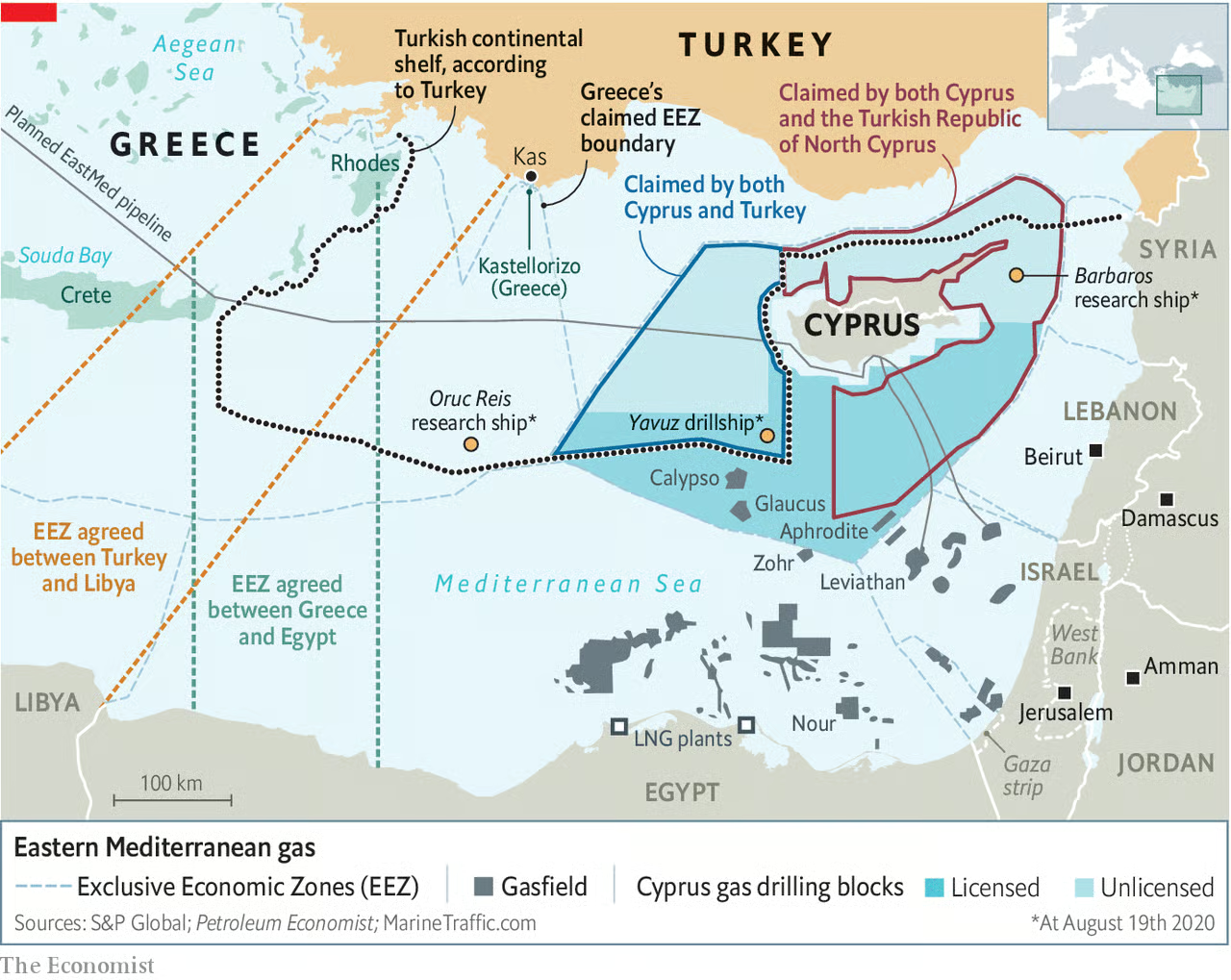
The Aegean region, situated between the Greek and Turkish coastlines, has been a focal point of intense geopolitical rivalry for decades. The roots of this conflict can be traced back to historical grievances that have shaped the perceptions and actions of both nations. Central to the contention is the issue of sovereignty over various islands and maritime zones in the Aegean Sea, which are argued to be vital for national security and resource exploitation.
Greece maintains that many of the islands, scattered throughout the Aegean, are rightfully theirs, thus asserting its territorial waters up to six nautical miles from these islands. Conversely, Turkey challenges this notion, arguing that such claims threaten its security, especially given the proximity of some islands to its mainland. This territorial dispute is further exacerbated by differing interpretations of international treaties, such as the Treaty of Lausanne in 1923 and the Paris Peace Treaties post-World War II, which primarily delineate borders and rights but leave room for interpretation concerning ownership and control.
The geopolitical significance of the Aegean Sea cannot be overstated. It serves not only as a vital trade route but also as a region where vital resources, like hydrocarbons, are believed to be abundant, thus increasing the stakes for both nations. Recent developments have reignited tensions, particularly with statements from Greece’s defense minister, which have been perceived by Turkey as provocative. Turkey’s swift and often militarized response underscores its commitment to maintaining its perceived territorial integrity and influence in the region. As both nations continue to assert their claims, the situation remains fraught with a potential for escalation, highlighting the need for diplomatic resolutions to prevent further militarization of the Aegean zone.
Greece’s ‘Achilles Shield’ Defense Strategy
The strategic landscape of the Aegean has seen a significant transformation with Greece’s introduction of its new defense doctrine, articulated by Minister Nikos Dendias. This doctrine, named the ‘Achilles Shield,’ signifies an evolution in Greece’s military posture, reflecting a proactive approach to national security.
Central to this strategy is the decision to arm various Aegean islands with precision-guided missiles. This move aims to bolster the defensive capabilities of these islands, enhancing their deterrent value amid rising tensions with Turkey. The integration of advanced military technology serves not only to protect Greek sovereignty but also to send a clear message regarding Greece’s commitment to national defense. By ensuring that these strategic points are equipped with sophisticated weaponry, Greece is preparing for a more assertive military stance in the region.
The sources of military assistance for this initiative primarily come from Israel, a nation known for its advanced defense technology. This collaboration underscores a broader trend of increasing military cooperation between Greece and Israel, particularly in response to shared concerns regarding regional stability. The reliance on Israeli technology for enhancing Greece’s defense infrastructure reflects the nation’s strategic realignment and its intent to modernize its military capabilities, which had been viewed as a necessity in light of perceived Turkish aggression.
Behind this initiative lies a multifaceted motivation. Greece faces skepticism about Turkey’s aspirations in the Aegean, leading to an urgent need for a defensive strategy that can address these threats effectively. ‘Achilles Shield’ serves not only as a means of deterrence but also as an assertion of Greek national identity against external pressure. Greece’s commitment to enhancing its defensive capabilities indicates a willingness to invest in its military to ensure enduring security in a historically volatile region.
Turkey’s Reaction and Military Posturing
In light of escalating military activities by Greece, the Turkish government has adopted a vigilant and proactive defensive stance. The Turkish authorities have emphasized their commitment to monitoring Greek military developments closely. This response has been fueled by concerns regarding potential aggression from their neighbor, leading to heightened military posturing along Turkey’s western borders. The focus remains on ensuring national security and maintaining a strategic edge in an increasingly volatile environment.
Turkey perceives Greece’s military maneuvers, which include the enhancement of defense infrastructures and increased joint military exercises with other nations, as provocative actions. As a result, Turkey has bolstered its military capabilities, deploying additional resources along the Aegean coast. This build-up is not only a show of strength but also a clear indication of Turkey’s readiness to counter any perceived threats. The Turkish government frequently reiterates its right to defend territorial integrity, asserting that they will not stand idle in the face of Greece’s evolving military capabilities.
Furthermore, the emotions surrounding this military escalation are multifaceted. Turkish officials express a mix of anger and derision toward Greece’s actions, often labeling them as attempts to provoke tensions. The rhetoric used by officials often conveys a sentiment of disbelief regarding Greece’s military ambitions, culminating in statements that ridicule what they view as an overstated perception of threat. This mixture of emotions fuels the narrative in Turkey, portraying Greece’s developments as exaggerated, while simultaneously justifying their military enhancements as essential to regional peace and stability. The political landscape is further complicated by the balance of power in the region, which continues to evolve amid these military dynamics.
The Broader Geopolitical Landscape and Future Implications
The ongoing tensions between Greece and Turkey are situated within a larger geopolitical framework that encompasses not only regional dynamics but also the broader defense strategies of Europe and international alliances. These tensions have significant implications for NATO, given that both Greece and Turkey are member states. As NATO aims to maintain a semblance of cohesion among its members, the military standoff raises concerns about the alliance’s effectiveness in managing internal disputes and fostering military cooperation. The ramifications extend to the European Union, which has been keen on ensuring stability in the Eastern Mediterranean, a region increasingly problematic due to geopolitical rivalries.
In addition, the emerging relationships among Greece, Israel, and Cyprus should not be overlooked. With Israel’s growing engagement in the Eastern Mediterranean, particularly through defense partnerships and energy collaboration, these alliances could shift the balance of power in the region. The trilateral cooperation between Greece, Cyprus, and Israel enhances their capabilities to address shared security challenges, thereby potentially isolating Turkey further. This strategic alignment could lead to heightened competition and an arms race in the region, resulting in increased military expenditure and heightened tensions.
Moreover, the future of Aegean security will be influenced by international agreements and diplomatic negotiations. The evolving security landscape necessitates a comprehensive framework that addresses the complex interplay of territorial disputes, maritime rights, and military deployments. As both nations seek to assert their interests, the potential for conflict escalation remains high unless sustainable dialogue is prioritized. Additionally, external powers are likely to play a role in mediating the situation, as their vested interests could either aggravate or alleviate tensions. In conclusion, the Greece-Turkey standoff must be viewed through the lens of these broader geopolitical dynamics, which could reshape alliances and influence regional security architecture in the years to come.