

The Vision of Networked Industry
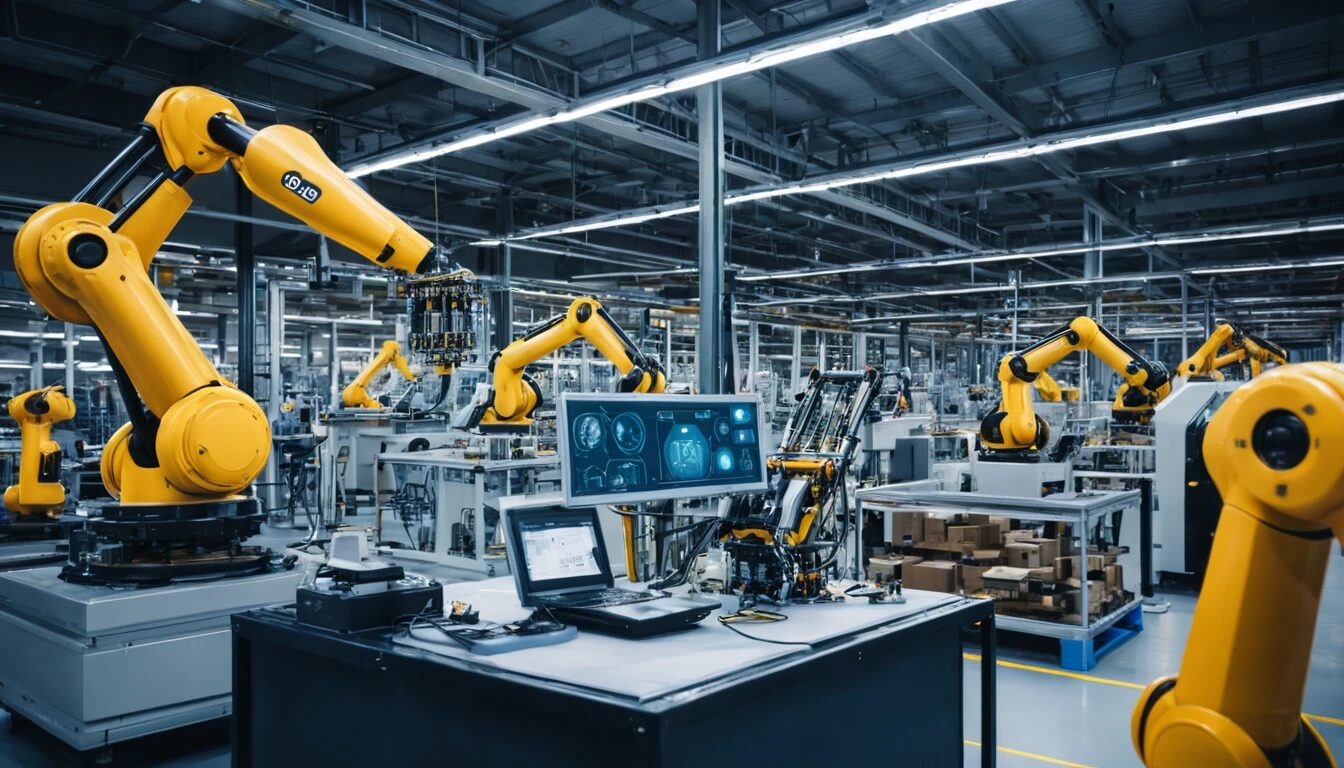
The concept of networked industry represents a transformative vision in smart manufacturing, where artificial intelligence (AI) and the Internet of Things (IoT) converge to establish interconnected production environments. This vision encompasses facilities equipped with comprehensive sensors that continuously monitor machinery, processes, and workforce activities. These sensors have the capacity to detect deviations in real time, thus enabling immediate analysis and prompt adjustments to improve overall production efficiency.
In an ideal scenario, networked industry would enhance operational agility by allowing machines to communicate autonomously, optimizing their performance without human intervention. For instance, if a piece of equipment begins to operate outside of its specified parameters, sensors can trigger automated diagnostics, which in turn initiate automated responses, such as recalibration or maintenance alerts. This level of responsiveness not only minimizes downtime but also improves the accuracy and quality of the manufacturing output.
However, the journey towards a fully realized networked industry is fraught with challenges. Many organizations still struggle with legacy systems that inhibit seamless integration of AI and IoT technologies. This fragmentation can lead to data silos, where information is isolated within departments, thereby limiting visibility and hindering informed decision-making. Moreover, the variability in standards and protocols across different devices adds another layer of complexity to the landscape of smart manufacturing. Hence, while the potential for a real-time, responsive production environment is substantial, achieving this vision will require concerted efforts in technological advancement, standardized practices, and workforce training.
The Role of Cloud Platforms and Predictive Maintenance
The integration of cloud platforms with artificial intelligence (AI) and the Internet of Things (IoT) has revolutionized the manufacturing sector, leading to enhanced operational efficiency and cost-effectiveness. These platforms facilitate the collection, storage, and analysis of vast amounts of data generated by connected machines and sensors in real time. By leveraging cloud computing, manufacturers can implement predictive maintenance strategies that significantly reduce downtime and maintenance costs.
Predictive maintenance relies heavily on data analytics to forecast equipment failures before they happen. By utilizing AI algorithms, cloud platforms can analyze historical performance data along with real-time sensor inputs to identify patterns and anomalies that may indicate an impending failure. This proactive approach allows manufacturers to address potential issues promptly, thereby maintaining operational continuity. Additionally, the scalability of cloud solutions means that businesses of all sizes can adopt these advanced technologies without substantial upfront investments in hardware.
Moreover, cloud platforms enhance the resilience of supply chains by providing seamless access to critical data across various locations and teams. This connectivity enables manufacturers to respond quickly to fluctuations in demand, ensuring that they can adapt to market changes more effectively. As a result, new service-oriented business models are emerging, where companies focus on providing not just products but also maintenance and support services driven by data insights.
Effective asset management forms the backbone of these advancements. By consolidating asset data in the cloud, manufacturers can develop a clear understanding of their equipment’s condition and performance metrics. This insight is pivotal in optimizing manufacturing processes, as it informs decision-making related to resource allocation, production scheduling, and lifecycle management. Ultimately, embracing cloud technologies in conjunction with predictive maintenance fosters a smarter, more efficient manufacturing landscape.
The Transformation Through Data and AI Integration
The integration of data, sensors, and artificial intelligence (AI) has ushered in a new era of smart manufacturing. In contemporary industrial processes, these technologies play a crucial role in streamlining operations and enhancing productivity. Just as Disney’s Cinderella transformed from rags to riches through magical means, the evolution of manufacturing—from traditional methods to data-driven approaches—has been nothing short of enchanting. However, unlike the fairy tale, this transformation is grounded in the practical applications of technology.
Data collected from various sensors installed throughout production lines provides a wealth of information that can be harnessed to optimize processes. This data, when combined with AI algorithms, enables predictive maintenance, which allows manufacturers to foresee potential equipment failures before they occur. Such capabilities significantly reduce downtime, consequently improving operational efficiency and enhancing overall productivity.
A prominent example of this transformation was showcased at the Hannover Messe trade fair, where industry leaders presented innovative solutions powered by AI and the Internet of Things (IoT). These solutions epitomize the collaborative growth of these technologies, demonstrating how interconnected devices can dynamically respond to changing conditions within production lines. For instance, machines equipped with AI can analyze real-time data to make adjustments instantaneously, thus ensuring that production resumes without hindrance.
As we continue to witness this paradigm shift in manufacturing, it is essential to recognize the potential of combining data analytics, AI, and IoT. This synthesis transforms not only operational efficiency but also the entire landscape of industrial processes, giving rise to a future that was once perceived as merely fantastical. The powerful synergy of these technologies is reshaping industries, suggesting that the magic of smart manufacturing is, indeed, a tangible reality.
Challenges and Strategies in AI and IoT Integration
As industries increasingly integrate artificial intelligence (AI) and the Internet of Things (IoT), they encounter several prominent challenges that must be addressed to fully realize the potential of smart manufacturing. One major hurdle is the vast amount of data generated by connected devices. Companies must ensure that this data is collected, processed, and made usable for insights and decision-making. Without effective data management strategies, the synergy between AI and IoT can be severely compromised.
Another challenge involves establishing trust in automated systems. Automated decision-making processes are only as reliable as the data upon which they are based. Industry professionals, including Thomas Fuchs, emphasize the importance of transparency in these systems. Manufacturers must be able to interpret how AI arrives at conclusions and ensure that these processes are free from bias. This trust is fundamental for stakeholders to commit to the new technologies and strategies that underpin smart manufacturing.
The interplay between technology and operations forms the backbone of effective integration. It requires a cultural shift within organizations, where teams must embrace a mindset focused on collaboration between human expertise and machine efficiency. One recommended strategy involves developing cross-functional teams that include data scientists, operational staff, and IT specialists. Such collaboration facilitates better communication and ensures that the unique needs of each department are met during the integration process.
To mitigate these complexities, businesses are advised to adopt phased implementation strategies. Gradually rolling out AI and IoT solutions allows for testing and adjustment, fostering an environment where companies can refine their approaches based on real-world feedback. Overall, successfully integrating AI and IoT within industrial settings will require careful planning, strong leadership, and a commitment to continuous improvement, paving the way for the future of smart manufacturing.