Introduction to the Situation
The Sheikh Jarrah compound has served as a crucial hub for the United Nations Relief and Works Agency for Palestine Refugees in the Near East (UNRWA), facilitating services and support for Palestinian refugees for many years. This facility plays a significant role in addressing the humanitarian needs of refugees who have been displaced from their homes as a result of ongoing conflicts and geopolitical tensions in the region. UNRWA provides essential services such as education, health care, and social services to a population that relies heavily on international assistance.
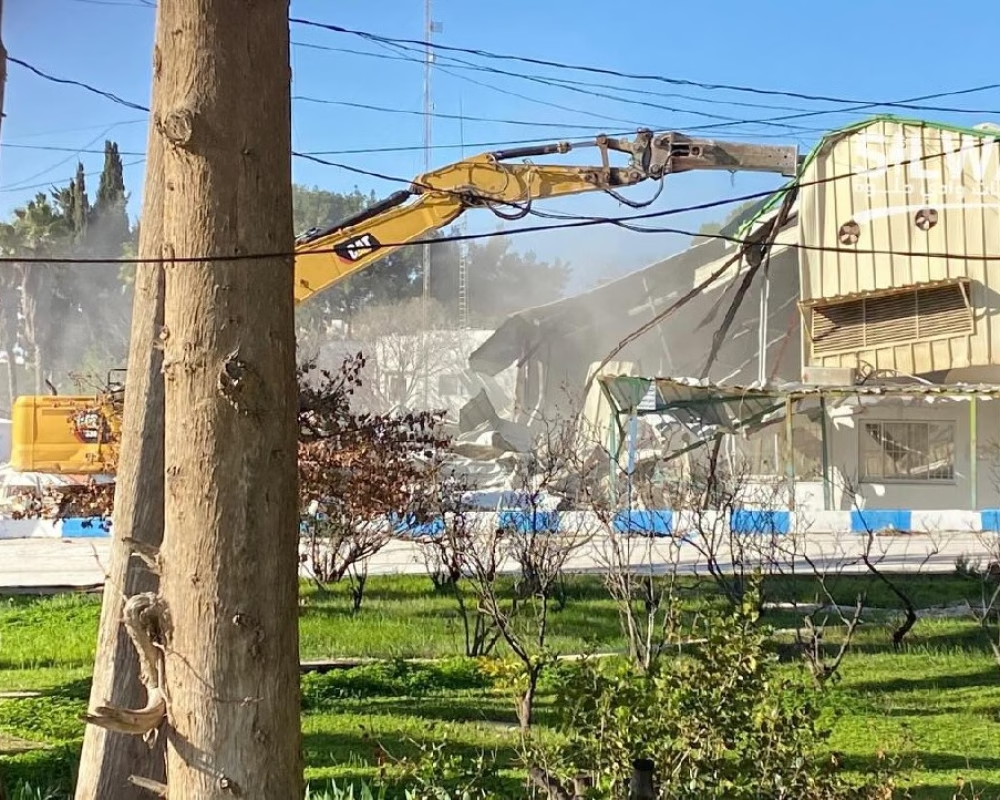
Recently, Israeli authorities have taken decisive actions that have led to the demolition of the Sheikh Jarrah UNRWA compound, provoking widespread concern and condemnation from various quarters, including the United Nations. The demolition is viewed not only as a physical loss of infrastructure but also as a potential step towards further marginalizing the rights and needs of Palestinian refugees. The context surrounding these demolitions is complex, stemming from longstanding territorial disputes and differing perspectives on sovereignty and refugee rights.
Israel’s actions have been framed within a broader policy aimed at controlling land and resources in areas with significant Palestinian populations. The demolition of the Sheikh Jarrah compound raises serious questions about the future of UNRWA’s ability to operate effectively in the region and maintain its mandate of supporting Palestinian refugees. The international community is closely monitoring the situation, urging Israeli authorities to reconsider such decisive actions that threaten humanitarian efforts and worsen the plight of vulnerable populations. The UN and other stakeholders continue to advocate for the protection of UNRWA facilities, recognizing their vital role in stabilizing the region and assisting those in need. Ultimately, the developments in Sheikh Jarrah reflect the ongoing struggle between maintaining humanitarian support and navigating the complex realities of political conflict in the region.
Details of the UN Secretary-General’s Response
UN Secretary-General António Guterres issued a pointed condemnation regarding the demolition of the Sheikh Jarrah UNRWA compound by Israeli authorities. He described the act as not only a troubling occurrence but also a clear violation of international law. His statement underscored the urgent need for Israel to adhere to its obligations under international human rights frameworks, emphasizing the impact such demolitions have on the rights and wellbeing of affected individuals.
In previous communications with the Israeli government, Guterres had reiterated the necessity to protect humanitarian facilities and ensure access to essential services for Palestinian refugees. His recent response was framed not only as a condemnation but also as a reiteration of the international consensus surrounding the protection of UN facilities, which serve as critical lifelines for vulnerable populations. The language Guterres employed highlighted the severity of the situation, marking it as one that threatens stability and peace in the region.
Guterres referred specifically to a letter he sent to Israeli Prime Minister Benjamin Netanyahu prior to the demolitions, in which he expressed profound concern about the humanitarian implications of such actions. He urged for dialog and negotiation rather than unilateral measures that can exacerbate tensions. The Secretary-General’s remarks reflect a broader international call for accountability, insisting that any violations of international law must meet with unequivocal opposition and demands for rectification.
This situation underscores the UN’s pivotal role in addressing humanitarian crises and advocating for adherence to international standards. Guterres’s statements emphasize that the international community remains vigilant regarding actions that undermine peace and violate fundamental rights, urging Israeli authorities to reconsider their approach.
Analysis of International Law Implications
The demolition of the Sheikh Jarrah UNRWA compound by Israeli authorities raises pertinent questions regarding compliance with international law. The primary legal frameworks to consider in this context are the United Nations Charter and the Convention on the Privileges and Immunities of the United Nations. Each of these documents establishes critical norms and obligations for member states, particularly concerning the treatment of UN facilities and personnel.
Under the United Nations Charter, member states are mandated to respect the sovereignty and the facilities of the UN, which includes consistency with international peace and security. The actions taken to demolish the Sheikh Jarrah compound contravene this principle, effectively undermining the stability that the UN aims to foster within conflict areas. Furthermore, the Convention on the Privileges and Immunities of the United Nations delineates the legal protections extended to UN property and personnel. This agreement underscores that each member state is obliged to ensure the inviolability of UN premises, thereby reinforcing the legal backbone against such demolitions.
The demolition of the compound is widely viewed as illegal under these international laws for several reasons. Firstly, it constitutes an interference with the operations of UNRWA, an organization tasked with providing essential services and humanitarian aid to Palestinian refugees. Such actions can disrupt these vital services, exacerbating already precarious living conditions. Secondly, the host country’s responsibilities to uphold international standards and protect diplomats and international organizations further imply that demolitions like these are not merely domestic legal issues, but violations of broader international norms. In light of these considerations, the actions of the Israeli authorities clearly exhibit a disregard for both the sovereignty of international institutions and their operational integrity, raising significant legal and ethical concerns.
Call to Action and Future Outlook
As the international community absorbs the recent condemnation by UN Secretary-General António Guterres regarding the demolition of the UNRWA compound in Sheikh Jarrah, it is imperative to consider the broader implications of this call to action. Guterres has urged the Israeli authorities to cease their demolition activities, highlighting the detrimental impact such actions have on regional stability and humanitarian conditions. The demolition of humanitarian facilities not only exacerbates the existing tensions between Israelis and Palestinians but also undermines the operational capacity of organizations like UNRWA, which are vital in addressing the needs of Palestinian refugees.
Continued demolition actions can lead to increased animosity and violence, disrupting any potential for peace in the region. The humanitarian situation, already precarious, may deteriorate further, resulting in severe consequences for the civilian population. This emphasizes the urgent need for the Israeli government to reassess its policies and actions concerning Palestinian territories, particularly those impacting vulnerable groups.
Moreover, the international community must actively engage and respond to the ongoing crisis. There are several avenues through which this can occur: by advocating for dialogues rooted in respect for international law, promoting negotiations that adhere to established frameworks for peace, and calling upon the Israeli government to respect the rights of Palestinian refugees. The validity of international law cannot be understated; it serves as a crucial framework for addressing disputes and ensuring the protection of marginalized populations.
In conclusion, fostering a dialogue that emphasizes cooperation and respect for human rights will be vital in pursuit of lasting solutions. By championing the safety of UNRWA facilities and the rights of Palestinian refugees, the international community can contribute to a more stable and equitable regional landscape. Ultimately, these efforts should pave the way for enduring peace that honors the dignity and rights of all individuals affected by this longstanding conflict.