

Background of the Attack
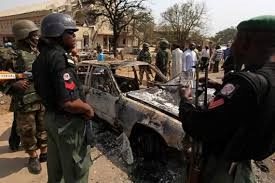
On February 3rd, 2023, Kwara State, Nigeria, was the site of a devastating terrorist attack that resulted in significant loss of life and property. This violent incident transpired in a region where residents have increasingly expressed concerns about their safety and the persistent threat posed by armed groups. Preliminary reports indicate that more than twenty individuals lost their lives, with several others sustained severe injuries during the attack. The profiling of the victims illustrates the indiscriminate nature of the violence faced by the community, which has deepened residents’ fear and anxiety.
The context surrounding this attack is emblematic of the broader security challenges faced by Nigeria. Over the past decade, the frequency and intensity of terrorist activities have surged, notably in the northeastern part of the country, where Boko Haram and other militant groups have been actively operating. However, as evidenced by the Kwara State incident, the threat is no longer confined to one geographical area; it has expanded to include regions previously considered stable. Such trends raise concerns about the effectiveness of the Nigerian security apparatus in countering these threats.
The immediate aftermath of the attack left the local community grappling with not only grief but also insecurity, as many residents felt the need to fortify their homes and reconsider their daily routines. Access to basic services has been disrupted, and many community members require psychological support to cope with the trauma experienced. In broader terms, the attack has underscored the vulnerability of Nigeria’s social fabric, highlighting an urgent need for strategies that address the root causes of terrorism and ensure effective security measures are implemented to protect citizens.
The Secretary-General’s Response
In light of the recent terrorist attack in Nigeria, UN Secretary-General António Guterres has issued a strong and unequivocal condemnation of the violence. The attack, which has resulted in significant loss of life and numerous injuries, was described by Guterres as an egregious act that is utterly unacceptable. His response, conveyed through a statement from his spokesman, emphasizes the urgent need for concerted global efforts to confront the growing threat of terrorism.
The Secretary-General expressed his heartfelt condolences to the families of the victims, recognizing the profound sorrow and grief that such senseless acts of violence can instigate. He extended his wishes for a swift recovery to those who have been injured, acknowledging the physical and emotional toll that such traumatic experiences entail. Guterres’s statement highlights the necessity of providing support and resources to the affected families as they navigate the aftermath of this tragic event.
Moreover, Guterres articulated a clear message of solidarity with the Nigerian people and the government in their fight against terrorism. His remarks underscore the importance of international cooperation in tackling this persistent challenge. He stressed that terrorism knows no borders and can only be effectively addressed through united efforts involving governments, international organizations, and civil society. Furthermore, the Secretary-General reiterated the UN’s commitment to assisting Nigeria in its counter-terrorism initiatives, emphasizing that sustained support from the international community plays a crucial role in combating terrorism and ensuring peace and security in affected regions.
Implications for Nigeria and Global Security
The recent terrorist attacks in Nigeria have far-reaching implications for both national and global security. These incidents not only threaten the lives and livelihoods of local communities but also shape international perceptions of Nigeria’s stability. As a country grappling with various security challenges, including terrorism, the recurrent violence undermines efforts to promote peace, governance, and socio-economic development. This situation sends alarming signals to investors and the international community, potentially resulting in reduced foreign direct investment and hindered economic growth.
Furthermore, the attack highlights the urgent need for collaborative efforts in combating terrorism and violent extremism. Terrorism is a transnational issue, and as such, Nigeria’s struggles resonate with numerous nations facing similar threats. The interconnectedness of global security issues indicates that instability in one nation can have ripple effects worldwide, leading to increased migration, terrorism, and other security challenges. Thus, the international community must bolster its support for Nigeria in these distressing times, focusing on multifaceted strategies that address both immediate and long-term needs.
In addressing these challenges, the role of the United Nations (UN) becomes paramount. As a leading body in international diplomacy, the UN can facilitate dialogue among nations, promote best practices in counter-terrorism efforts, and provide necessary resources to support Nigeria’s fight against terrorism. Additionally, fostering solidarity among countries will strengthen collective action, allowing nations to share intelligence and resources effectively. Through these cooperative frameworks, it is possible to devise comprehensive strategies that not only target immediate threats but also tackle the underlying socio-economic factors that contribute to extremism.
Calls for Justice and Future Prevention Measures
The recent terrorist attack in Nigeria has not only claimed lives but has also amplified calls for justice and accountability for the victims and their families. The international community, including the United Nations, emphasizes the urgency of holding those responsible for such heinous acts accountable under the law. Establishing effective legal frameworks that can adapt to the dynamic nature of terrorism is crucial in prosecuting perpetrators and deterring future incidents.
Furthermore, effective measures to combat terrorism must extend beyond punitive actions. Strategies that engage local communities in safeguarding their neighborhoods can significantly enhance security. Community engagement fosters trust and cooperation between citizens and law enforcement, creating a formidable frontline against terrorist activities. By empowering citizens and encouraging them to participate in safety initiatives, the likelihood of detecting and preventing potential threats increases, thus fostering a more resilient society.
Another vital aspect of combating terrorism lies in intelligence sharing among nations. Collaborative efforts among various governments can result in timely action against terrorist networks. This requires breaking down silos and providing platforms for information exchange that can lead to proactive measures rather than merely reactive ones. Strengthening technical assistance to nations grappling with terrorism can streamline these collaborative efforts.
Lastly, the call for international cooperation highlights the notion that terrorism knows no borders. Countries must work hand in hand, pooling resources and expertise to create a unified front against this global menace. Strengthening partnerships with international organizations can enhance capacity building and ensure effective implementation of counter-terrorism measures.
In conclusion, achieving justice for victims of terrorism and preventing further attacks in Nigeria necessitates a multi-faceted approach. By prioritizing accountability, community involvement, intelligence sharing, and international solidarity, a safer and more peaceful future can be envisioned for all.