Overview of Resolution 2800 and Mandate Extension
On December 20, 2025, the United Nations Security Council adopted Resolution 2800, marking a significant step in strengthening peacekeeping efforts in the Central African Republic (CAR). This resolution extends the mandate of the United Nations Multidimensional Integrated Stabilization Mission in the Central African Republic (MINUSCA) until November 15, 2026. The unanimous support for this resolution reflects the international community’s recognition of the critical importance of stabilizing the CAR, which has been plagued by political turmoil and security challenges for several years.
The voting results revealed robust backing for the resolution, with 14 members of the Security Council voting in favor, while only one member abstained. This strong majority illustrates a collective commitment to enhancing the effectiveness of MINUSCA in facilitating peace, protecting human rights, and supporting the transitional government in its efforts to build a sustainable peace. The adoption of Resolution 2800 underscores the continued relevance of international cooperation in addressing complex security issues within the CAR, particularly in light of the persistent threats posed by armed groups and intercommunal violence.
One of the key aspects of Resolution 2800 is its focus on enhancing MINUSCA’s operational capabilities and ensuring that the mission is adequately resourced to address the evolving dynamics within the CAR effectively. The resolution emphasizes the importance of integrating a comprehensive approach that involves not only military and security considerations but also the promotion of socio-economic development and political dialogue. This holistic strategy is essential in fostering long-term stability, ensuring that peacekeeping operations are not merely reactionary but rather proactive in addressing the root causes of conflict.
In conclusion, Resolution 2800 represents a crucial development for the Central African Republic, reaffirming the global commitment to supporting peacekeeping missions that seek to restore stability in regions facing complex crises. The extension of MINUSCA’s mandate will undoubtedly play a pivotal role in facilitating the transitional processes necessary for lasting peace in the region.
Mission Composition and Future Evaluations
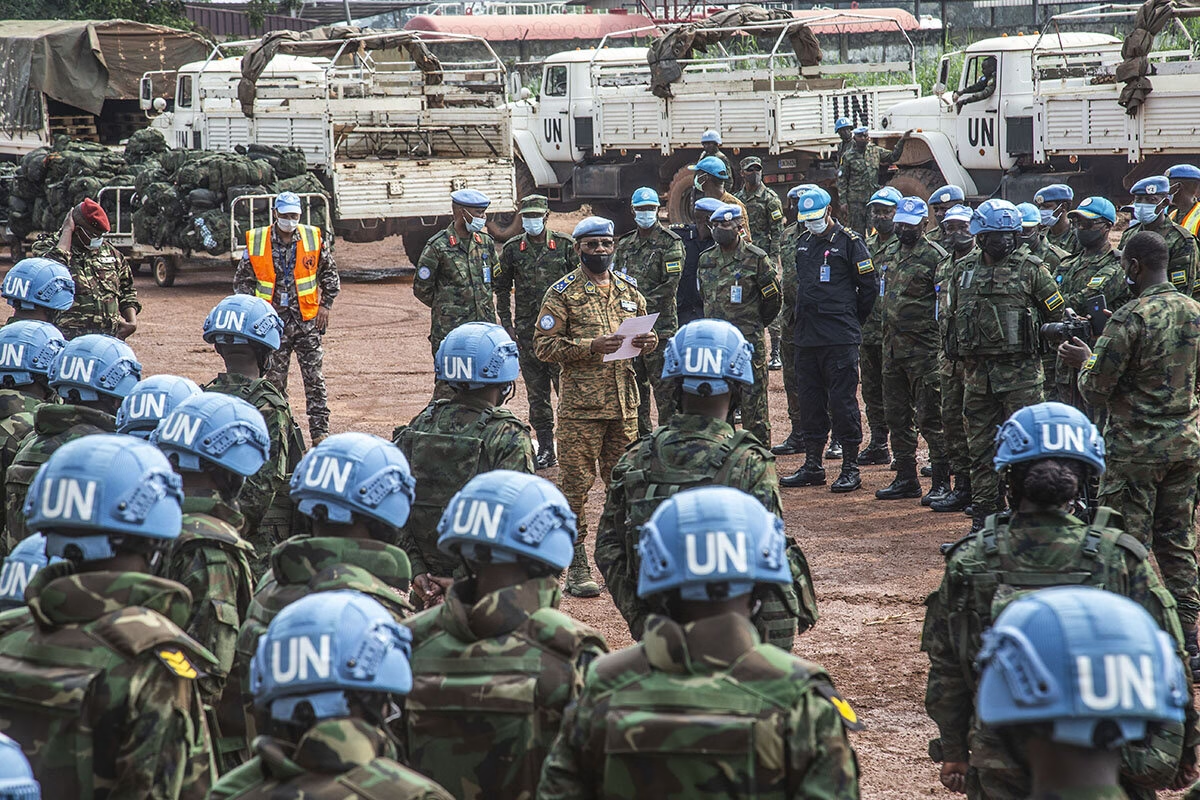
The Multidimensional Integrated Stabilization Mission in the Central African Republic (MINUSCA) is structured to include an authorized troop level of up to 14,046 military personnel. This significant number reflects the United Nations Security Council’s commitment to stabilizing the region, which has faced extensive conflict and humanitarian challenges. The mission’s overarching goal is to protect civilians, support disarmament efforts, and facilitate the political process in a nation struggling with ongoing violence and instability.
As per UN Security Council Resolution 2800, the future evaluations of MINUSCA’s troop composition are closely linked to the electoral processes scheduled for 2025 and 2026. The Council has communicated its intention to reassess the authorized troop levels following these elections. This planned review illustrates the recognition that the stability of the Central African Republic is contingent upon successful electoral outcomes, which serve as a barometer for the mission’s effectiveness and the broader political landscape.
The evaluations will consider various factors, including the security environment on the ground, the capabilities of local law enforcement, and the overall political climate. Such reviews will enable the Security Council to make informed decisions about troop levels, potentially adjusting the number of peacekeepers based on the evolving situation. This adaptability is crucial, as it ensures that MINUSCA can provide effective support to national authorities while addressing the unique challenges that arise within the country.
Ultimately, the composition and future evaluations of MINUSCA will play a pivotal role in determining the mission’s capacity to foster peace and stability in the Central African Republic. By closely monitoring the electoral developments and adjusting troop numbers accordingly, the Security Council aims to enhance its peacekeeping efforts in this critically important region.
Key Priorities and Implementation Strategies
The United Nations Multidimensional Integrated Stabilization Mission in the Central African Republic (MINUSCA) has been mandated to address critical priorities aimed at fostering peace and stability in the region. One of the foremost responsibilities is the protection of civilians, which encompasses safeguarding vulnerable populations from violence and ensuring their safety in conflict situations. This initiative requires a robust presence on the ground, enabling peacekeepers to deter potential threats and respond effectively when necessary. Ensuring civilian safety is paramount, as it directly contributes to the overall stability of the Central African Republic.
Another essential task for MINUSCA is the strengthening of state authority. This objective involves supporting the government in re-establishing control over its territory, encouraging the restoration of public services, and promoting good governance. By enhancing the functionality of state institutions, MINUSCA aims to build public trust and promote long-term sustainable peace. Coordination between MINUSCA and national authorities is crucial in implementing these strategies effectively, as it helps align the mission’s objectives with local governance needs.
Facilitating humanitarian assistance is also a priority within MINUSCA’s mandate. The mission is tasked with enabling the delivery of essential services such as healthcare, education, and food security to those most affected by the ongoing conflict. This requirement necessitates strategic planning and collaboration with humanitarian organizations to ensure resources are allocated effectively amidst a challenging operating environment.
A strategic approach to implementing these tasks is essential, focusing on priority and sequencing to maximize resources and impact. Expectations placed on the UN Secretary-General relative to prioritizing tasks during the deployment and resource allocation processes play a pivotal role in the successful execution of MINUSCA’s mandate. Establishing clear operational strategies, coupled with flexibility to adapt to evolving circumstances, is critical for achieving mission objectives and ensuring the continued welfare of the Central African Republic populace.
International Reactions and Statements from Council Members
Following the adoption of UN Security Council Resolution 2800, various member states articulated their positions, reflecting a spectrum of support, concern, and expectations for peacekeeping initiatives in the Central African Republic (CAR). France, as a long-time partner of the CAR, expressed strong support for the resolution, underscoring its commitment to maintaining stability in the region. French representatives emphasized the importance of a robust peacekeeping mission, illustrating their belief that enhanced international cooperation could facilitate the restoration of peace and security.
Conversely, the Central African Republic’s representatives exhibited cautious optimism. While welcoming the commitment from the international community through Resolution 2800, they accentuated the pressing need for timely deployment of resources and personnel. They articulated concerns regarding the ongoing violence and instability, urging for swift action to safeguard civilians and restore trust in governance, emphasizing that the success of the mission hinges on effective collaboration among all stakeholders.
Pakistan, highlighting the significance of peacekeeping, commended the resolution’s focus on strengthening the United Nations Multidimensional Integrated Stabilization Mission in the Central African Republic (MINUSCA). They reiterated the essential role these missions play in bolstering peace in fragile states and called for continuous engagement and dialogue among member states to ensure sustainable peace.
Sierra Leone offered a reflective statement, drawing on its own post-conflict recovery experience. It acknowledged the vital role of local ownership in peace processes, advocating for community involvement in stabilization efforts. Meanwhile, China and Russia emphasized the necessity of respecting state sovereignty and non-interference in domestic affairs, urging the need for a collaborative approach that would uphold the CAR’s autonomy while delivering humanitarian assistance. Lastly, the United States reaffirmed its commitment to supporting the mission, articulating expectations for measurable outcomes that promote long-term stability within the region.
These diverse perspectives collectively underscore a reaffirmation of the international commitment to peacekeeping efforts in the Central African Republic, signifying a united front toward achieving lasting peace and security.