Introduction to the African Continental Free Trade Area
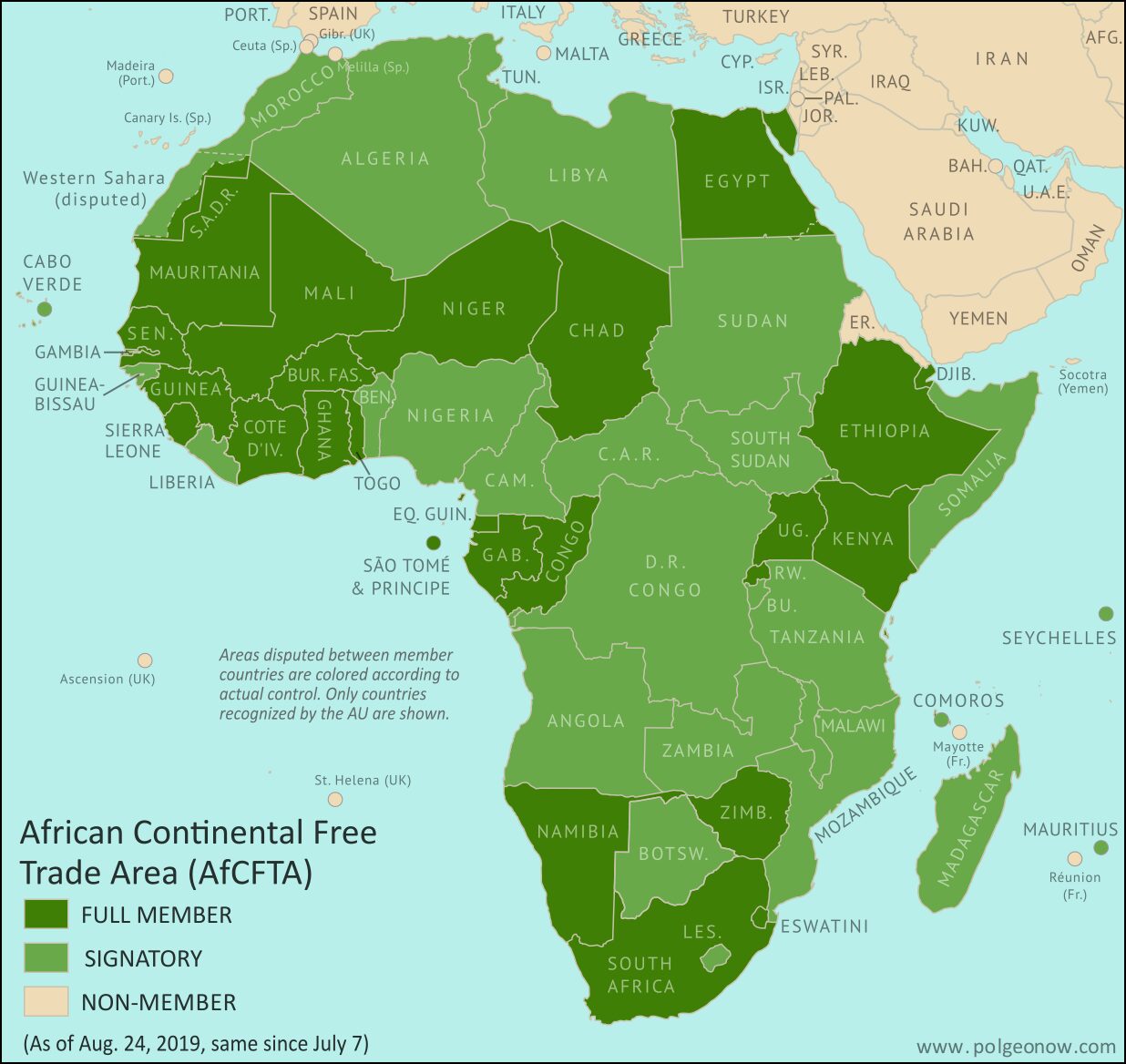
The African Continental Free Trade Area (AfCFTA) represents a landmark initiative aimed at promoting intra-African trade and economic integration among the continent’s fifty-four member states. Launched in 2018, it is currently recognized as the world’s largest free trade area in terms of the number of participating countries, signaling a significant shift in how African nations engage economically with one another and the rest of the world.
The primary goal of the AfCFTA is to create a single market for goods and services, thereby facilitating not only trade but also the movement of capital and labor across borders. By reducing tariffs and addressing non-tariff barriers, the AfCFTA aims to enhance trade volume within the continent, which has historically been low, estimated to be only around 15% of Africa’s total trade.
As part of its vision, the AfCFTA also seeks to improve Africa’s position in global trade dynamics. By fostering a more competitive trading environment and enabling countries to leverage their natural resources and manufacturing capabilities, the AfCFTA aims to transform the economic landscape of the continent. This agreement has the potential to contribute to higher growth rates, job creation, and economic diversification across member states.
The groundwork for the AfCFTA was laid in 2012 at the African Union’s 18th Assembly, where leaders recognized the necessity of integrating African economies for sustainable growth. The agreement was officially signed during the 10th extraordinary summit of the African Union in March 2018. Since then, the AfCFTA has made significant progress, with numerous countries submitting their ratifications, marking a critical step toward realizing the potential of this ambitious trade agreement.
Historical Context and Establishment
The African Continental Free Trade Area (AfCFTA) is a monumental initiative aimed at enhancing economic integration among African nations. The origins of this agreement can be traced back to the collective ambitions of African Union (AU) member states who recognized the necessity to create jobs, uplift living standards, and address persistent economic challenges faced by the continent. The inception of the AfCFTA reflects a unified vision: to harness the vast potential of Africa’s markets, resources, and talent.
In 2012, a significant decision was made during the 18th Assembly of the African Union, where member states committed to accelerate the process of establishing the AfCFTA. This pivotal moment laid the groundwork for a comprehensive framework aimed at reducing tariff barriers and facilitating the free flow of goods and services across national borders. The ambition of creating a single market for goods and services was a critical thrust toward promoting intra-African trade, which had historically been hampered by various economic obstacles.
A landmark event occurred in March 2018 when the AfCFTA agreement was signed in Kigali, Rwanda. This signing marked a significant step toward actualizing a continent-wide free trade agreement, with representatives from 44 out of 55 AU member states present. However, the journey toward establishment was not without its challenges. Some of the continent’s leading economies, such as Nigeria, expressed hesitations regarding the agreement, reflecting concerns over potential economic vulnerabilities and negative impacts on local industries. Nonetheless, their eventual decision to endorse the agreement in subsequent years demonstrated a growing recognition of the necessity for collective economic growth.
As more nations joined the initiative, the AfCFTA gradually gained momentum, showcasing the resolve of African governments to collaborate in pursuit of sustainable development and economic resilience. The establishment of the AfCFTA epitomizes a critical step in addressing the socio-economic impediments of the continent and enhancing its global economic standing.
Objectives and Economic Impact
The African Continental Free Trade Area (AfCFTA) is a landmark initiative aimed at fostering economic integration among African nations. One of its primary objectives is to dismantle trade barriers, which often impede the flow of goods and services across borders. By removing tariffs and reducing non-tariff barriers, the AfCFTA seeks to facilitate smoother trade relations, promoting intra-African trade. Current statistics reveal that intra-African trade stands at approximately 16% of the continent’s total trade, vastly lower than the figures seen in other regions. Thus, an essential goal of the AfCFTA is to increase this share significantly over the next decade.
Another vital objective of the AfCFTA is to create a pan-African market that encourages investment and job creation. With an estimated market size of 1.3 billion people and a combined GDP of $3.4 trillion, the AfCFTA presents a substantial opportunity for businesses and investors. It is anticipated that as barriers fall, foreign investment will surge, leading to the establishment of new industries and enhancement of existing ones. This is in alignment with the African Union’s Agenda 2063, which emphasizes the importance of regional integration through economic projects.
The expected economic impact extends beyond just trade and investment; it encompasses the development of value chains across various sectors. By coordinating efforts and resources, African countries can collaboratively develop agriculture, manufacturing, and services sectors. This cooperation is expected to enhance productivity and create additional job opportunities, which are crucial for addressing Africa’s unemployment challenges.
In summary, the objectives of the AfCFTA encompass enhancing trade, investment, and regional integration, all of which promise significant economic impacts across the continent. The successful implementation of the AfCFTA will not only increase intra-African trade but also contribute to the broader goals of sustainable economic growth and development across Africa.
Implementation Mechanisms of the AfCFTA
The African Continental Free Trade Area (AfCFTA) aims to enhance intra-African trade by establishing a unified market for goods and services. To facilitate the effective operation of this trade agreement, various implementation mechanisms have been put in place. One of the foundational elements of the AfCFTA is the establishment of rules of origin, which define the criteria to determine the national source of a product. This is vital for ensuring that only goods produced within member states can enjoy the tariff benefits of the AfCFTA, thereby promoting local industries and preventing non-member countries from unjustly benefiting from lower tariffs.
Additionally, tariff concessions are a crucial aspect of the AfCFTA framework. Member states are required to gradually reduce and eliminate tariffs on a significant proportion of their trade. This approach not only facilitates smoother trade flows but also serves as a means to enhance economic integration across the continent. By committing to lower tariffs, member states can stimulate competition, leading to improved product quality and pricing for consumers.
Non-tariff barriers (NTBs), however, remain a critical challenge that can impede trade between African nations. Therefore, monitoring frameworks have been established to ensure transparency in trade practices. These mechanisms aim to track and manage NTBs effectively, ensuring that countries adhere to agreed standards and practices that promote fair trade.
Other key tools being employed to support the operationalization of the AfCFTA include the Pan-African Payment and Settlement System (PAPSS) and the African Trade Observatory. The PAPSS aims to streamline cross-border payments across the continent, thus facilitating financial transactions and promoting trade efficiency. Meanwhile, the African Trade Observatory serves as a vital resource for data collection and analysis, empowering stakeholders with the information necessary to make informed trade decisions.