Introduction to the Anti-Corruption Conference
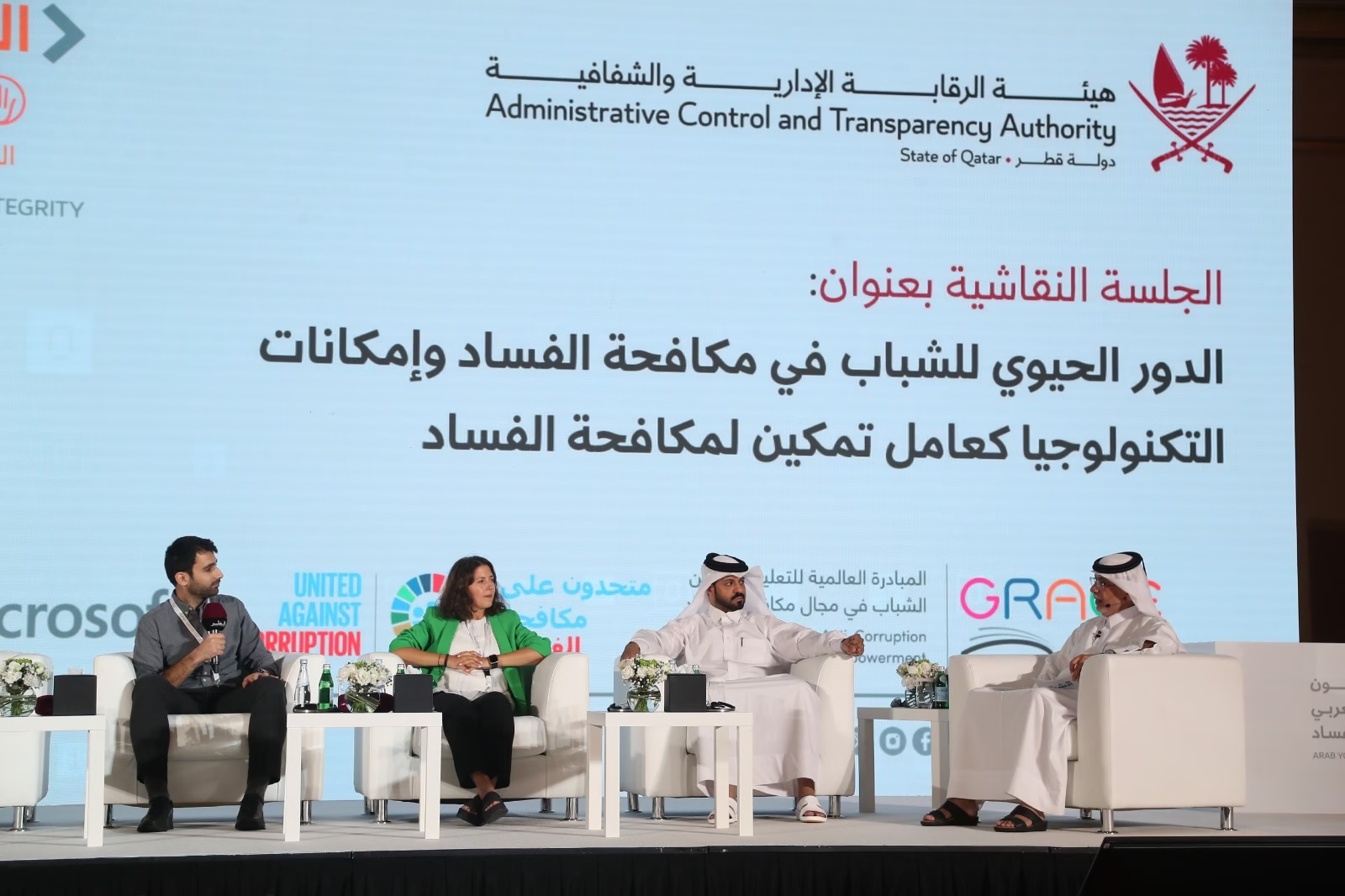
The Anti-Corruption Conference held in Doha stands as a pivotal event in the global fight against corruption and economic crime. Recognized as the largest gathering of its kind, it assembles leaders, policy makers, scholars, and civil society from around the world. The conference aims to examine the multifaceted nature of corruption, its detrimental impact on economies and societies, and the innovative strategies needed to combat it effectively.
This conference marks an important historical moment as it brings together a diverse coalition of countries and organizations dedicated to fostering international cooperation in enforcement, legislation, and technological advancements that can aid anti-corruption efforts. By facilitating dialogue among stakeholders, the conference emphasizes shared responsibility in addressing corruption—a challenge that transcends borders and affects nations worldwide.
In addition to discussions on the need for strengthened regulatory frameworks and transparent governance, a focal point of the Doha conference is the strategic integration of emerging technologies in the fight against corruption. Leveraging technology such as blockchain, artificial intelligence, and data analytics can enhance transparency and accountability, making it increasingly difficult for corrupt practices to thrive. The event encourages participants to explore how these advancements can be utilized effectively within their respective jurisdictions.
The significance of this gathering is magnified by the urgency of unity among global leaders in their shared goal of combating corruption. Through collaborative discussions and the exchange of ideas, the conference serves to galvanize efforts across different sectors, underscoring the importance of a cohesive response to a pervasive issue that significantly undermines economic development and governance. The conference ultimately seeks to inspire action and commitment towards building a future rooted in integrity and transparency.
Key Messages from Global Leaders
During the recent Doha Conference, global leaders shared their perspectives on the pressing issue of corruption and its far-reaching effects on society. The President of the United Nations General Assembly emphasized that corruption undermines global stability and progress, creating critical inequalities that hinder economic growth. His message resonated with the audience, reiterating that corruption is not only a national concern but a global challenge that demands a united front. He highlighted the need for international collaboration, stating that combating corruption is an integral part of achieving sustainable development goals.
The UN Secretary-General reinforced this sentiment by noting the adverse effects of corruption on governance and public trust. He pointed out that corruption diverts resources from essential public services, exacerbating poverty and inequality. Additionally, he remarked on the significant implications of corruption in times of crisis, where the misallocation of resources can severely impact communities already in vulnerable situations. The Secretary-General stressed the urgent necessity for innovative solutions to address this endemic problem, arguing that emerging technologies could play a pivotal role in transparency and accountability.
Artificial intelligence emerged as a central theme, with several leaders acknowledging its dual potential. While AI can enhance anti-corruption efforts through data analysis, surveillance, and predictive modeling, there are inherent risks associated with its deployment. The potential for misuse, bias, and erosion of privacy raises questions about ethical practices in leveraging technology against corruption. Therefore, the discussions centered on responsible usage and the establishment of robust frameworks to ensure that AI acts as a collaborative tool rather than a means to perpetuate corruption. Overall, the insights shared during the conference highlighted the urgent need for action combined with technological innovation to confront and ultimately eradicate corruption on a global scale.
The Role of Technology in Combating Corruption
Emerging technologies play a crucial role in the global fight against corruption, offering innovative solutions that enhance transparency, accountability, and overall integrity within various systems. Among these technologies, artificial intelligence (AI) stands out as a transformative tool with the potential to radically reshape anti-corruption efforts. AI can assist in identifying patterns of corrupt practices, predicting fraudulent behaviors, and analyzing vast amounts of data, which is often unmanageable through manual processes.
One significant application of AI in combatting corruption lies in its ability to foster transparency. For instance, machine learning algorithms can be utilized to monitor financial transactions in real-time, detecting anomalies that may signify illicit activities. This proactive approach not only allows for early intervention but also sends a clear message about the existence of oversight mechanisms that deter corrupt behaviors. Furthermore, AI technologies can be employed to analyze public contracts and procurement processes, ensuring adherence to established guidelines and best practices, thereby maintaining a high level of public trust.
In addition to transparency, technology enhances the detection of corrupt practices. By integrating AI systems with data from various sources, agencies can leverage predictive analytics to identify high-risk areas and allocate resources more strategically. Such targeted attention helps in the efficient utilization of public funds and supports rigorous oversight, ultimately contributing to improved governance. The combination of AI and big data also enables deeper analysis of the socio-economic factors that drive corruption, leading to informed policy decisions aimed at addressing root causes.
However, the implementation of these technologies must be accompanied by a robust regulatory framework to prevent potential misuse. Striking the right balance between harnessing technological advancements and ensuring ethical standards is imperative. Authorities must establish guidelines that govern the use of AI and other technologies to guarantee that they serve their intended purpose in combating corruption effectively.
The United Nations Convention Against Corruption: A Global Framework
The United Nations Convention Against Corruption (UNCAC), which entered into force in 2005, serves as a pivotal international instrument aimed at combating corruption in all its forms. It originated from growing concerns about the detrimental effects of corruption on development, governance, and the rule of law. The UNCAC is unique because it not only addresses the legal and institutional frameworks necessary to combat corruption, but it also promotes measures to prevent corrupt practices. By establishing a comprehensive global framework, the convention facilitates international cooperation against corruption, encouraging states to take actions that transcend national boundaries.
The primary objectives of the UNCAC include promoting integrity, accountability, and transparency within public and private sectors. Additionally, it aims to enhance the ability of member states to strengthen their laws and practices, allowing for better detection, prevention, and prosecution of corruption cases. The convention encourages countries to implement measures for asset recovery, ensuring that funds illicitly gained are returned to their rightful destinations. This global framework fosters a collective response to corruption, promoting dialogue and collaboration among member states.
Recent developments from the Doha Conference highlighted the importance of the UNCAC in bolstering global anti-corruption measures. Delegates discussed resolutions aimed at enhancing integrity and transparency within government sectors and civil society. Moreover, the conference underscored the significance of reinforcing the convention’s mechanisms, enabling states parties to continuously improve their anti-corruption measures and policies. These discussions echo the convention’s core principle: that a united front is essential in effectively addressing the corruption challenge, thus ensuring sustainable development and instilling public trust in institutions. By building on the foundational role of the UNCAC, countries are better positioned to confront corruption collectively.