Introduction to Awa Dabo’s Appointment
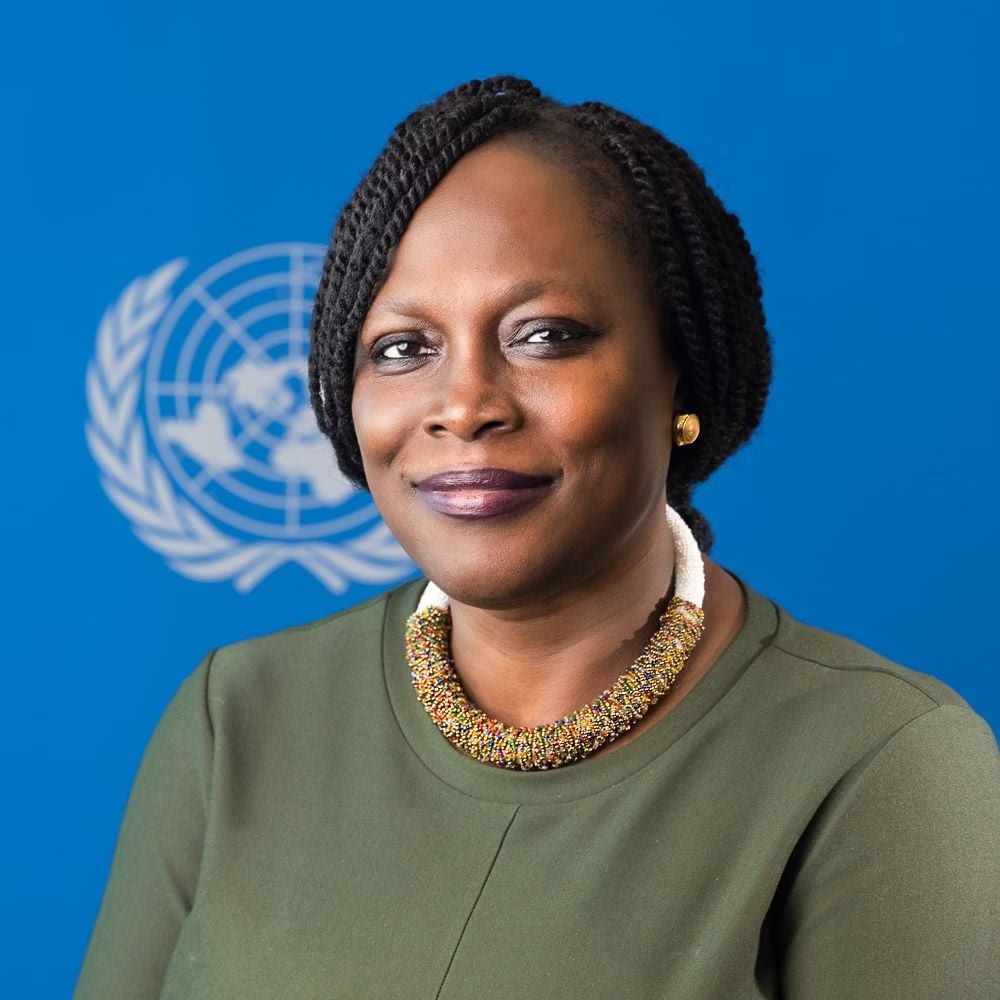
In a pivotal move for the United Nations, Secretary-General António Guterres has announced the appointment of Awa Dabo as the new Deputy High Commissioner for Human Rights. This significant appointment highlights the UN’s ongoing commitment to human rights advocacy around the world. Awa Dabo brings with her an extensive background in human rights and international law, equipping her for the challenges that lie ahead in this crucial position. Her appointment signals a new era for the UN’s Human Rights Office, which plays an essential role in fostering respect for human dignity globally.
The role of the Deputy High Commissioner for Human Rights is integral to the UN’s mission to promote and protect human rights. This position not only involves overseeing the day-to-day operations of the Human Rights Office but also entails engaging with various stakeholders, including member states, civil society, and affected communities. The Deputy High Commissioner must also collaborate with the High Commissioner to implement strategies that address human rights violations worldwide. Awa Dabo’s valued experience will be instrumental in navigating the complexities of these responsibilities.
The importance of human rights advocacy cannot be overstated, especially in today’s volatile geopolitical landscape. As challenges to human rights continue to emerge, including rising authoritarianism and systemic discrimination, the appointment of a dedicated leader like Awa Dabo signifies hope for progress. Her leadership will not only strengthen the UN’s efforts to address these urgent issues but will also seek to ensure that the voices of marginalized populations are heard in international forums. This is critical for advancing a culture of accountability and respect for human rights globally.
Acknowledging the Contributions of Nada Al Nashif
Nada Al Nashif has undeniably made substantial contributions during her tenure as Deputy High Commissioner for Human Rights, demonstrating tenacity and resilience in the face of numerous challenges. One of the most significant tests of her leadership came during the unprecedented COVID-19 pandemic, when the already strained global human rights landscape required immediate and innovative responses. Al Nashif adeptly navigated through this crisis, ensuring that the rights of the most vulnerable populations remained a focal point of the UN’s efforts.
Her commitment to advancing human rights was further exemplified during ongoing financial crises that have plagued many nations. Al Nashif continually advocated for a more equitable distribution of resources and support, asserting that the protection of fundamental human rights should not be compromised amidst economic instability. Under her leadership, the Office of the High Commissioner for Human Rights (OHCHR) reinforced its commitment to uphold the principles of justice and equality, urging member states to prioritize these values even in times of financial restraint.
A critical aspect of Al Nashif’s tenure was her role in promoting UN reform and advancing partnership initiatives that sought to enhance collaborative efforts in addressing pressing global issues. Recognizing the necessity of inclusivity, she championed initiatives that aimed to foster dialogue among member states, civil society, and grassroots organizations. Al Nashif’s focus on multilateralism emphasized the UN’s role as a platform for global cooperation, strengthening networks that addressed human rights concerns.
As we anticipate the incoming leadership of Awa Dabo, it is essential to acknowledge the foundational work laid by Nada Al Nashif. Her contributions have not only advanced the human rights agenda but also set a precedent for future leaders within the UN framework. The impact of her vision and leadership will continue to resonate into the next chapter of human rights advocacy.
Awa Dabo’s Impressive Background and Experience
Awa Dabo brings to her new role as Deputy High Commissioner for Human Rights an extensive and diverse background that spans over two decades of commitment to human rights, peacebuilding, and humanitarian efforts. Her career has been characterized by a strong focus on uplifting vulnerable populations and advocating for the universal declaration of human rights.
Ms. Dabo’s journey began with her initial involvement in non-governmental organizations, where she gained hands-on experience in advocacy and grassroots mobilization. She quickly rose through the ranks due to her outstanding ability to navigate complex political landscapes, engaging effectively with local communities and international stakeholders alike.
Her tenure with the United Nations has been marked by significant contributions to various peacekeeping and mission support operations. Notably, she served as a senior advisor in multiple conflict zones, where she was pivotal in implementing programs aimed at reducing violence and fostering dialogue among conflicting parties. Her leadership in these critical environments has been recognized for not only addressing immediate humanitarian needs but also laying the groundwork for sustainable peace.
Awa also held important positions in policy formulation and strategic planning, where her efforts shaped the UN’s approach to human rights issues worldwide. Her work in these capacities has demonstrated her commitment to promoting equality and justice, as well as her adeptness at working with diverse institutions.
Moreover, she has been instrumental in various high-level conferences and panels focusing on human rights advocacy. Her ability to articulate pressing social issues and propose actionable solutions has earned her respect across the globe. Through all these roles, Awa Dabo has cultivated a nuanced understanding of the multifaceted challenges facing human rights today, making her a formidable advocate for justice and equity.
The Significance of Dabo’s Multilingual Skills and Cultural Background
Awa Dabo’s appointment as Deputy High Commissioner for Human Rights represents a transformative opportunity for the United Nations, particularly in the realm of enhancing dialogue around human rights issues. Her multilingual capabilities and rich cultural background uniquely position her to navigate the complexities associated with international human rights advocacy. Multilingualism in such a prominent role is invaluable, as it facilitates improved communication and understanding among diverse groups, transcending the language barriers that often hinder effective dialogue.
Given the global nature of her responsibilities, Dabo’s proficiency in multiple languages will allow her to engage with varied stakeholders, ranging from governmental officials to grassroots organizations, in their preferred languages. This inclusivity is essential for fostering cooperation and mutual understanding, which are pivotal in addressing human rights violations. By speaking the languages of the communities she serves, she can build trust and rapport, signaling a commitment to listening and understanding local concerns.
Moreover, her cultural background enriches her perspective, allowing her to approach human rights issues with an awareness of the historical and societal contexts that shape them. This cultural sensitivity is crucial for devising impactful strategies that resonate on a local level. Dabo’s understanding of different cultural norms and values will enable her to tailor her initiatives and interventions effectively, ensuring that they are not only relevant but also respectful of the intricate social fabrics within which issues exist.
In conclusion, Awa Dabo’s multilingual skills and deep cultural insights are not merely advantageous assets; they are essential tools that will support her mission within the United Nations. They enable her to promote human rights in a manner that is both effective and inclusive, ultimately contributing to more equitable and just outcomes for all narratives involved.