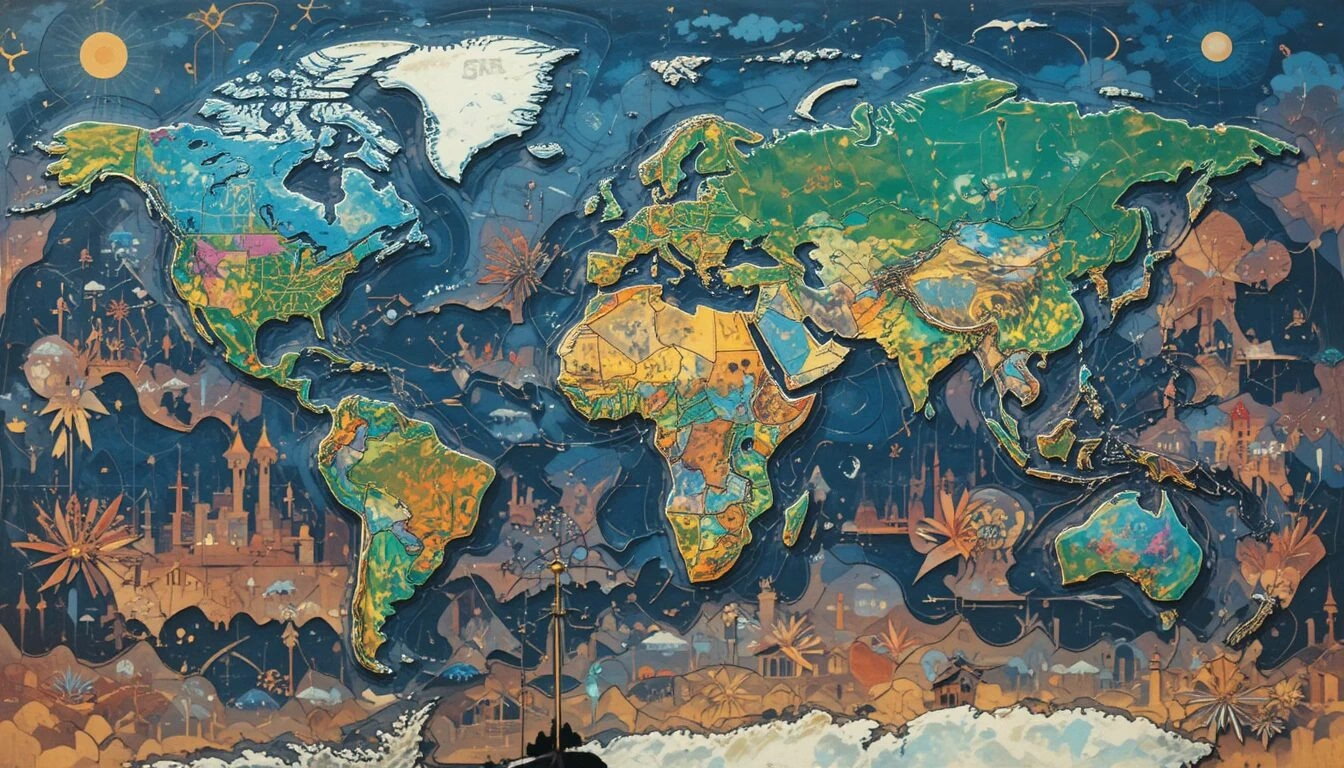
Introduction: The Changing Global Landscape
The contemporary global landscape is marked by profound transformations driven by a multitude of factors such as technological advancements, climate change, and social inequalities. In his address at the African Union-European Union Summit, UN Secretary-General António Guterres articulated the urgency of recognizing these shifts and adapting to the evolving dynamics of international relations. This speech serves as a crucial reflection on the pressing need for a multipolar world—one where cooperation is pivotal in addressing shared challenges across nations.
Technological advancements have fundamentally altered the way societies interact and engage with one another. Digital communication and information technologies have bridged gaps, allowing for instantaneous exchanges that transcend geographical boundaries. However, these same technologies have also exacerbated disparities, leaving marginalized communities at a greater disadvantage. In the face of these challenges, fostering inclusive dialogue and fostering multilateral partnerships will be critical for ensuring equitable progress.
Additionally, the climate crisis represents a pressing threat that has pushed nations to reassess their priorities and methodologies. With adverse environmental changes affecting food security, water resources, and public health across the globe, the necessity for collective action has never been more urgent. This necessitates not only the development of sustainable practices and green technologies but also the establishment of resilient frameworks that promote shared responsibility among nations.
Furthermore, deepening inequalities, whether economic, social, or political, demand a reevaluation of existing power structures. As wealth continues to concentrate within select populations, the gap between nations grows wider, undermining global stability. Creating a multipolar world requires an equitable distribution of resources and opportunities, ensuring that collaboration fosters mutual benefit rather than competition.
In summary, the speech by António Guterres emphasizes the importance of unity in addressing the multifaceted challenges of our time. By fostering a multipolar world rooted in cooperation, nations can build a resilient foundation for development, climate action, and peacebuilding. The stakes are high, and the path forward must prioritize interconnected relations to thrive in this rapidly changing global landscape.
Reimagining Development: The Path to Sustainable Growth
Sustainable development has emerged as a critical focus in fostering equitable growth across nations, particularly under the current global financial architecture, which often benefits affluent countries at the expense of poorer ones. The international community has recognized that achieving the Sustainable Development Goals (SDGs) necessitates a concerted and collaborative effort to reform the existing financial system. This engagement is particularly vital for developing nations, notably in Africa, where access to funding remains precarious.
Notably, the disparity in financial resources limits the capacity for numerous developing countries to address their socio-economic challenges effectively. Investment in infrastructure, education, and healthcare is paramount for fostering economic resilience and eradicating poverty. Thus, the proposal to reform the global financial system shores up support for innovative financing solutions, such as green bonds and social impact investing, which can diversify funding sources not only for infrastructure development but also to combat climate change.
In this context, the partnership between the African Union and the European Union serves as a prime model for cooperative development efforts. By aligning their strategic priorities, both entities can bolster economic opportunities, reflect mutual interests, and leverage their unique strengths. Initiatives such as technology transfer, shared best practices in governance, and collaborative projects can serve as a conduit for effective resource allocation. Such interventions aim to enhance access to capital, providing an avenue for African nations to pursue sustainable growth proactively.
Ultimately, reimagining development through sustained cooperation engenders a more equitable financial ecosystem. Moving forward, the focus must remain on reshaping global financial structures to ensure they serve the interests of all nations, nurturing sustainable growth, and fostering peace and stability globally. The collaboration that emerges from this effort will be instrumental in addressing pressing challenges, thus rendering a more balanced multipolar world.
Climate Action: Harnessing Africa’s Resources for a Green Future
Africa is endowed with abundant natural resources, which positions the continent as a crucial player in the global transition towards clean energy. The vast reserves of solar, wind, and hydroelectric power present in various regions of Africa offer enormous potential for generating sustainable electricity. For instance, the Sahara Desert holds enough solar energy to supply the entire planet’s electricity needs several times over. In addition, Africa’s vast network of rivers and extensive coastline provide opportunities for harnessing hydro and wind energy, respectively. Such resources can be pivotal in combatting climate change while simultaneously fostering economic development.
Transitioning to sustainable energy practices in Africa is not merely an environmental necessity but also an opportunity for socio-economic growth. The development of renewable energy infrastructures can create jobs, spur local innovations, and improve energy access for millions of people. Nevertheless, this transition is fraught with challenges, including inadequate financing, lack of technological expertise, and insufficient regulatory frameworks. Therefore, international cooperation is imperative to support African nations in overcoming these obstacles. This collaboration can take various forms, including investment in renewable energy projects, capacity-building initiatives, and knowledge transfer.
The roles of both African and international stakeholders are essential in ensuring a just and equitable approach to climate action. Investments from developed nations can provide the necessary financial backing, while technological assistance can facilitate the deployment of efficient energy solutions tailored to local contexts. Furthermore, the establishment of fair trade agreements can ensure that African nations benefit from their resources while actively participating in the global energy market. By establishing strategic partnerships, the international community can help to foster an inclusive green energy revolution, enabling Africa to move towards a sustainable and resilient future.
The Role of Peacebuilding in a Multipolar World
In recent years, the global landscape has shifted towards a multipolar world, characterized by multiple centers of power and influence. Amidst this transformation, the call for peace has resonated prominently, as highlighted by the Secretary-General, especially in the context of ongoing conflicts and humanitarian crises. The pursuit of peacebuilding is not merely an ideal but a necessity for fostering stability in such a diverse international environment. One of the critical aspects of this endeavor is establishing permanent seats for African nations on the UN Security Council. This inclusion would enable a more equitable representation of varied perspectives and promote decision-making that reflects the realities and needs of a broader spectrum of nations.
Furthermore, ensuring sustainable funding for African Union (AU)-led peace operations is vital. The AU has demonstrated its capacity to address regional conflicts and facilitate resolutions that resonate locally. However, inadequate funding often hampers these operations, hindering their effectiveness and leading to protracted crises. A reliable financial framework would not only empower the AU in its peace efforts but also strengthen the collective resolve towards achieving lasting peace on the continent and beyond.
The significance of multilateralism cannot be overstated in this context. In a multipolar world, collaboration among nations—particularly through platforms like the African Union and European Union—can play a pivotal role in promoting global stability. These organizations are uniquely positioned to address historical injustices and advocate for a more inclusive international community. By fostering dialogue, encouraging cooperation, and engaging all stakeholders in the peacebuilding process, these entities can facilitate a transition towards a world where conflict resolution is prioritized over confrontation. Thus, building a new multipolar world necessitates a concerted emphasis on peacebuilding as a foundational principle, shaping a more secure and just global order.