Understanding the Food Security Landscape in Benin
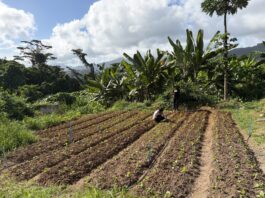
Benin’s food security landscape presents a complex interplay of challenges and opportunities, significantly influenced by its agricultural sector, which serves as the backbone of the country’s economy. A staggering 70% of the population relies on agriculture as their primary source of livelihood, highlighting its critical role in maintaining food security. However, smallholder farmers face numerous obstacles, primarily due to weather variability, inadequate access to technology, infrastructure deficits, and market limitations. These challenges are exacerbated by the region’s susceptibility to climate change, which often leads to unpredictable agricultural outputs.
Weather variability, including irregular rainfall patterns and prolonged droughts, severely impacts crop yields, making it imperative for farmers to adapt their practices. This unpredictability not only threatens food production but also jeopardizes the income and stability of households dependent on agricultural activities. Furthermore, factors such as limited access to financial resources, agricultural inputs, and training hinder farmers from implementing more resilient farming techniques. As a result, many smallholders operate at subsistence levels, struggling to produce enough food to meet their family’s needs.
In response to these challenges, the Beninese government has introduced a development strategy aimed at enhancing the resilience of its agricultural sector. This strategy emphasizes the importance of improving agricultural productivity through research and innovation, promoting sustainable practices, and increasing investment in rural development projects. Education initiatives are also underway to equip smallholder farmers with the knowledge and tools necessary to mitigate the effects of climate change and weather-related challenges.
In summary, while the agricultural sector remains pivotal to food security in Benin, addressing the hurdles faced by smallholder farmers is essential for building a more resilient and sustainable food system. By fostering innovation and investing in capacity building, Benin can improve food security and enhance the livelihoods of its population.
Opportunities for Nuclear Science in Agriculture
Nuclear science and technology hold significant potential for transforming agricultural practices in Benin, particularly in enhancing food security. These innovative approaches can lead to improved crop yields, better fertilizer efficiency, and enhanced food safety measures, which are critical in a nation where agriculture is a primary source of livelihood.
One notable application is plant mutation breeding, a technique that utilizes radiation to induce mutations in plant genomes. This process accelerates the development of new crop varieties that are more resilient to environmental stressors, pests, and diseases. By fostering genetic diversity, mutation breeding can substantially increase crop productivity and ensure a stable food supply, which is crucial for a country like Benin that faces agriculture-related challenges.
Another important aspect is the use of nitrogen-15 isotope tracing. This advanced technique allows researchers and agronomists to monitor nitrogen uptake in crops, thereby optimizing fertilizer usage. By understanding how plants absorb and utilize nitrogen, farmers can apply fertilizers more efficiently, reducing costs and environmental impacts while maximizing crop yield. Such precision farming practices can contribute to the sustainable management of resources, which is vital in tackling the food security crisis in Benin.
Additionally, radioanalytical techniques can play a key role in improving food safety. By using radiation to detect contaminants and residues in food products, these techniques help ensure that agricultural outputs meet safety standards. This not only protects consumer health but also boosts the reputation of Benin’s agricultural products in both local and international markets.
In light of these innovations, the application of nuclear science and technology in agriculture presents a promising avenue for enhancing food security in Benin. As the nation continues to confront agricultural challenges, embracing these scientific advancements could pave the way for a more resilient and prosperous agricultural sector.
Building on Existing Expertise and Infrastructure
Benin’s agricultural research and regulatory institutions possess a foundational capability that can be significantly enhanced through targeted support and investment. The existing frameworks have demonstrated potential in various agricultural sectors, particularly in livestock management and crop production. Institutions engaged in agricultural research are currently exploring innovative applications of nuclear science, which serve as instrumental tools to respond to the pressing needs of food security in the region.
One noteworthy initiative is the use of artificial insemination in cattle, aimed at improving livestock quality and productivity. This method has the dual benefit of enhancing herd genetics while ensuring better disease resistance. Furthermore, nuclear science facilitates advanced disease detection methods that enable timely responses to livestock health challenges. Continual development of such practices can contribute not only to food security but also bolster the economic stability of rural communities.
To maximize the impact of these initiatives, it is essential to scale up support from international organizations. Collaboration with global stakeholders can enhance training programs for local researchers, providing valuable expertise in cutting-edge agricultural technologies. Investments in laboratory infrastructures will allow for the collection and analysis of nutritional data, which is crucial for formulating innovative solutions tailored to local dietary needs. Strengthened laboratory capacities will be fundamental in tackling emerging agricultural challenges and adopting sustainable practices.
Moreover, engaging in knowledge and resource sharing with established agricultural institutions worldwide is imperative. Such collaborations can facilitate the exchange of best practices and methodologies, ensuring that Benin’s agricultural landscape is equipped to harness the benefits of nuclear science and technology effectively. By building upon the existing expertise and infrastructure, Benin can position itself as a leader in innovative agricultural solutions, thereby enhancing food security in the region.
The Future of Food Security in Benin through Collaboration
The pursuit of food security in Benin is intrinsically linked to effective collaboration among key stakeholders, including the government, the International Atomic Energy Agency (IAEA), and the Food and Agriculture Organization (FAO). Partnerships with these organizations have proven vital, enabling the integration of nuclear science and technology into agricultural practices, thus enhancing food production and sustainability.
The Atoms4Food initiative, in particular, stands out as a strategic alignment with Benin’s national priorities for agricultural development. By leveraging nuclear techniques, the initiative addresses critical challenges such as pest management and soil fertility. This collaboration not only promotes scientific innovation but also empowers local farmers with the knowledge and tools necessary to increase their productivity sustainably.
In addition to fostering agricultural advancements, these partnerships hold the potential to drive economic development in the region. Enhanced food security can lead to reducing poverty levels, improving public health, and creating jobs within the agricultural sector. By working together, the stakeholders can build a resilient food system that withstands economic shocks and climate change impacts.
As we envision the future of food security in Benin, it is essential to prioritize continued cooperation among the government, IAEA, and FAO. Such collaboration will further promote knowledge sharing, capacity building, and the implementation of research findings in real-world agricultural scenarios. The collective efforts will help Benin to respond effectively to food security challenges, setting a precedent for similar initiatives in other regions facing analogous difficulties.
Ultimately, by nurturing these partnerships and embracing the potential of nuclear science and technology, Benin can pave the way for a secure and prosperous future, ensuring that its population has access to sufficient and nutritious food.