Innovative Strategies for Reducing Pesticide Use
The agricultural landscape of North Rhine-Westphalia is experiencing a significant transformation, characterized by the state government’s commitment to minimizing pesticide usage through innovative plant protection strategies. Among these strategies, advanced technologies have emerged as pivotal tools for enhancing agricultural practices, allowing for efficient and targeted interventions. Techniques such as weeding robots, drones, and artificial intelligence applications are leading this revolution.
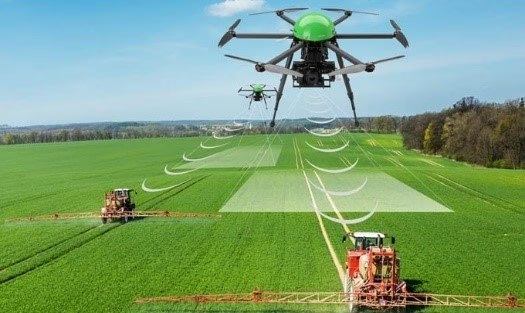
One of the most notable advancements in this area is the concept of ‘spot-spraying.’ This method ensures that only the areas of a crop that exhibit pest infestation receive pesticide treatment, thereby reducing the overall quantity of chemicals applied to the field. By employing precision agriculture techniques, farmers can now achieve effective pest control with minimal environmental impact. Weeding robots, for example, utilize sophisticated sensors and imaging technologies to identify and eliminate weeds, thus mitigating the need for herbicides and fostering sustainable farming practices.
Drones also play a crucial role in the future of plant protection. These aerial vehicles can perform comprehensive field monitoring and collect real-time data, allowing for timely interventions. They enable farmers to assess crop health, identify areas needing attention, and apply treatments precisely where they are required. Integrating artificial intelligence with these technologies further enhances decision-making processes, as algorithms can analyze historical data and predict pest outbreaks, enabling preemptive actions.
Insights from agriculture experts indicate that these innovative strategies not only enhance the effectiveness of pest management but also lead to substantial savings in pesticide usage. The shift towards a more precise application reduces costs for farmers, while simultaneously addressing environmental concerns and comply with regulatory standards. As North Rhine-Westphalia continues to embrace these cutting-edge solutions, the future of agriculture looks promising, increasingly aligning with sustainability goals.
The Role of Technology in Modern Agriculture
In recent years, the integration of technology into agriculture has significantly transformed farming practices, particularly in regions like North Rhine-Westphalia. With the continuous advancement of precision agriculture, farmers are now able to enhance their operational efficiency through innovative tools and techniques. Among these are autonomous robots and drones, which have gained prominence for their capabilities in identifying pests and weeds with unprecedented speed and accuracy.
Autonomous robots, equipped with sophisticated sensors and artificial intelligence, are capable of performing tasks that were once labor-intensive and time-consuming. These machines can navigate through fields, monitor crop health, and detect pest infestations without human intervention. By employing algorithms that analyze data in real-time, these robots can make swift decisions that lead to targeted interventions. This not only minimizes the need for chemical pesticides but also reduces waste, integrating more sustainable practices into the agricultural framework.
Drones play a pivotal role in modern agriculture by providing high-resolution aerial imagery that allows farmers to gain insights into their crops from above. The sophisticated cameras mounted on these drones can capture detailed pictures, enabling farmers to assess plant health, water needs, and nutrient deficiencies. Additionally, these aerial devices can be programmed to spray pesticides, fertilizers, or herbicides, ensuring precise application where it is most needed. The result is a reduction in the overall use of chemicals, which is not only cost-effective but also promotes environmental health.
The cumulative impact of these technologies signifies a shift towards more sustainable agricultural practices. By leveraging autonomous robots and drones, farmers in North Rhine-Westphalia can enhance their productivity while also safeguarding natural resources. This technological evolution supports a new paradigm in agriculture, fostering resilience against pests and promoting the long-term health of the agricultural ecosystem.
Challenges and Considerations in Implementation
The adoption of advanced methodologies in agriculture, particularly in the field of plant protection, presents several challenges for farmers in North Rhine-Westphalia. A principal issue is the limited mobile network coverage in rural areas, which significantly hampers the effectiveness of high-tech solutions such as precision agriculture and smart technologies. Many farmers rely on real-time data for making informed decisions regarding pest control and crop management. However, inadequate connectivity can lead to delays in receiving critical information, ultimately affecting their ability to act swiftly against potential threats.
Additionally, the dynamic nature of climate change poses another major challenge. Farmers must continuously adapt their practices to cope with fluctuating weather patterns, increased pest pressures, and changing crop diseases. The emergence of new pests, such as the Phlogotettix cyclops leafhopper, presents a significant threat to crops, necessitating an agile response from farmers. This adaptability requires not only the adoption of new technologies but also a shift in mindset and skill sets among agricultural workers. Training programs may be necessary to equip farmers with the knowledge and capabilities needed to effectively integrate these advanced methodologies.
Moreover, the financial aspect cannot be overlooked. The investment required to implement high-tech plant protection solutions can be substantial. Farmers may face dilemmas regarding the allocation of limited resources for these innovations versus traditional practices that have historically ensured their livelihoods. Therefore, understanding the trade-offs involved and developing supportive policies to encourage the adoption of innovative solutions is critical. Addressing these challenges requires a collaborative approach among technology providers, agricultural extension services, and government agencies to ensure that farmers in North Rhine-Westphalia can harness the benefits of modern plant protection measures while navigating complex environmental changes.
Towards Sustainable Agriculture: Opportunities and Support
The agricultural landscape in North Rhine-Westphalia (NRW) is undergoing significant transformation, marked by a concerted effort towards sustainability. Central to this evolution is the burgeoning growth of organic farming, which plays a vital role in minimizing pesticide usage. Organic farming not only adheres to natural agricultural practices but also aligns with the increasing consumer demand for pesticide-free produce. This shift towards sustainable agriculture is enhanced by state government initiatives aimed at incentivizing farmers to adopt innovative technologies.
In recent years, the NRW government has introduced financial support initiatives tailored to encourage the adoption of sustainable agricultural practices. These programs typically cover a range of funding options from grants for research to subsidies for equipment aimed at reducing pesticide reliance. Such proactive measures depict a clear commitment from public institutions to facilitate the transition towards a more sustainable agricultural framework within the region. Farmers, in turn, are presented with various opportunities to innovate their practices while contributing positively to environmental stewardship.
A holistic approach to sustainable farming in NRW includes essential preventative measures such as crop rotation and integrated pest management (IPM) strategies. Crop rotation serves to maintain soil fertility and disrupt pest cycles, ultimately leading to reduced dependence on chemical pesticides. Meanwhile, IPM strategies focus on utilizing biological control methods and environmentally friendly solutions, emphasizing the importance of a balanced ecosystem. Together, these practices not only promote sustainable agricultural production but also safeguard the biodiversity crucial to resilient farming systems.
By embracing these sustainable practices and leveraging government support, farmers in North Rhine-Westphalia stand to benefit from enhanced productivity and profitability, while simultaneously contributing to a greener future for the agricultural sector. The convergence of organic farming growth, financial initiatives, and practical pest management strategies is indicative of NRW’s commitment to fostering a sustainable agricultural landscape.