Türkiye is one of the Mediterranean region’s important citrus producers, harvesting about five million tonnes of oranges, lemons and grapefruit each year. These crops support farming communities, seasonal employment, packing and processing businesses, and trade with overseas markets. Citrus production is concentrated in regions where warm conditions and suitable soils help orchards thrive, but the same dependence on weather also leaves growers exposed to increasingly difficult conditions.
Extreme heat can interfere with flowering and fruit development, while prolonged high temperatures may increase water demand and stress trees. Frost presents a different threat: a sudden cold spell can damage blossoms, leaves and fruit, reducing the quantity that can be harvested. The timing and severity of these events matter. Even when trees survive, adverse weather can affect fruit size, appearance and quality, which are important factors in determining whether produce meets market requirements.
Recurring pest outbreaks add further pressure. Insects can damage fruit directly or weaken trees, and infestations may spread quickly when conditions are favourable. Farmers must monitor orchards and choose control measures carefully, since crop protection decisions affect both production costs and the quality of the harvest. Weather extremes and pests can occur together, compounding losses and making planning more uncertain from one season to the next.
Lower yields or fruit that fails to meet required grades can reduce farm income and disrupt the businesses that depend on a reliable supply. They may also make it harder for Türkiye to maintain its standing in competitive export markets, where consistent volume and quality are central to long-term trade relationships. In response, researchers and agricultural authorities are exploring tools that can help protect crops and improve resilience. Among them are nuclear techniques, applied in specific areas of agricultural research and pest management. This article examines how such methods are being used to address some of the challenges facing Türkiye’s citrus industry, alongside the broader need to adapt farming practices to changing conditions.
The Mediterranean fruit fly is a serious concern for citrus growers across Türkiye’s Aegean and Mediterranean coasts, where suitable climates and abundant fruit can support its spread. The insect, often called the medfly, attacks citrus and many other crops, creating risks for orchard yields, fruit quality and market access. Infested fruit may be rejected by buyers, so preventing damage is important not only for farmers but also for the wider agricultural trade.
The fly’s life cycle helps explain why it can be difficult to control. A female pierces the skin of a fruit and lays eggs beneath the surface. When the eggs hatch, the larvae feed within the fruit, damaging its pulp as they grow. The injury can cause fruit to soften, decay or fall before harvest. Because much of this development occurs inside the fruit, infestations may be hard to spot early, and control measures must address adult flies as well as the next generation.
The sterile insect technique, or SIT, offers a different way to suppress the pest. In this approach, large numbers of male flies are raised in facilities, sterilized using radiation and released into affected areas. The sterile males compete with wild males to mate with wild females. When a female mates with a sterile male, she produces no viable offspring. Repeated releases can therefore reduce the number of new flies over time, especially when supported by monitoring and coordinated area-wide action. Since SIT targets a specific insect, it can also reduce reliance on pesticides and help limit chemical residues on produce, while contributing to integrated pest management.
Experience elsewhere illustrates the method’s potential, though outcomes depend on local conditions and sustained implementation. In the Dominican Republic, the medfly was reported eradicated within a year during 2023–24 after a control campaign that included sterile insect releases. That result does not guarantee the same timeline in Türkiye, but it demonstrates how large-scale coordination can produce rapid gains. For citrus-growing regions, SIT may become a useful part of a broader strategy to protect orchards, safeguard fruit quality and reduce pressure from chemical treatments.
The partnership between Türkiye’s Bornova Plant Protection Research Institute and the International Atomic Energy Agency (IAEA) is advancing an area-wide approach to protecting citrus production from damaging insect pests. In 2024–25, researchers tested the sterile insect technique in an İzmir orchard, releasing one million sterilized male insects. Because the males cannot produce viable offspring, they mate with wild females without adding to the next generation. Monitoring found that the wild female population fell by 95%, an encouraging result demonstrating the potential of carefully coordinated releases and surveillance. The pilot also provided practical experience for adapting operations to a broader landscape.
Building on that outcome, a larger release is now underway across a 2,000-hectare valley in Menderes, south of İzmir. The expanded effort is intended to suppress pest numbers over a connected production zone rather than relying on isolated orchard treatments. Area-wide control requires sustained releases, reliable monitoring and coordination with growers, since insects can move between fields. The valley operation therefore builds on lessons from the pilot while testing the logistics and scale needed for wider adoption. Its results will help researchers assess how sterile males perform under varied local conditions and how release schedules can be aligned with citrus production.
The supporting infrastructure has also been strengthened with a new mass-rearing facility in İzmir, established with support from the IAEA and the Food and Agriculture Organization (FAO). The facility includes an X-ray irradiator funded by Türkiye’s Ministry of Agriculture and Forestry, which sterilizes the male insects before release. It can produce about 10 million sterile males each week, providing the volume needed for sustained area-wide campaigns. The IAEA has supported the programme over four years through training, fellowships and expert missions. This technical cooperation has helped build expertise in rearing, irradiation, release planning and monitoring, supporting Türkiye’s ability to manage the programme.
Mutation breeding uses carefully controlled radiation to increase the rate at which genetic changes arise in plant material. These changes resemble variations that occur naturally over generations, but the method allows researchers to examine a broader range of traits in a shorter period. Scientists select plants with useful characteristics, such as earlier fruit ripening, improved disease resistance or seedlessness, and assess their performance through testing. At Alata Horticultural Research Institute, this work led to Eylül, released in 2009. The lemon variety matures early and offers disease resistance, qualities that can help growers manage production schedules and reduce vulnerability to crop losses. In 2010, researchers introduced three seedless varieties—Alata, Gülşen and Uzun—expanding the options available to citrus producers and consumers.
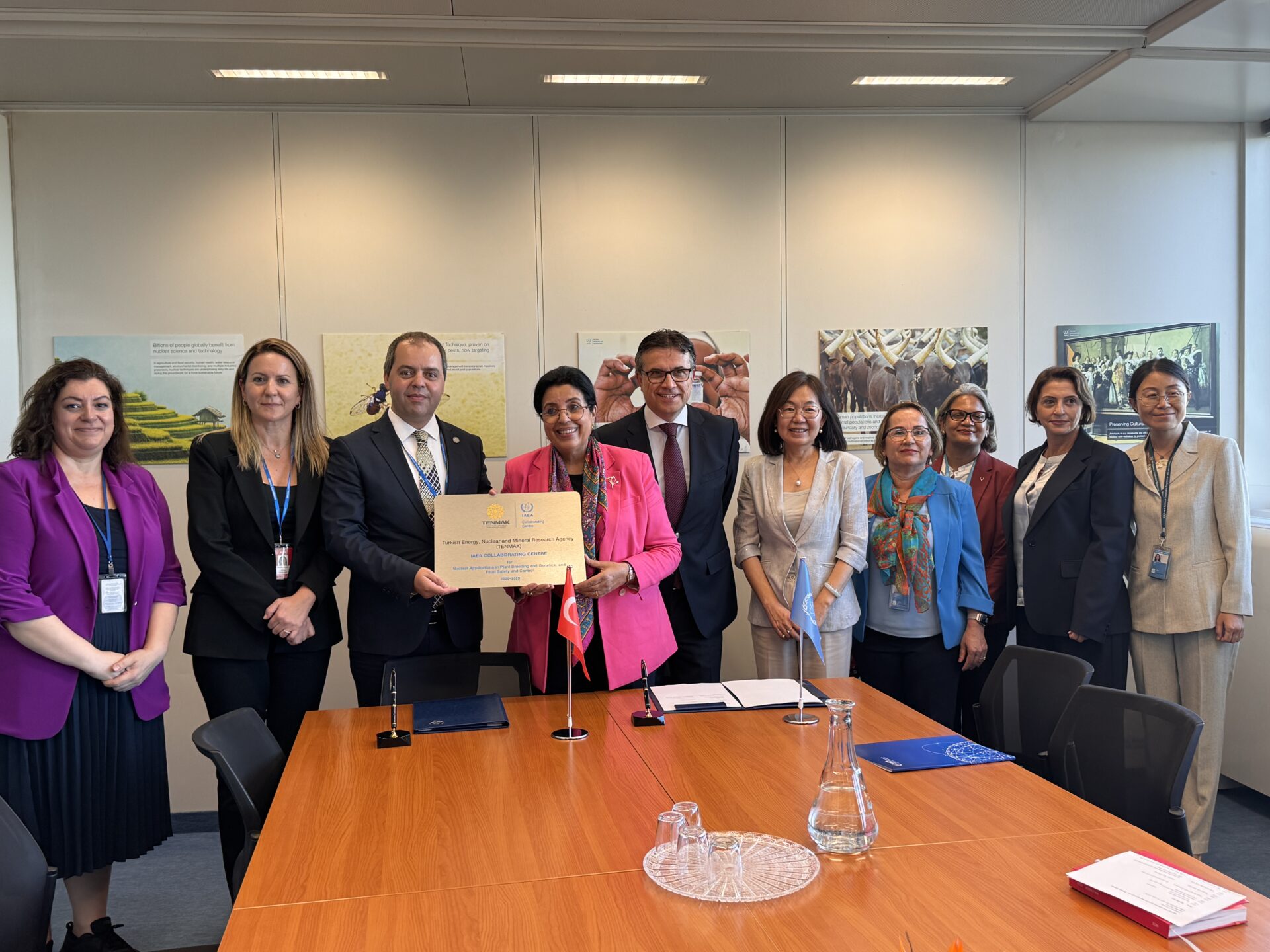
Beyond varietal development, Türkiye’s national nuclear research capacity supports related agricultural applications. TENMAK’s Nuclear Energy Research Institute contributes expertise in mutation breeding and food irradiation, and its designation as an International Atomic Energy Agency (IAEA) Collaborating Centre has strengthened this role. The partnership supports research, technical cooperation and the exchange of knowledge, helping connect nuclear science with practical needs in agriculture. Food irradiation can be studied as a means of managing pests and microorganisms and extending the safe handling of food, while mutation breeding offers a structured route to new crop characteristics. Together, these fields broaden the scientific tools available to protect citrus production and improve the quality and reliability of products moving through the supply chain.
These efforts matter as climate pressures intensify and growers face changing temperatures, water constraints and evolving pests. Resilient varieties, sound food-safety practices and compliance with export standards can help sustain market access. Continued progress depends on training scientists and agricultural experts to conduct trials, interpret results and transfer knowledge to producers. Investing in expertise will support innovation and future growth across Türkiye’s citrus sector.