Overview of the Humanitarian Diplomacy Initiative
The Humanitarian Diplomacy Initiative, officially announced during the Qatar Mediation Forum 2025, aims to bolster humanitarian efforts across various global contexts while supporting peace-building and conflict resolution. This initiative is a strategic endeavor that underscores Qatar’s commitment to promoting humanitarian values through international collaboration and diplomatic engagement. By tapping into the expertise of key stakeholders such as the Qatari Ministry of Foreign Affairs, the Qatar Red Crescent Society (QRCS), and the Center for Conflict and Humanitarian Studies (CCHS), the initiative forges a collective approach to humanitarian diplomacy.
One of the primary objectives of the Humanitarian Diplomacy Initiative is to enhance the effectiveness of humanitarian actions by integrating them with diplomatic efforts. This is crucial, especially in conflict-prone areas where traditional humanitarian responses often face numerous obstacles. Through targeted diplomatic engagement, the initiative seeks to facilitate access to affected populations, ensuring that humanitarian assistance reaches those in dire need. Furthermore, the initiative promotes a coordinated response to crises, fostering collaboration among international organizations, non-governmental entities, and local actors.
The significance of the Humanitarian Diplomacy Initiative is also reflected in Qatar’s broader framework for international cooperation. By advocating for a humanitarian approach in diplomatic dialogues, Qatar positions itself as a proactive player in global humanitarian efforts. This initiative not only aligns with Qatar’s national objectives but also reinforces its reputation as a mediator in international disputes. By addressing the interconnectedness of humanitarian aid and diplomacy, the Humanitarian Diplomacy Initiative serves as a vital platform for advancing both humanitarian principles and diplomatic relations in challenging contexts.
Establishment of the Humanitarian Diplomacy Unit
The creation of the Humanitarian Diplomacy Unit within the Center for Conflict and Humanitarian Studies marks a significant advancement in the pursuit of effective humanitarian responses. By integrating multidisciplinary approaches, this unit aims to enhance the bridge between humanitarian fieldwork and rigorous academic research. The primary objective of the unit is to provide comprehensive support through extensive research, capacity building, and effective policy formulation aligned with contemporary humanitarian needs.
One of the key functions of the Humanitarian Diplomacy Unit is its commitment to research. The unit is dedicated to studying the dynamics of crises and the impact of humanitarian actions on affected populations, thereby contributing valuable insights that can inform policy and practice. This research will serve as a critical tool for understanding the complexities of humanitarian interventions and for evaluating their effectiveness in real-world scenarios.
Moreover, capacity building is another integral focus of the unit. It aims to empower humanitarian actors and organizations by enhancing their skills and knowledge, ensuring they are adequately equipped to respond to emergencies. By offering training programs and resources, the unit aspires to foster a new generation of practitioners who are adept at navigating the challenges of humanitarian contexts.
The Humanitarian Diplomacy Unit also seeks to play a pivotal role in policy support. Through collaboration with humanitarian agencies and governments, the unit will provide expert recommendations based on empirical evidence and research findings. Such support is essential for enhancing coordination among various stakeholders and improving decision-making processes in times of crisis, ultimately leading to more effective and sustainable humanitarian outcomes.
In developing its framework, the unit acknowledges the importance of a comprehensive approach to humanitarian diplomacy, where academic rigor meets field-based realities, thus fostering a deeper understanding of the intricate interplay between academic inquiry and practical humanitarianism.
Key Remarks from Forum Leaders
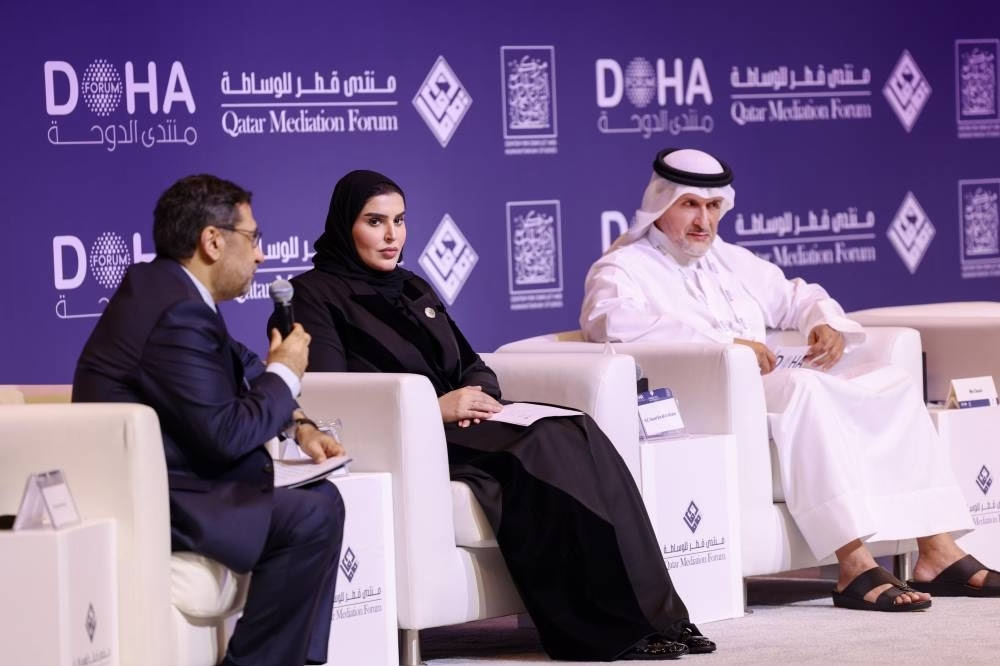
At the Qatar Mediation Forum 2025, prominent figures highlighted the crucial role of humanitarian diplomacy in fostering peace and stability in conflict-affected areas. Her Excellency Dr. Mariam Al-Misnad emphasized the significance of collaborative efforts in addressing humanitarian crises. She underscored that effective diplomacy should not only focus on conflict resolution but also incorporate humanitarian assistance. Dr. Al-Misnad remarked that this dual approach is essential in creating sustainable solutions and bringing relief to those impacted by crises.
Mr. Yousef bin Ali Al-Khater, a key figure in Qatar’s leadership, spoke about the operational challenges faced by humanitarian initiatives in conflict and disaster zones. He noted that geopolitical nuances often complicate the delivery of aid, highlighting the need for enhanced coordination among humanitarian actors, governments, and international organizations. Mr. Al-Khater called for a concerted effort to improve logistics and accessibility to ensure that aid reaches those who need it most promptly. He articulated that mediators must be empowered to navigate these difficulties effectively to maintain a focus on humanitarian priorities.
Dr. Ghassan Elkahlout contributed valuable insights regarding the potential impact of the Humanitarian Diplomacy Initiative. He explained that this initiative aims to strengthen Qatar’s role on the global stage as a proactive mediator and humanitarian provider. Dr. Elkahlout stressed that the initiative seeks to engage with various stakeholders, integrating local voices into the decision-making processes surrounding humanitarian interventions. The participants’ diverse perspectives enrich the dialogue, fostering a more inclusive approach to diplomacy. Ultimately, the forum’s leaders shared a common vision: to leverage Qatar’s commitment to humanitarian diplomacy to alleviate suffering and promote lasting peace in regions marred by conflict.
Future Directions for Humanitarian Diplomacy in Qatar
The establishment of the Humanitarian Diplomacy Initiative represents a pivotal step in refining Qatar’s role in addressing global humanitarian challenges. By integrating innovative strategies and fostering collaborative relationships among various stakeholders, this initiative has the potential to significantly enhance Qatar’s capacity to respond to humanitarian crises, both nationally and internationally. The new unit aims to facilitate a more coherent approach to humanitarian diplomacy, enabling Qatar to leverage its unique geopolitical position and resources effectively.
One of the foremost implications of this initiative is the encouragement of partnerships with international organizations, governments, and non-governmental organizations (NGOs). These collaborations are expected to yield innovative solutions tailored to complex humanitarian situations, ensuring that aid delivery is both timely and effective. Furthermore, by engaging in knowledge-sharing and best practices, Qatar can enhance its diplomatic outreach, positioning itself as a key player in global humanitarian efforts.
In addition to fostering partnerships, the initiative emphasizes the importance of training in international humanitarian law (IHL). Continuous education for diplomats, humanitarian workers, and policymakers is essential for creating a robust framework that aligns with international standards. This focus on training not only enhances the competency of personnel involved in humanitarian work but also builds a culture of respect for human rights and humanitarian principles within Qatar.
Collaboration among various entities, including academic institutions, civil society organizations, and private sectors, is critical for improving humanitarian outcomes. Collective efforts to mobilize resources, share insights, and coordinate responses can lead to more sustainable and impactful results during humanitarian emergencies. As Qatar embarks on this new journey through the Humanitarian Diplomacy Initiative, the commitment to integrating innovative tactics with established diplomatic practices signifies a promising future for humanitarian diplomacy in the region.