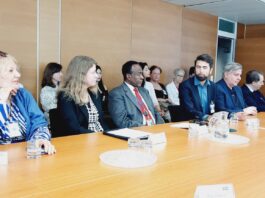
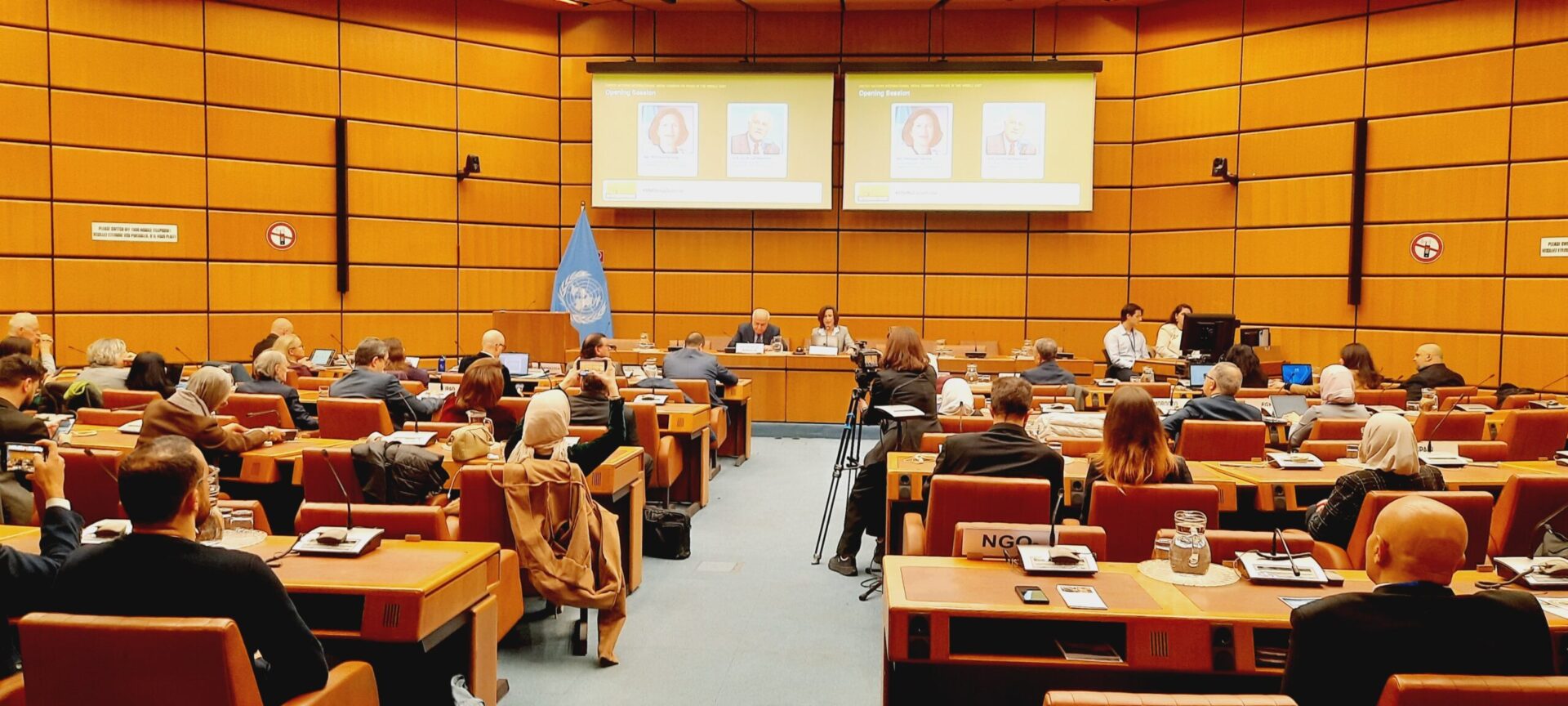
On 16 and 17 November 2026, the United Nations International Media Seminar on Peace in the Middle East convened at the Vienna International Centre. Organized by the UN Department of Global Communications, the annual gathering brought together media professionals and other participants to consider the relationship between journalism, conflict and prospects for peace in the region. Its location in Vienna provided a setting for discussion among an international audience, including European journalists and news organizations whose coverage helps shape public understanding of developments in the Middle East.
The seminar was held in accordance with General Assembly resolution 77/24, adopted on 30 November 2022. That resolution provides the institutional basis for the annual meeting, reflecting the United Nations’ continuing interest in how information about the region is produced, communicated and received. The event’s regular return also offers an opportunity to assess changing media practices and the challenges facing those who report on a complex and often contested political landscape.
The 2026 gathering carried particular significance as it marked the seminar’s 35th anniversary. That milestone coincided with the 35th anniversary of the Madrid Peace Conference, an important diplomatic effort to advance negotiations in the Middle East. The connection placed the seminar within a longer history of international engagement, while inviting participants to consider how media coverage has evolved alongside diplomatic initiatives and regional events. The anniversaries offered a point of reference rather than a substitute for examining present-day reporting and its responsibilities.
At its centre, the seminar examined how the media report on peace and conflict in the Middle East. Particular attention to European journalists and news organizations made it possible to consider editorial choices, reporting conditions and the ways audiences encounter coverage beyond the region. The discussions addressed the media’s role in conveying conflict, explaining peace efforts and representing people affected by events. By bringing these questions into a dedicated international forum, the Vienna seminar aimed to encourage informed reflection on journalism’s contribution to public debate and understanding.
The opening session marked the UN Vienna Media Seminar’s 35th anniversary by looking back at how Western media coverage of the Middle East has changed over roughly three decades. Its point of reference included the period of the Madrid Peace Conference, providing a way to consider how reporting and the context in which audiences encountered it have developed since then. Rather than treating media narratives as fixed, the discussion placed them within a longer history of change.
Participants considered shifts in framing, language and priorities: the choices that shape which developments receive attention, how events are described, and what wider context accompanies a report. These dimensions influence not only the presentation of individual stories but also the broader narratives through which the region is understood. Examining them over time offers a means of recognizing change in journalistic practice and in the terms used to discuss the Middle East, without assuming that coverage has moved in a single direction or followed a uniform pattern.
The session also considered the relationship between media coverage and public understanding. Reporting helps audiences interpret events, while the language and emphasis used in coverage can affect which issues appear central and how they are placed in context. Looking back across several decades therefore provides an opportunity to ask how Western audiences may have encountered the region differently at different moments. Such reflection is valuable for assessing the development of coverage and the assumptions that can accompany it. By revisiting the period since Madrid, the seminar’s anniversary session encouraged a long view of the media’s role in representing conflict and peace. This historical perspective can support more careful discussion of how narratives are formed and revised, while keeping attention on the complexity of the subject rather than relying on simplified accounts.
For European journalists and media organizations covering a conflict from outside the region, reporting is shaped by practical and editorial constraints. Distance can limit opportunities to observe events directly, speak with people affected, and assess how conditions change over time. Newsrooms must make decisions about what can be reported with confidence when staff cannot reach the places at the center of a story. These challenges concern not only logistics but also the standards and judgments that guide publication.
Reliable information is essential in this setting. Journalists may need to compare accounts from multiple sources, examine available images and documents, and distinguish confirmed details from claims that remain uncertain. Such work can support careful reporting, but it cannot always replace firsthand observation. Direct access gives reporters a way to see conditions, ask follow-up questions, and add context that may be difficult to establish remotely. When that access is limited, journalists must explain what they know, how they know it, and where important gaps remain.
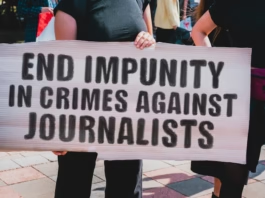
A central concern raised in the session’s subject was the reported ban on international journalists entering Gaza to report. Restricted entry can affect every stage of newsgathering: reporters may be unable to gather their own accounts on the ground, independently verify information, or convey the lived conditions they would otherwise witness. The resulting reliance on indirect sources can complicate corroboration and narrow the range of perspectives available to audiences. It can also make uncertainty more prominent in coverage, particularly when events are developing quickly. For editors, the task is to communicate those limitations without presenting unverified material as fact or allowing caveats to obscure the human realities being reported. The session’s focus therefore highlights a broader editorial question: how can media outlets provide accurate, meaningful coverage when access to the place itself is restricted? Transparency about sourcing and constraints, alongside persistent efforts to secure dependable information, remains important to public understanding.
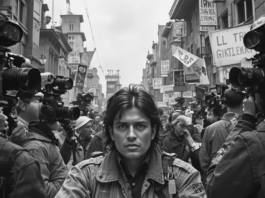
The Vienna Media Seminar’s final session, “Unseen Struggles: The Trauma of Reporting from or on a War Zone,” shifted attention to the people who document conflict and the emotional consequences of that work. Its subject encompassed journalists reporting directly from war zones as well as those covering violence from elsewhere. Although their working conditions may differ, both groups can encounter the psychological weight of sustained engagement with conflict, suffering and loss. The session’s framing brought that personal dimension into a broader conversation about how war is reported and understood.
Journalists in conflict settings may face danger, uncertainty and the pressures of gathering information amid rapidly changing events. Reporting from a distance can also involve repeated contact with distressing images, testimony and other material connected to violence. Across these circumstances, repeated exposure can be emotionally demanding. The strain does not necessarily end when a journalist leaves a conflict area or completes an assignment: material may continue to be reviewed, edited and shared, keeping reporters in contact with accounts of traumatic events. The session’s stated focus drew attention to these experiences without treating every journalist’s response as the same.
Considering the trauma of war reporting also makes journalists’ well-being relevant to discussions that might otherwise focus chiefly on events, sources and audiences. Recognizing that reporters can be affected by what they witness or cover does not lessen the importance of their work; it acknowledges that reporting takes place through people who may carry its effects. The session placed this human dimension alongside the public role of journalism in documenting conflict. In doing so, it highlighted the emotional and psychological strain associated with covering war, whether on the front line or through sustained engagement with distressing material elsewhere, as an important part of the wider subject of conflict reporting.