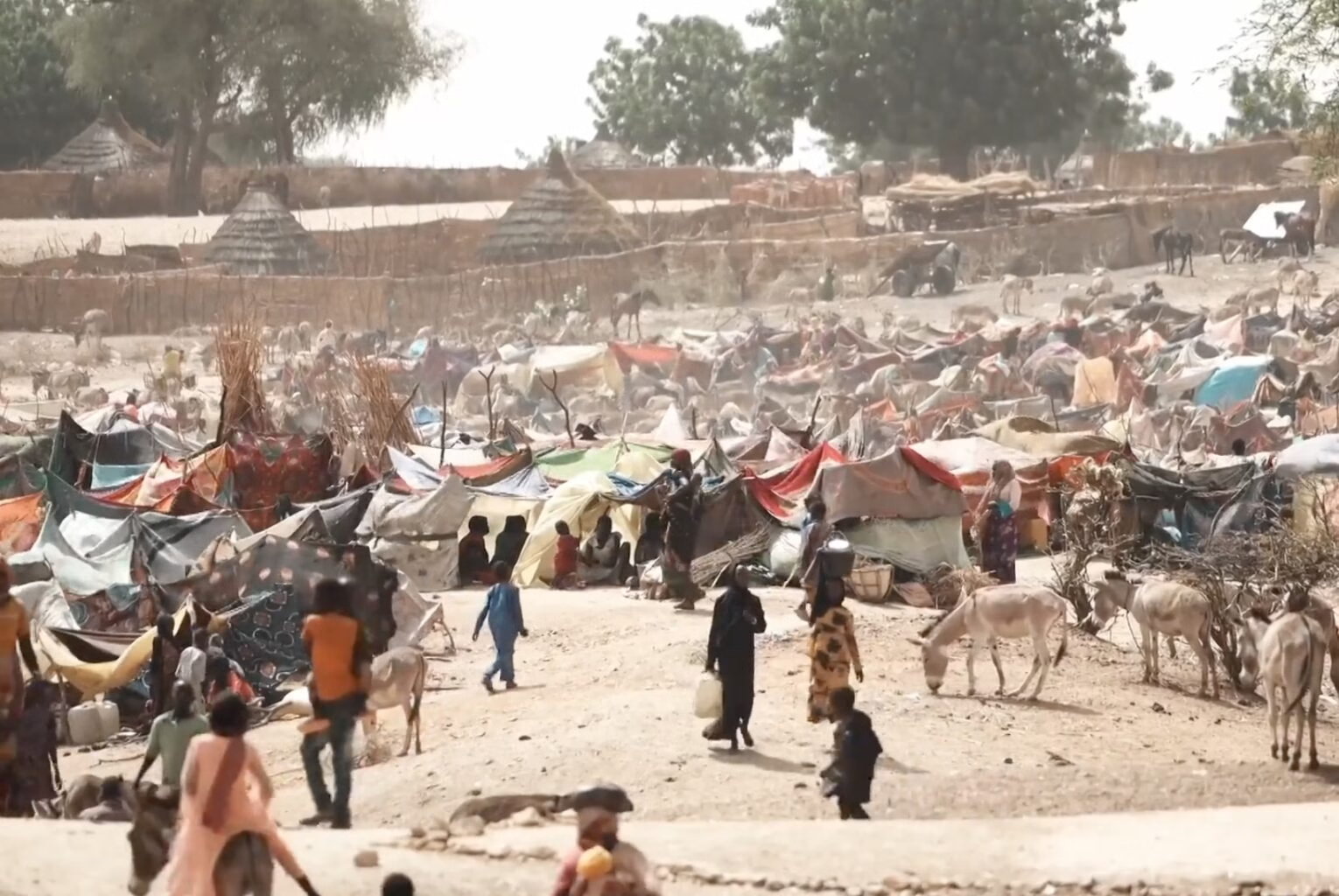
Understanding the Current Conflict in Sudan
The ongoing conflict in Sudan, particularly in the Kordofan region, has escalated dramatically in recent months. This upheaval primarily involves the clashes between the Sudanese Armed Forces (SAF) and the Rapid Support Forces (RSF). The RSF has made notable territorial gains, including the capture of key strategic locations such as Babanusa and Heilig. These advancements have not only reshaped the power dynamics within the region but have also contributed to an overall deterioration of security and stability throughout Sudan.
One of the most alarming aspects of this conflict has been the humanitarian implications arising from the violence. Displacement is on the rise, with countless civilians forced from their homes due to the ongoing hostilities. As fighting intensifies, reports of drone strikes targeting civilian areas have emerged, further exacerbating the crisis. Such aerial assaults have led to an increase in civilian casualties, instilling fear among the populace and hindering humanitarian access to those in dire need of assistance.
Moreover, the chaos has resulted in significant disruptions to essential services, including healthcare and education, exacerbating the suffering of the affected communities. Humanitarian organizations are struggling to deliver aid amidst the conflict, and the need for international intervention has been echoed by various advocacy groups. The urgent situation demands collective action both from the international community and regional stakeholders, aimed at preventing a further escalation of violence and addressing the immediate needs of those impacted by this dire conflict.
Regional Dynamics: The Potential for Spillover
The ongoing conflict in Sudan has significant implications not only for its citizens but also for neighboring countries, particularly Chad, South Sudan, and Ethiopia. The porous borders that exist between these nations create an environment where the violence and unrest in Sudan can easily spill over. This potential for cross-border movement of armed groups adds to the regional tensions and poses substantial risks to the stability and security of these nations.
Chad, which shares a border with Sudan, has a history of dealing with the repercussions of Sudanese conflicts. The presence of armed groups along the border has the potential to destabilize Chad, particularly in the eastern region where government authority is often challenged. Any escalation in Sudan could lead to increased refugee inflows, humanitarian crises, and might necessitate a military response from Chad to address threats associated with rogue armed groups.
Similarly, the conflict has ramifications for South Sudan, which is already grappling with its internal issues and is wary of any spillover effects from Sudanese factions crossing into South Sudanese territory. The Free Sudanese Armed Forces and other insurgent groups may exploit the chaos to gain a foothold in South Sudan, further complicating an already challenging political landscape.
Ethiopia, on the other hand, is currently focused on its internal security issues, including the conflict in the Tigray region. However, as tensions rise in Sudan, there is a possibility that armed groups could seek refuge in Ethiopia or attempt to disrupt the delicate balance of peace within its borders. The Ethiopian government may find itself compelled to address threats that emerge as a result of the Sudanese conflict, thus requiring increased military vigilance.
In essence, the deteriorating situation in Sudan not only affects its own stability but also poses numerous risks to regional security and necessitates concerted efforts to prevent a larger catastrophe from unfolding. Diplomatic interventions, increased border surveillance, and collaborative security measures among these nations will be critical in maintaining regional stability.
Humanitarian Crisis and International Response
The ongoing conflict in Sudan has led to a significant humanitarian crisis, increasingly affecting the civilian population. Reports indicate widespread atrocities including mass killings, sexual violence, and other forms of brutal repression executed primarily against vulnerable communities. These developments have created a dire situation, with millions of individuals facing severe food shortages, inadequate healthcare, and displacement from their homes. Despite international calls for the protection of civilians, the scale of violence suggests that immediate measures are essential to address these escalating concerns.
Access to essential supplies has become heavily restricted, as various factions obstruct humanitarian aid efforts. This blockage exacerbates the suffering of the population, leading to malnutrition, disease outbreaks, and deteriorating living conditions. Humanitarian organizations are striving to reach those in need; however, their efforts are often met with challenges that make the delivery of supplies, including food and medical care, increasingly difficult. The coordination of these efforts has become a critical component in combating the humanitarian crisis in Sudan.
The international community has also taken notice of the situation, with various countries and organizations mobilizing resources to assist those affected by the conflict. Significant contributions have been pledged by multiple nations, alongside various UN agencies, aiming to provide immediate relief as well as long-term support strategies. However, without a unified approach and a vested commitment to ensuring protection for humanitarian workers, the response may fall short of addressing the burgeoning crisis. Collaboration among all stakeholders is paramount to alleviating the sufferings of the Sudanese people effectively and to advocating for lasting peace in the region.
The Call for Action: Preventing Further Escalation
The ongoing conflict in Sudan has drawn increasing attention from international leaders and experts, who are urgently calling for decisive action to curtail the violence that has led to significant humanitarian crises. One of the critical aspects highlighted in these discussions is the need to address the arms supply exacerbating the conflict. The influx of weaponry into the region has not only fueled hostilities but has also complicated efforts aimed at restoring peace and stability.
In light of these developments, there are pressing demands for an expansion of arms embargoes targeted specifically at all parties involved in the conflict. Such embargoes would serve as a crucial step in limiting the available resources for armed groups, thereby reducing their capacity to perpetuate violence against civilians. Furthermore, robust enforcement mechanisms are necessary to ensure that these embargoes are effective, accompanied by strong international oversight to prevent illicit arms trafficking.
The international community must pivot from a stance of inaction to one characterized by measurable strategies that prioritize both the prevention of further violence and the protection of civilians in Sudan and its surrounding areas. Diplomatic efforts should be reinforced by tangible measures such as humanitarian assistance and support for local NGOs that directly aid affected populations. This multifaceted approach may foster an environment conducive to peace negotiations, essentially placing a premium on civilian safety amid ongoing turmoil.
As the situation in Sudan evolves, it is imperative that the global community responds adequately and collectively as this crisis touches on broader regional stability. The strong leadership exhibited by nations willing to collaborate on restraint and advocacy for peaceful resolutions will be pivotal in changing the current trajectory of the conflict.