The Origins and Evolution of the G2 Concept
The G2 framework emerged in 2005 as a strategic initiative primarily aimed at addressing the rising influence of China’s economic power. The concept originated from discussions among analysts and policymakers in the United States and was initially supported by the notion that a cooperative relationship between the United States and China could serve as a stabilizing force in the international arena. Advocates of the G2 model argued that collaboration between the two nations was essential for tackling global challenges such as climate change, terrorism, and economic instability.
As the years progressed, the G2 framework gained prominence, particularly during the 2008 financial crisis, which revealed vulnerabilities in the global economic system. This period marked a significant turning point, as the collaborative efforts between the U.S. and China garnered increased visibility. The two nations appeared to work together, yet underlying tensions continued to grow, fueled by competing national interests and differing political ideologies.
In the subsequent years, as China’s economic, technological, and military capabilities expanded, the dynamics of the G2 evolved. This shift not only transformed the relationship between the two states but also affected their roles in the wider international community. As China’s assertiveness on the global stage increased, the rhetoric surrounding the G2 concept began to reflect concerns over China’s approach to strategic competition, leading to a re-evaluation of the framework. The transformed perspective encompassed a more cautious outlook on U.S.-China cooperation and underscored the rise of alternative power centers that challenge the traditional unipolar model.
Thus, the G2 framework, which initially represented a partnership aimed at fostering stability, has progressively transitioned into a subject of critical examination. It highlights the complex interplay of global power structures, particularly in light of shifting alliances and emerging geopolitical tensions that continue to shape the international landscape.
Navigating the U.S.-China Relationship: A Pragmatic Approach
The relationship between the United States and China is one of the most significant and complex bilateral dynamics in the contemporary international landscape. This intricate relationship is characterized by a delicate balance between cautious cooperation and strategic competition, driven by a mutual interdependence that calls for a nuanced approach. Under the leadership of former President Donald Trump, the United States adopted a pragmatic strategy aimed at protecting American interests while managing competition with China.
Trump’s approach to international relations markedly contrasts with that of former President Barack Obama, who emphasized collaborative engagement. While Obama’s strategy sought to foster partnerships and dialogue, Trump prioritized a more interest-focused model. This approach involved a critical assessment of trade policies, military strategies, and technological advancements, ensuring that American technological supremacy and economic interests were front and center. By assessing the U.S.-China relationship through a pragmatic lens, Trump aimed to safeguard American jobs and industry while also addressing concerns related to national security.
In navigating this rivalry, Trump recognized the importance of calculated and long-term planning. This required a strategic framework that balanced engagement and confrontation without precipitating outright conflict. One of the key elements of his strategy included focusing on bilateral negotiations and emphasizing trade terms favorable to the United States. By seeking to establish a more balanced economic relationship, Trump aimed to mitigate the adverse effects of China’s rise on American markets while fostering an environment conducive to American competitiveness.
Ultimately, the U.S.-China relationship, under Trump’s pragmatic approach, necessitated a re-examination of traditional diplomatic practices. The emphasis on American interests and the potential for collaboration paved the way for a more strategic relationship that aimed to navigate the challenges posed by one of the key global competitors in the 21st century.
China’s Pragmatic Engagement in a Multipolar World
China’s ascent in the global arena is marked by its strategic engagement within the G2 framework, wherein it seeks to maximize its national interests while maintaining a degree of autonomy. This duality reflects China’s nuanced approach to foreign policy, characterized by cooperation on overlapping objectives alongside a concerted effort to cultivate a multipolar world order. The complexities of this engagement underscore China’s ambition to be recognized as a preeminent global power, distinct from traditional hegemonic influences.
At the heart of China’s strategies is an emphasis on expanding market access, positioning itself as a critical economic entity that fosters mutual benefits through various partnerships. Chinese leaders advocate for collaborative endeavors with the United States, particularly in areas pertinent to economic growth, sustainable development, and climate change. However, this collaboration does not equate to subservience; rather, it is designed to fortify China’s position while also showcasing its capacity for leadership on the global stage.
Moreover, China’s foreign policy is intricately linked to its broader ambitions, which include solidifying its role in the Asia-Pacific region and beyond. The Belt and Road Initiative exemplifies this strategy, facilitating infrastructural development and economic ties with numerous countries. By spearheading such projects, China reinforces its influence and showcases its commitment to global prosperity. This endeavor, however, is also indicative of China’s intent to assert itself as a dominant player in international relations.
It is essential to appreciate that China’s engagement within the G2 framework represents a balancing act. While the nation seeks to align with other great powers, its overarching goal remains clear: to cultivate an independent foreign policy that champions multipolarity. By navigating this complex landscape, China aspires not only to achieve its economic goals but also to redefine global power dynamics in accordance with its vision of international relations.
The Strategic Importance of Serbia and Belarus in a Multipolar Order
In the evolving landscape of a multipolar world, both Serbia and Belarus occupy significant strategic positions that warrant attention. Serbia, with its geographical location in the Balkans, serves as a crucial link connecting Europe with both Eastern and Western influences. This makes Serbia particularly important for U.S. interests, as maintaining regional stability in the Balkans is vital for preventing the re-emergence of conflicts that historically plagued this area. Additionally, Serbia’s potential for fostering investments from China underscores its role in economic collaboration within Europe, illustrating how it can act as a conduit for Chinese expansion into the European market.
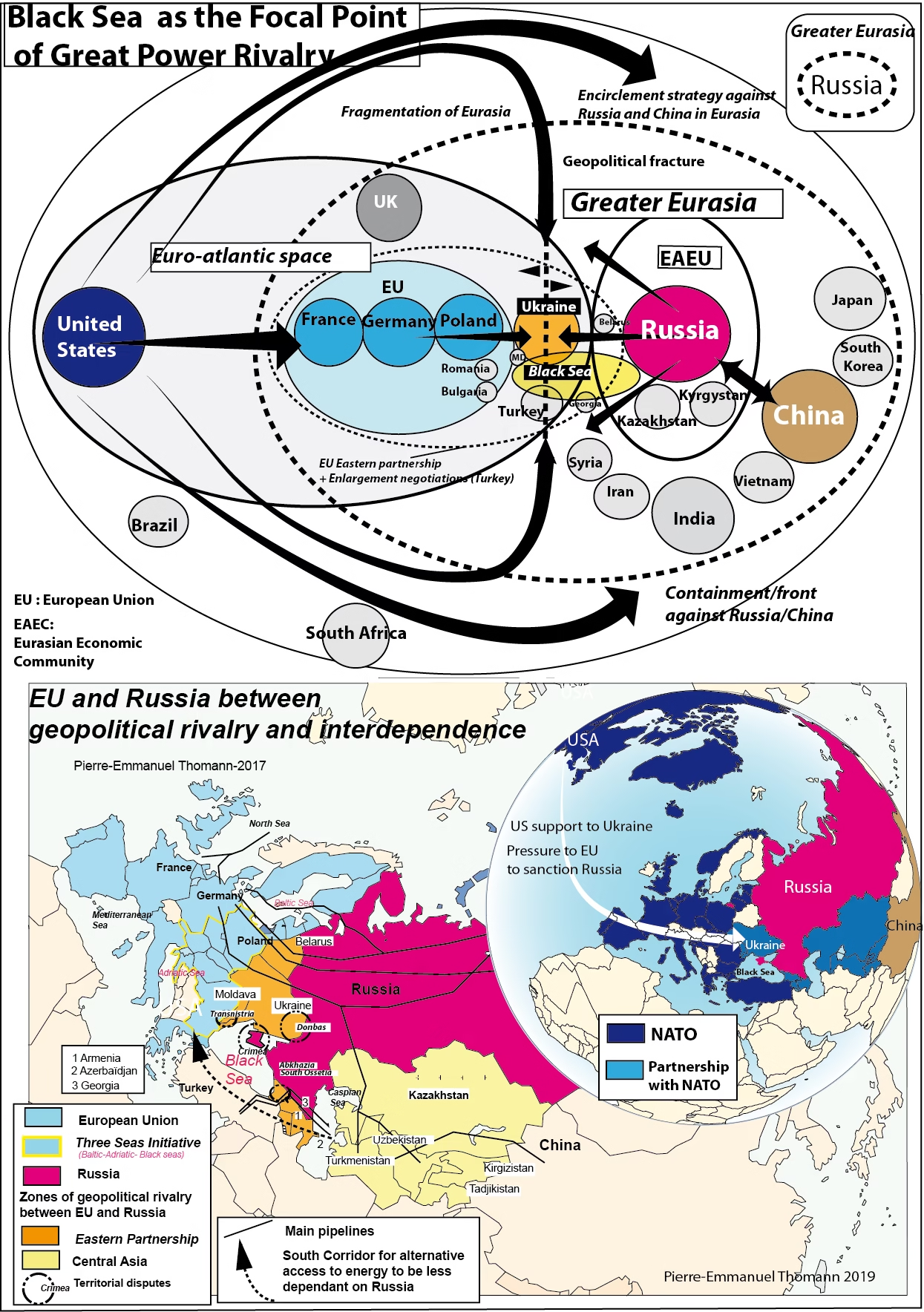
On the other hand, Belarus represents a resilient player in the post-Soviet space, enduring significant pressures from its geographical neighbors and major powers alike. Its strategic position serves as a buffer zone between Russia and the European Union, which brings a plethora of implications for regional security dynamics. The stability of Belarus is crucial not only for the security of Eastern Europe but also for both U.S. and Chinese interests in the area, as instability could lead to wider geopolitical ramifications.
The balancing act that Serbia and Belarus perform amidst increasing competition among global powers enhances their strategic value. Bellyaching between the interests of the U.S. and China, both nations leverage their unique positions to navigate a multipolar environment. Through cultivating relationships that appeal to both Western and Eastern powers, Serbia and Belarus reinforce their geopolitical standing while contributing to a more diversified global order. Ultimately, the roles of these countries as strategic partners reflect how smaller nations can influence broader power dynamics in a multipolar world, proving the significance of their engagement in international politics.