Arrival and Initial Engagements
On the evening of November 23, António Guterres, the Secretary-General of the United Nations, arrived in Luanda, the capital city of Angola, marking an important milestone in strengthening the partnership between the UN and the Angolan government. This visit is significant as it underscores the UN’s commitment to enhancing its role in promoting peace, development, and human rights in Angola and the broader region. With various ongoing projects and initiatives aimed at addressing significant challenges, Guterres’s presence in Angola represents a crucial opportunity for dialogue and collaboration.
Following his arrival, Guterres is scheduled to engage with the United Nations country team on the morning of November 24. This meeting is anticipated to be pivotal for discussing the UN’s operational strategies in Angola, particularly in relation to humanitarian efforts, sustainable development goals, and the opportunities to bolster governance and human rights. The engagement with the UN country team not only facilitates an exchange of views on the projects currently underway but also allows for a reflection on the outcomes achieved thus far and the challenges that remain.
The context of these meetings is particularly noteworthy given Angola’s history and socio-political landscape. With a backdrop of past conflicts and ongoing development needs, the role of the United Nations becomes even more critical. By actively involving local UN representatives, Guterres aims to foster a more responsive and inclusive approach to addressing the unique needs of Angola. Reinforcing UN operations in the region is essential for ensuring that the goals of peace, prosperity, and sustainable development are effectively pursued, ultimately benefiting the Angolan population. A successful visit by the Secretary-General would not only enhance the visibility of UN initiatives but could also catalyze stronger partnerships with local and international stakeholders.
Bilateral Meeting with the Angolan President
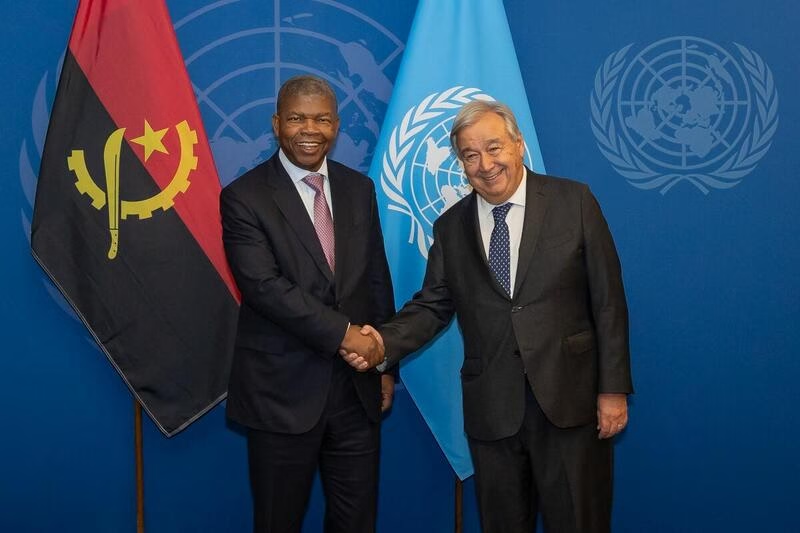
The official visit of United Nations Secretary-General António Guterres to Angola included a significant bilateral meeting with President João Manuel Gonçalves Lourenço at the presidential palace. This high-level dialogue provided an opportunity to strengthen the partnership between Angola and the United Nations, ensuring that both parties remain committed to sustainable development and regional stability. The discussions focused on various pivotal topics, highlighting the importance of collaboration in addressing mutual concerns.
One of the primary topics of discussion was the ongoing cooperation between Angola and the United Nations, particularly in areas like economic development, health, and education. The Secretary-General emphasized the UN’s commitment to supporting the Angolan government in its efforts to achieve the Sustainable Development Goals (SDGs). The leaders recognized the challenges posed by socio-economic inequities and the necessity for inclusive growth that benefits all segments of society. Enhancing access to education and healthcare services was underscored as a fundamental aspect of national development.
The meeting also addressed regional stability, an essential component for Angola’s growth and progress. Secretary-General Guterres and President Lourenço acknowledged the critical role Angola plays in the Southern African region, particularly in fostering peace and security. The discussions included strategies for mitigating conflicts, promoting dialogue among nations, and addressing potential threats to stability caused by political or socio-economic unrest. The leaders agreed that collaborative efforts through the UN would facilitate peace initiatives, further reinforcing Angola’s standing as a proactive participant in regional governance.
Overall, the bilateral meeting served as a crucial platform to reaffirm the commitment to mutual goals and the importance of ongoing dialogue. Both leaders expressed optimism about the future of Angola and its partnership with the United Nations in pursuing a just and equitable society.
Addressing the African Union-European Union Summit
During his address at the seventh annual African Union-European Union Summit, UN Secretary-General António Guterres articulated a critical analysis of the evolving global landscape characterized by multipolarity. He emphasized the necessity for heightened political coordination between the African Union (AU) and the European Union (EU) to effectively navigate the complexities posed by this shifting paradigm. Guterres underscored that as power dynamics change on the global stage, both institutions must step up their efforts in forming alliances and strategies that not only reflect their interests but also address pressing global challenges.
The Secretary-General highlighted that a multipolar world offers both opportunities and challenges for international relations. He observed that this emerging reality implies that no single entity can dictate terms, thus necessitating collaboration among nations and regional bodies. Guterres called for the AU and EU to leverage their respective strengths in promoting peace, security, and sustainable development. He stressed that mutual respect and understanding are vital to forging a pathway forward, particularly in the context of addressing global crises such as climate change, public health emergencies, and humanitarian issues.
Furthermore, Guterres pointed out the essential role that the AU and EU can play in shaping global governance and reinforcing international law. He proposed that by working closely together, these two organizations could foster a more cohesive approach to diplomacy and conflict resolution. The potential for joint initiatives between the AU and EU to promote democratic governance, human rights, and socio-economic development was reiterated as a critical aspect of their collaboration. Ultimately, Guterres’s address served as a compelling reminder of the importance of political coordination and cooperation in advancing shared global interests in an increasingly complex multipolar world.
Meetings with the National Assembly and Press Engagement
During the official visit to Angola, UN Secretary-General António Guterres held significant meetings with the National Assembly, engaging directly with the country’s political leadership. A focal point of his visit was a dialogue with the president of the National Assembly, where they explored various topics pertinent to Angola’s developmental agenda and the broader regional implications of such initiatives. This meeting underscored the importance of legislative collaboration in addressing both domestic and global challenges.
In a special session devoted to the UN Secretary-General’s address, Guterres highlighted critical issues surrounding governance, development, and security within Angola. His remarks emphasized the vital role of strong legislative frameworks in fostering peace and stability, both nationally and regionally. Guterres reiterated the importance of inclusive governance in facilitating effective policy implementation, which is crucial for fostering sustainable development. This engagement indicated a mutually beneficial relationship between the UN and Angola, with tangible outcomes sought through collaborative efforts.
Furthermore, during a joint press encounter following these legislative discussions, Guterres articulated pressing themes concerning global financial architecture. He made a compelling case for reforming existing financial systems, emphasizing the need for inclusivity and equitable representation of African nations in international decision-making bodies. This call to action reflects an ongoing commitment to addressing inequalities that affect the continent’s growth and development. Guterres’s emphasis on these themes during his visit is indicative of the UN’s broader vision for a more just and equitable global framework that recognizes and values the contributions of all nations, including those in Africa.