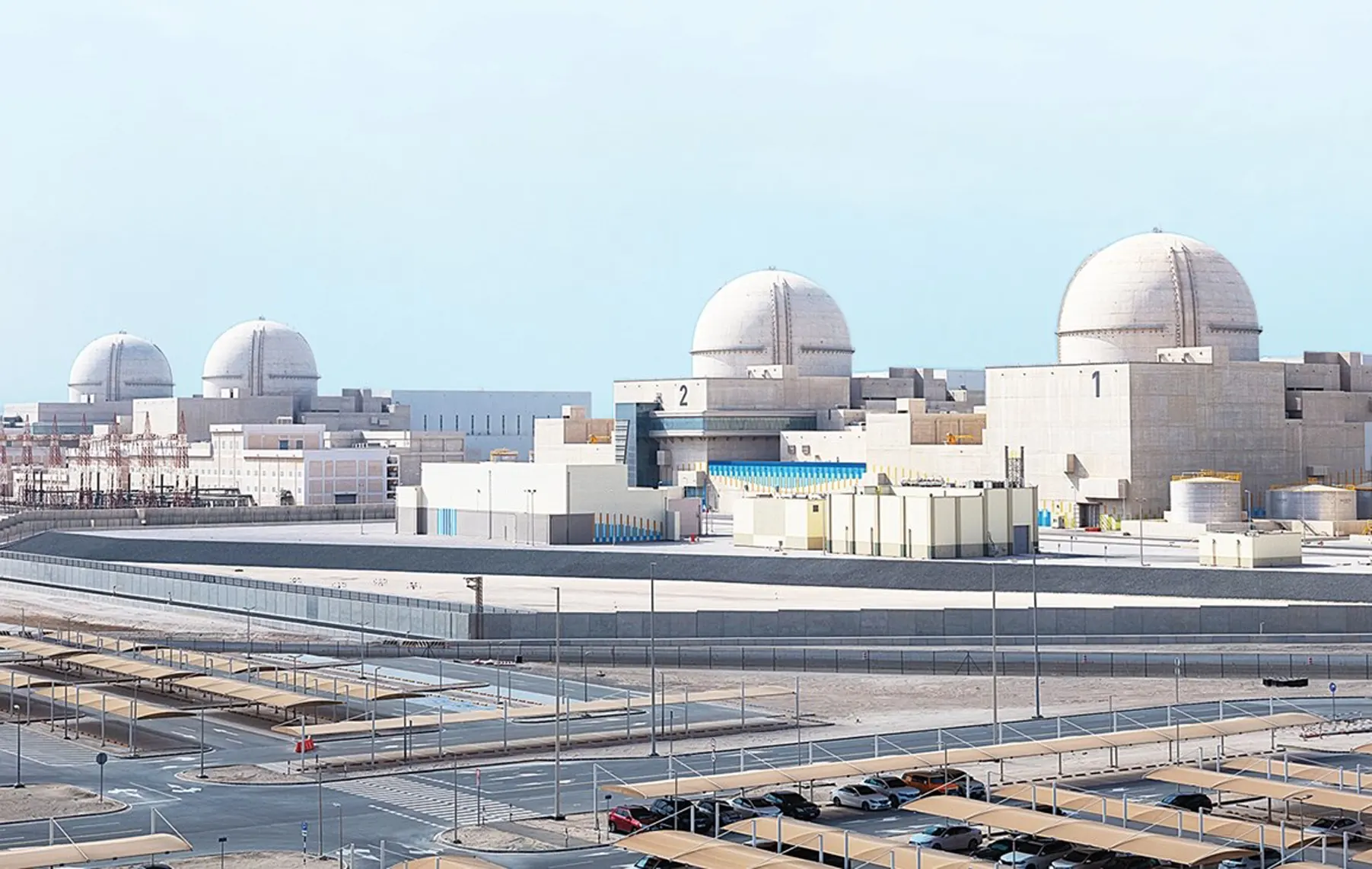
On 17 May 2026, Barakah Nuclear Power Plant Unit 3 experienced a loss of off-site power following a drone strike. The event interrupted the unit’s connection to external electricity supplies, but it did not mean that the reactor had lost all sources of power. Nuclear plants are designed with safety systems and backup arrangements to respond to disruptions of this kind. The International Atomic Energy Agency (IAEA) subsequently reviewed the response and concluded that the UAE authorities and the plant operator acted appropriately, taking steps to maintain safety.
Barakah is located in Abu Dhabi’s Al Dhafra region, on the UAE’s western coast. The facility is operated by ENEC Operations, a joint venture subsidiary of the Emirates Nuclear Energy Company (ENEC) and Korea Electric Power Corporation (KEPCO). This operating structure brings together the UAE’s nuclear energy organization and a partner with experience in the design and construction of the plant’s reactor technology. The IAEA’s assessment of the incident focused on how the responsible organizations managed the disruption and protected the plant, rather than on the power interruption alone.
Barakah comprises four APR1400 nuclear reactors, developed in South Korea and built as a coordinated national energy project. Together, the units are capable of producing about 40 terawatt-hours of electricity annually, an amount equivalent to roughly one-quarter of the UAE’s electricity needs. The scale of that contribution makes reliable operation and strong emergency readiness important to the country’s power system. The Unit 3 event therefore drew attention not only to the immediate response but also to the safeguards and procedures used to manage external hazards. The IAEA’s conclusion that the response was appropriate offers an international assessment of how the UAE authorities and ENEC Operations addressed the loss of off-site power while maintaining safety at the plant.
A six-member International Atomic Energy Agency (IAEA) mission visited the United Arab Emirates from 12 to 20 October 2026 to examine the response to the loss of power at Barakah Nuclear Energy Plant Unit 3. The visit took place at the UAE government’s request and followed an agreement reached during IAEA Director General Rafael Mariano Grossi’s visit to Barakah in June 2026. The mission provided an opportunity for international experts to review the event and the measures taken by the plant operator and national authorities.
During the visit, the team toured affected areas of the plant and inspected emergency response facilities. It reviewed relevant operating procedures and emergency procedures, focusing on how established arrangements were applied during the event. The mission also met senior leaders and technical personnel from Barakah and the Federal Authority for Nuclear Regulation (FANR), the UAE’s independent nuclear regulator. These discussions helped the reviewers understand decision-making, coordination, and the technical actions taken as the situation developed.
The review considered several connected aspects of the response. These included actions undertaken at the plant, national emergency preparedness and response arrangements, and the lessons identified from the power loss. The team also examined safety measures implemented by the operator, including how those measures supported safe plant conditions and informed the response. Considering both operational and national arrangements enabled the mission to assess how responsibilities and communication functioned across the organizations involved.
The IAEA mission’s approach combined direct observation, document review, and discussions with personnel responsible for plant operations, regulation, and emergency response. Its work was intended to provide a structured assessment of the response rather than replace the UAE’s own regulatory oversight or operational investigations. By examining procedures alongside the actions taken in practice, the reviewers could consider whether arrangements were understood, coordinated, and suitable for addressing the event. The findings and lessons from this work can inform continued attention to nuclear safety and emergency readiness at Barakah and across the UAE’s nuclear programme.
The IAEA review recognized several effective actions taken after the loss of off-site power at Barakah Unit 3. The UAE promptly notified national authorities and relevant international organizations, supporting timely information-sharing during the event. Plant personnel used established emergency procedures to assess conditions and guide their response, while public communication helped provide information about the incident and its safety significance. Off-site power was restored within a short period, limiting the duration of the disruption. Together, these actions demonstrated the value of prepared personnel, clear procedures, and established channels for notification and communication.
The mission also noted the role of regulatory oversight and ongoing efforts to strengthen nuclear safety and security. These included improvements to procedures, staff training, and measures intended to enhance the resilience of critical infrastructure. The review recognized that the UAE authorities had adopted the IAEA’s seven indispensable pillars for nuclear safety and security as a basis for their response. Applying these principles supports attention to safe operations, effective protection, and the continuity of essential functions during challenging conditions. The mission’s observations acknowledged these steps while identifying areas where further development would help sustain preparedness.
The recommendations were distinct from the effective actions already taken. The review called for further strengthening emergency preparedness and response, including the ability to manage a range of scenarios and coordinate actions promptly. It also recommended improving the reliability and resilience of critical infrastructure, reducing the risk that external disruptions could affect essential plant functions. In addition, the mission advised reinforcing coordination among stakeholders so that responsibilities, information-sharing, and response arrangements are clear. Better coordination can help ensure that nuclear safety and security measures operate together rather than as separate efforts. Addressing these recommendations would build on the response’s demonstrated strengths and support consistent preparedness across the relevant organizations.
In the mission’s closing remarks, IAEA mission leader Amgad Shokr praised the Federal Authority for Nuclear Regulation (FANR) and the Barakah Nuclear Power Plant for requesting an independent review of the response to the Unit 3 power loss. He described the decision to invite the mission as an important part of a learning-focused approach to nuclear safety. Shokr encouraged the UAE organizations involved to continue implementing the organizational and technical measures identified through lessons learned. Sustained attention to those measures, he noted, can help strengthen preparedness and improve coordination among the plant, regulator and other relevant organizations.
IAEA Deputy Director General Karine Herviou recognized the UAE’s engagement with the Agency and highlighted the technical competence demonstrated by FANR, Barakah plant management and operating staff, and electrical-grid field operators. Their work was important to understanding how the event unfolded and how the response was managed. Herviou also emphasized that a review mission should examine both sides of the experience: practices and decisions that worked effectively, as well as opportunities to improve. This balanced assessment enables organizations to preserve effective arrangements while addressing gaps, and supports practical follow-up rather than treating the review as a simple evaluation of performance.
FANR Director General Hamad Al Kaabi said the UAE had responded swiftly to the event and remained committed to international standards for nuclear safety and security. He underscored that protecting the public and the environment continues to guide the country’s regulatory and operational work. Al Kaabi also affirmed that the UAE would continue cooperating with the IAEA and national partners as it considers the mission’s findings and applies relevant lessons. The officials’ remarks therefore combined recognition of the response with an expectation of continued action: maintaining strong technical capability, implementing identified improvements and sustaining cooperation across institutions. Such follow-through is central to turning the review’s observations into lasting improvements in preparedness and safety.