Introduction to the Singapore Convention on Mediation
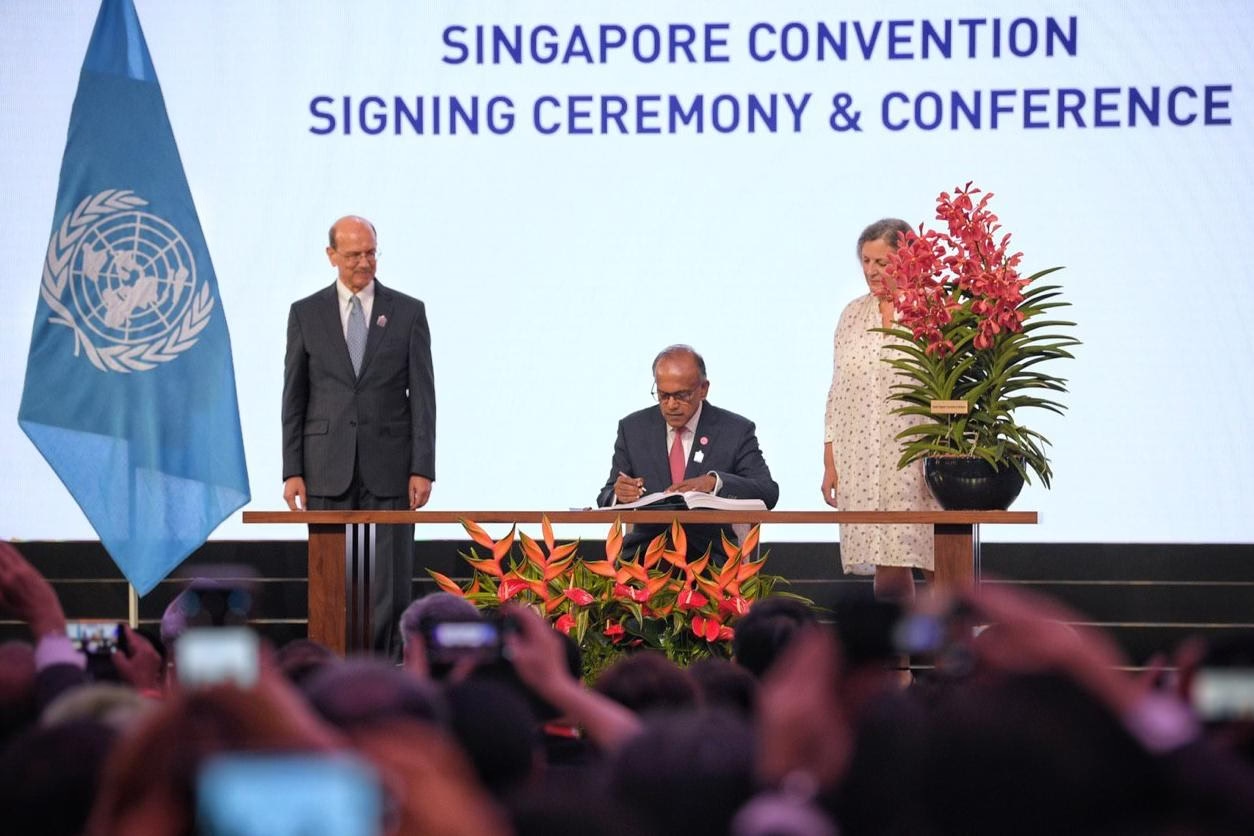
The Singapore Convention on Mediation, formally known as the United Nations Convention on International Settlement Agreements Resulting from Mediation, was adopted on December 20, 2018. This pivotal instrument aims to facilitate the enforcement of mediation agreements in the realm of international trade and commerce. It marks a significant milestone in the evolution of alternative dispute resolution (ADR) globally, reflecting a commitment by nations to emphasize mediation as a preferred method for resolving disputes amicably.
The convention was developed to address the challenges that emerged from the growing utilization of mediation as a means to resolve disputes. Traditionally, while mediation has been widely adopted, the enforceability of settlement agreements generated from such processes often faced legal hurdles across different jurisdictions. The purpose of the Singapore Convention is to bridge these gaps by providing a robust framework that recognizes and upholds the validity of mediated settlement agreements, thereby enhancing the predictability and reliability of international mediation.
As international commerce expands, the demand for efficient and effective dispute resolution mechanisms has become increasingly apparent. Mediation is inherently suited for this purpose, offering a collaborative and less adversarial approach compared to traditional litigation. The convention is noteworthy not only for its procedural guidelines but also for promoting a culture of cooperation among states, encouraging them to adopt mediation actively in their own legal systems.
Furthermore, the convention plays a crucial role in the escalation of international trade by supporting businesses in swiftly addressing disputes without resorting to lengthy court processes. By focusing on mediation, the Singapore Convention seeks to reduce the burden on judicial systems while ensuring that parties can resolve disputes in a manner that is cost-effective and time-efficient. This comprehensive legal framework presents a significant advancement in enhancing the legitimacy and appeal of mediation on a global scale.
Kyrgyzstan’s Accession to the Convention
Kyrgyzstan has recently made a significant step in international law by acceding to the Singapore Convention on Mediation, a pivotal treaty designed to facilitate the enforcement of mediated settlements across borders. This accession, which took place on [Insert Date], signifies Kyrgyzstan’s commitment to enhancing its dispute resolution mechanisms and aligning itself with global standards in mediation. By becoming a party to the convention, Kyrgyzstan acknowledges the importance of mediation as a preferred mode of conflict resolution, thereby promoting a culture of dialogue and compromise over adversarial legal processes.
Being recognized as a state party to the Singapore Convention on Mediation entails certain legal obligations and implications for Kyrgyzstan. Firstly, it enables local businesses, individuals, and state entities to maintain confidence that mediated agreements will be respected and enforceable not only within Kyrgyzstan but also in other member states. Consequently, this improves the investment climate, potentially attracting foreign investors who prefer jurisdictions that facilitate effective dispute resolution through mediation.
In preparation for the implementation of the convention, Kyrgyzstan must undertake a series of legal and practical measures. This will involve adapting domestic laws to align with the provisions outlined in the convention, ensuring that all parties understand their rights and responsibilities in mediation processes. Notably, Kyrgyzstan has made a reservation in accordance with Article 8(1)(b), which allows the state to opt-out of certain provisions of the convention, specifically regarding the enforcement of mediated agreements that are not in writing. Such a reservation signifies Kyrgyzstan’s intention to balance its commitment to international standards while considering its capacity and legal culture. This nuanced approach allows Kyrgyzstan to gradually evolve its mediation practices while ensuring that the framework remains relevant and effective for its socio-economic context.
Impacts of the Accession on Kyrgyzstan’s International Trade
The accession of Kyrgyzstan to the Singapore Convention on Mediation signals a significant shift in the realm of international dispute resolution within the country, particularly impacting its international trade landscape. By aligning with the Convention, Kyrgyzstan aims to foster an environment more conducive to foreign investment and improved trade relations. This strategic move is anticipated to enhance the nation’s attractiveness to international investors who prioritize reliable and efficient mechanisms for resolving conflicts that may arise in commercial transactions.
Previously, uncertainties in resolving trade disputes may have deterred potential investors, as they seek jurisdictions that offer robust frameworks for mediation. The acknowledgment of mediation as a viable and preferable option for settling disputes, as advocated by the Singapore Convention, demonstrates Kyrgyzstan’s commitment to providing a safe and predictable legal environment. This shift could significantly bolster confidence among foreign businesses, encouraging greater investment flows into the country.
Furthermore, accession to the Singapore Convention may also improve Kyrgyzstan’s relations with its key trade partners. Countries that prioritize alternative dispute resolution methods are often better positioned in the global marketplace, establishing an atmosphere of trust and mutual respect in cross-border transactions. With increased assurance that disputes can be settled amicably through mediation, Kyrgyzstan can forge stronger ties with its international counterparts, leading to enhanced cooperation in trade and commerce.
In addition, the promotion of mediation aligns with the global trend towards more amicable and cost-effective conflict resolution methods. By embracing such practices, Kyrgyzstan is not merely adapting to international norms but is actively contributing to a more favorable environment for conducting business. Overall, Kyrgyzstan’s accession to the Singapore Convention on Mediation is expected to yield substantial benefits for its international trade landscape, ultimately positioning the country as a more competitive player in the global economy.
Looking Ahead: The Road to Implementation and Benefits
The recent accession of Kyrgyzstan to the Singapore Convention on Mediation marks a significant step towards enhancing international dispute resolution mechanisms within the country. Effective implementation of the convention requires a structured roadmap that encompasses essential legal reforms and institutional transformations. To begin with, Kyrgyzstan will need to amend its existing legal frameworks to align with the convention’s stipulations, ensuring that mediation agreements are enforceable and that local laws support this contemporary dispute resolution method.
One of the core challenges lies in the necessity to create a coherent national mediation framework. This involves establishing a regulatory body that oversees mediation practice and provides training for mediators to meet international standards. Developing educational programs and certifications for mediators will contribute to a pool of qualified professionals equipped to manage various types of disputes, thereby bolstering confidence in mediation as a viable alternative to litigation.
The benefits of Kyrgyzstan’s participation in the Singapore Convention are multifaceted. Increased reliance on mediation can lead to faster dispute resolution, which in turn enhances business efficiency. By fostering a conducive atmosphere for commercial activities, Kyrgyzstan can attract foreign investment, crucial for its economic growth. Additionally, the use of mediation promotes a culture of negotiation rather than confrontation, potentially reducing the backlog in courts and alleviating the pressure on the judicial system.
As Kyrgyzstan prepares for the full entry into force of the Singapore Convention in June 2026, it faces both challenges and opportunities. The proactive measures taken now will pave the way for a more robust legal environment that prioritizes alternative dispute resolution. Through these efforts, Kyrgyzstan positions itself to not only improve its mediation practices but also to emerge as a prominent player in the field of international dispute resolution in the coming years.