Escalating Violence and Humanitarian Crisis
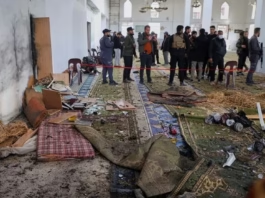
The political instability in South Sudan has resulted in a disturbing escalation of violence, particularly in regions such as Jonglei State. Reports indicate that clashes between armed groups and government forces have become increasingly frequent, leading to widespread destruction and significant population displacement. Thousands of individuals have been forced to flee their homes, creating one of the largest internally displaced person (IDP) crises in the world. The effects of this violence extend beyond mere displacement; they disrupt local economies, hinder access to essential services, and exacerbate the already dire humanitarian situation.
Furthermore, humanitarian access has been severely restricted due to ongoing hostilities. Humanitarian agencies face numerous challenges in delivering aid, as insecurity hampers operational deployments and logistical supply chains. Recent reports have highlighted the use of aerial bombardments targeting civilian areas, which not only instills fear among the populace but also significantly reduces trust in government efforts to stabilize the region. This has created a pressing need for international support, as local agencies struggle to cope with increasing numbers of people needing assistance.
The situation in Jonglei is emblematic of the broader humanitarian crisis affecting South Sudan, where food insecurity has reached alarming levels. Many regions suffer from famine conditions, partly a result of agricultural disruption caused by violence. As the conflict intensifies, the need for a robust international response becomes critical. Global partners must prioritize humanitarian assistance while also advocating for peace and conflict resolution to address the underlying issues that fuel this violence. Without decisive action, the spiral of conflict and humanitarian need will continue, leaving South Sudan’s most vulnerable populations in dire circumstances.
Threats to the Peace Agreement
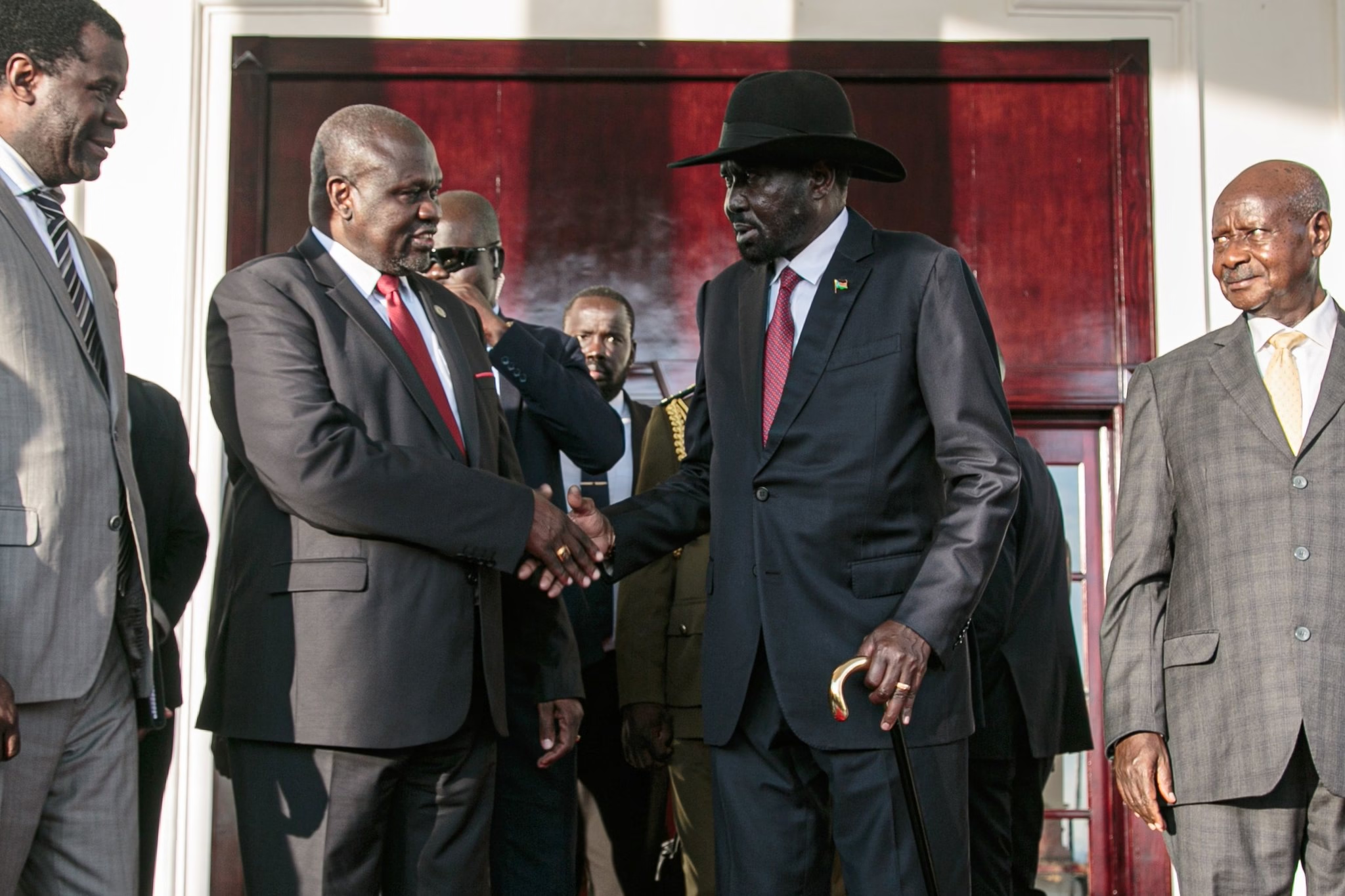
The 2018 revitalized peace agreement in South Sudan was initially heralded as a critical step toward ending years of civil conflict and violence. However, the stability of this agreement has come into question due to several ongoing developments within the political landscape. One of the most pressing issues is the current political impasse that has emerged among key political factions. This stalemate has resulted in a lack of consensus on vital governance structures, which are essential for the implementation of the peace accord.
Moreover, the removal of opposition figures from prominent government positions poses a significant threat to the peace initiative. Critics argue that such actions not only undermine the inclusivity the agreement aimed to promote but also exacerbate tensions among rival factions. The absence of opposition voices in the political discourse raises concerns about the legitimacy of the government and its ability to represent the diverse interests of the citizens. This growing sense of disenfranchisement risks fueling further unrest among the populace.
Key political leaders and international observers have expressed alarm over these developments. Prominent figures have issued warnings regarding the jeopardy faced by the peace process, emphasizing the urgency for collaborative dialogue among all political stakeholders. The calls for action from civil society organizations and foreign diplomats highlight a collective concern for the future of peace in South Sudan. Without concerted efforts to bridge the political divides and address grievances, the fragile peace agreement is at risk of unraveling, which could lead to a resurgence of violence and instability in the region.
International Responses and Diverging Opinions
The political crisis in South Sudan has elicited a wide array of responses from the international community, highlighting the complexities of foreign policy interventions. Nations around the globe have issued statements expressing concerns regarding the escalating violence and the potential collapse of the fragile peace agreement established in 2018. Many countries, alongside international organizations such as the United Nations, have warned that the ongoing conflict not only threatens stability in South Sudan but has implications for the broader East African region.
Some countries advocate for a robust and immediate response, calling for increased diplomatic pressure on the leaders involved in the conflict. These nations argue that proactive measures are essential to ensure the survival of the peace agreement, emphasizing the need for accountability for those committing human rights violations. For instance, several European nations have suggested that targeted sanctions could serve as an effective deterrent against continued aggression by the warring parties. In this context, sanctions are seen as a tool to compel cooperation and adherence to the peace process.
Conversely, other nations express skepticism regarding the efficacy of sanctions, suggesting that such measures might exacerbate the humanitarian situation rather than alleviate it. Critics of sanctions argue that they may limit access to essential resources for civilians and hinder international humanitarian assistance. These proponents advocate for diplomatic negotiations and engagement with South Sudan’s current government, prioritizing dialogue aimed at fostering reconciliation and sustainable peace.
The varying perspectives on how to handle the South Sudan crisis illustrate the challenges faced by the international community in formulating a coherent response. The divergence in approaches not only reveals the complexities of foreign policy but also underscores the need for a nuanced understanding of the local dynamics at play.
The Role of UNMISS and Challenges Ahead
The United Nations Mission in South Sudan (UNMISS) plays a crucial role in maintaining peace and security in South Sudan. Established in 2011, following the country’s independence, UNMISS has been mandated to protect civilians, support the delivery of humanitarian assistance, and promote human rights. With the escalating violence and a fragile peace agreement in place, the presence of UNMISS remains vital for fostering stability in the region. However, the mission is encountering several challenges that threaten its effectiveness.
One of the primary issues facing UNMISS is funding shortages. Operating in a complex environment fraught with ongoing conflict has made it increasingly difficult to secure necessary financial resources. These constraints adversely impact UNMISS’s ability to deploy personnel, conduct patrols, and provide essential services to vulnerable populations. Additionally, the unpredictable security situation often hampers the mobility of peacekeepers, limiting their capacity to respond to incidents of violence.
Operational constraints further complicate UNMISS’s mission. The mission must navigate a delicate balance between engaging with the South Sudanese government and addressing the needs of the local communities. This challenge is heightened by the government’s fluctuating stance towards the mission. While there have been instances of cooperation, the South Sudanese authorities sometimes exhibit resistance to international involvement, particularly when it comes to addressing human rights violations and enhancing accountability. This complex relationship emphasizes the need for continued international support and dialogue to uphold the peace agreement.
In conclusion, the role of UNMISS in South Sudan is critical amidst rising violence and instability. Continued international support is essential for overcoming funding shortages and operational challenges, ensuring the mission’s effectiveness in fostering peace and security in South Sudan. The commitment of the South Sudanese government to collaborate with UNMISS and uphold the peace agreement will ultimately determine the path forward for lasting stability in the nation.