


Historical Context of Central African Republic Sanctions
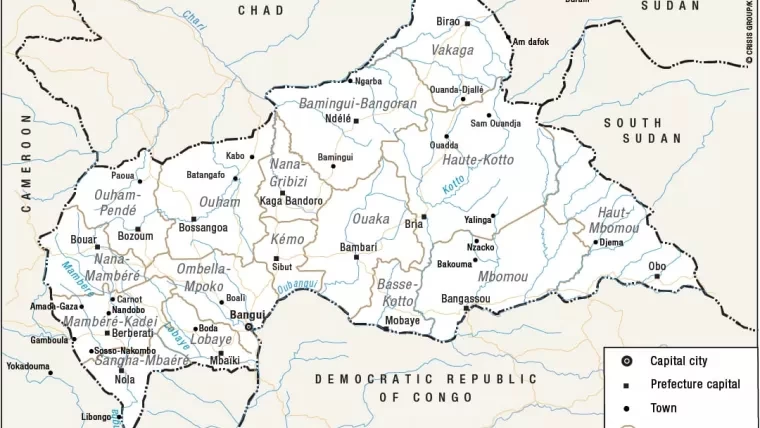
The Central African Republic (CAR) has faced a long history of political instability, conflict, and humanitarian crises, leading to the imposition of sanctions aimed at restoring peace and security. The genesis of the sanctions can be traced back to civil unrest that began in the early 2000s, particularly after the 2013 coup that ousted President François Bozizé and the subsequent rise of various armed groups including the Seleka coalition. This turmoil not only exacerbated intercommunal violence but also resulted in widespread human rights violations, displacing numerous civilians and catalyzing a regional humanitarian disaster.
In response to these developments, the United Nations Security Council (UNSC) took decisive action. The first sanctions resolution was adopted in 2013, focusing primarily on arms embargoes and asset freezes targeting individuals and entities contributing to the ongoing violence and instability. The rationale behind these sanctions lies in the need to curb the flow of weapons to armed groups, thereby mitigating the violence and fostering a conducive environment for dialogue and reconciliation.
Over the years, the sanctions framework has evolved, with subsequent resolutions adding layers to the sanctions regime. Key milestones include the UNSC Resolution 2127, which extended sanctions and introduced a travel ban for key figures linked to armed groups. The international community, through the African Union and regional organizations, has also contributed to the efforts in stabilizing the CAR. These sanctions have faced criticism, with debates surrounding their effectiveness and humanitarian impact. Nonetheless, they represent a critical tool utilized by international actors to address the deep-rooted challenges hampering peace and governance in the Central African Republic.
Committee Activities and Sanctions Implementation
Over the past two years, the committee monitoring the sanctions imposed on the Central African Republic (CAR) has actively engaged in a variety of activities aimed at ensuring effective compliance and implementation of these measures. The committee’s key responsibilities include providing support to member states, maintaining a transparent process, and ensuring consistent application of the sanctions measures across different jurisdictions. This is crucial in maintaining the integrity and efficacy of the sanctions regime, which is designed to address the ongoing challenges within the CAR.
The committee has conducted numerous consultations with national and regional stakeholders, fostering a collaborative approach to sanctions compliance. By facilitating open dialogue, the committee ensures that member states are well-informed regarding their obligations under the sanctions regime. This includes providing guidance on reporting requirements and clarifying any ambiguities in the sanctions measures, thereby minimizing the risk of non-compliance.
In addition to supporting member states, the committee has prioritized transparency in its operations. This has involved regular updates on the status of the sanctions, public reporting on violations, and ensuring that stakeholders are aware of any changes to the sanctions framework. Such transparency is vital not only for compliance but also for building trust among international partners involved in the peace and stability efforts in CAR.
Despite facing several challenges, including political instability within the region and varying levels of commitment to sanctions enforcement, the committee remains committed to its objectives. Efforts have been made to engage with local communities and civil society organizations in CAR to promote understanding and support for the sanctions. By fostering this relationship, the committee aims to enhance the overall effectiveness of the sanctions and contribute to the long-term stability of the Central African Republic.
Current Sanctions List and Review Process
As of December 2025, the sanctions list related to the Central African Republic (CAR) comprises 14 individuals and one entity. These sanctions are aimed at addressing the challenges of instability, armed conflict, and violations of human rights within the country. The individuals on the sanctions list are subject to travel bans and asset freezes, while the entity faces restrictions that limit its operations internationally. The targeted sanctions are designed to exert pressure on those deemed responsible for perpetuating violence and undermining peace efforts in the region.
The review process for the sanctions list is meticulously structured, ensuring that any changes made are based on clear criteria and thorough investigation. The committee responsible for overseeing these sanctions closely monitors the situation in CAR and evaluates the behavior of listed individuals and entities. During the latest review period, no proposals were submitted for adding or removing names from the sanctions list. This suggests a strategic decision to maintain the current focus, reflecting an ongoing assessment of the threats posed by those involved in destabilizing activities in CAR.
The absence of new proposals during this reporting period may also indicate the committee’s recognition of the persistent risks that continue to afflict the region. Each member state involved plays a crucial role in reviewing the global and regional implications of the sanctions measures. The goal is to adapt and respond to the evolving dynamics within the CAR, while also weighing the potential impacts of sanctions on broader humanitarian conditions.
Overall, the current sanctions list remains a critical component of international efforts to promote stability in the Central African Republic, with the review process ensuring that responses to changing circumstances are methodical and measured.
Future Engagements and Challenges Ahead
The Central African Republic (CAR) sanctions regime is poised for continued evolution as the committee engages with member states and regional partners to strategize for effective implementation. In the upcoming months, the committee’s agenda will likely focus on enhancing collaboration with various stakeholders, ensuring that sanctions serve their intended purpose of promoting peace and stability in the region. Engaging directly with local actors, including civil society organizations, will be crucial in understanding ground realities and adapting strategies to meet the unique challenges faced by the CAR.
However, the path forward is fraught with challenges. A significant hurdle has been the delayed appointments of subsidiary body chairs, which not only affects the continuity of leadership but also hampers timely decision-making processes. These delays have led to missed opportunities for crucial briefings that could otherwise inform stakeholders about the evolving situation in the CAR and the effectiveness of existing sanctions. Scheduling conflicts have further complicated these efforts, creating an environment where coordination becomes challenging and potentially undermines the sanctions’ intended impact.
Despite these hurdles, the committee is committed to ensuring that enforcement of sanctions remains robust. Ongoing assessments and adaptive measures are essential to safeguard the effectiveness of the sanctions and to respond to any deviations in compliance. Future engagements will also prioritize capacity-building initiatives aimed at strengthening regional capabilities in monitoring and enforcing sanctions. By fostering partnerships and facilitating dialogue among member states, the committee aims to synergize efforts in addressing the myriad challenges inherent in the CAR sanctions regime.